
Skip to content
Start Learning
HomeRegalTicker LearnRisk Management
Capital Protection Path

Risk Management

Learn stock market risk management for beginners through an ordered path covering position sizing, stop-losses, diversification, drawdowns, behaviour and capital protection.

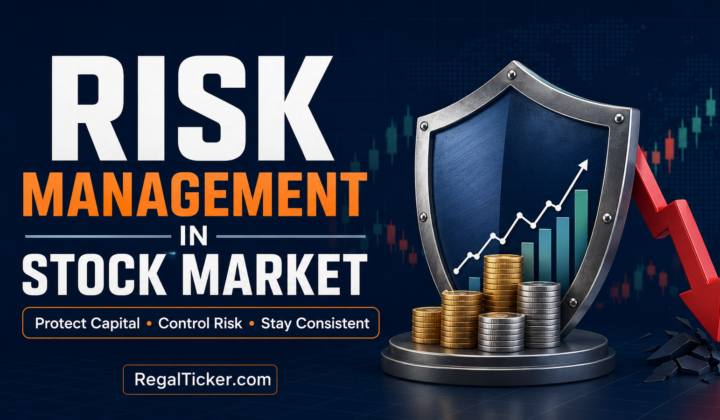
Investor observing a capital-protection system containing market turbulence while preserving diversified exposure channels and reserves
Beginner Roadmap

Protect Capital Before Chasing Returns

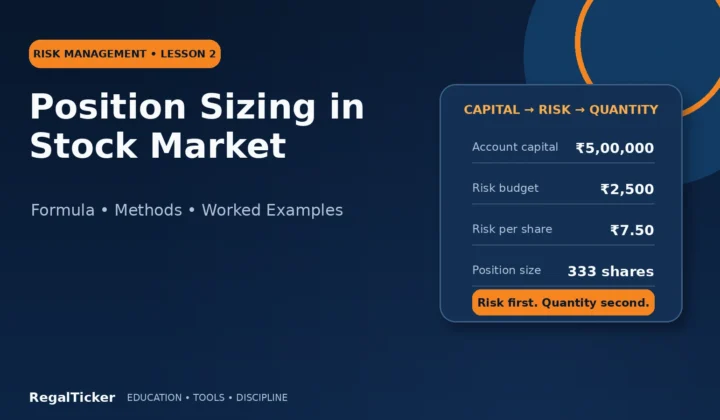
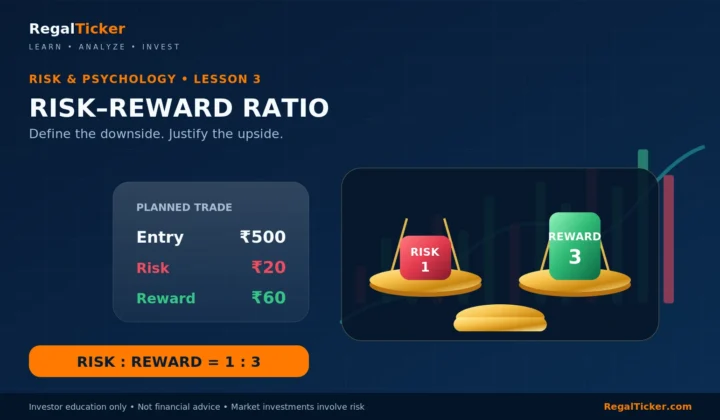
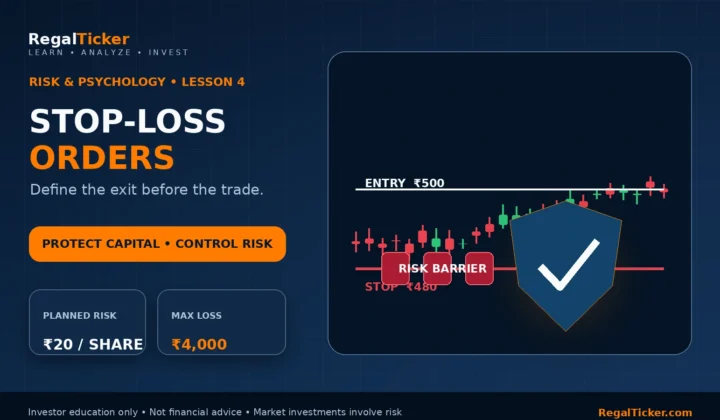
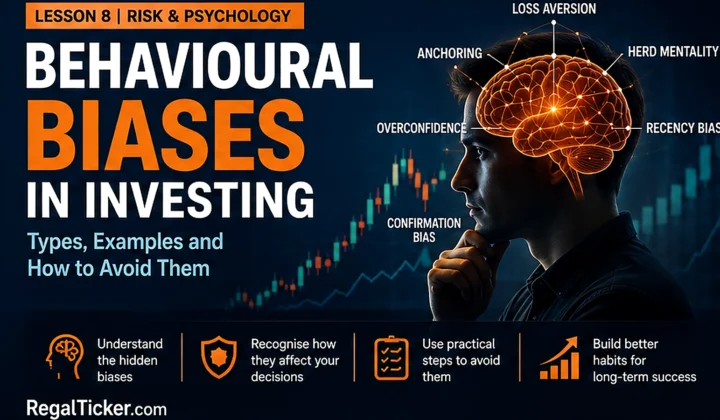
Risk management is a process for limiting damage, not a way to avoid every loss. This path starts with a practical framework, position sizing, risk–reward and stop-loss orders, then expands to diversification, drawdowns and capital protection before addressing trading psychology, behavioural biases and a personal risk plan.

Follow the lessons in order if you are building a framework from scratch. Define acceptable loss before taking exposure, size positions from risk rather than conviction, separate market, portfolio, behavioural and execution risks, and review the plan when your capital, goals or circumstances change. Calculators can quantify inputs, but they cannot remove uncertainty.

Course Curriculum

Learn in the Recommended Order

Use the recommended learning order, or jump directly to the guide you need.

Relevant Calculators

Quantify the Planned Risk

Use this calculator after defining an entry, stop, target and position size. It measures the relationship between planned loss and reward; it does not estimate probability or decide whether a trade suits you.

Newest From This Topic

Latest Article

Primary References

Official Sources

Use official investor-education sources to understand risk, suitability and diversification. Apply general guidance to your own goals, liquidity needs, time horizon and ability to absorb loss.

Quick Clarifications

Risk Management FAQs

Does risk management prevent all losses?

No. It aims to control the size, frequency and impact of losses while keeping enough capital available for future decisions. Market, liquidity and execution risks can still produce unexpected outcomes.

How much capital should be risked on one position?

There is no universal percentage. The limit should reflect your goals, liquidity, portfolio concentration, volatility, stop distance and ability to absorb loss without disrupting essential finances.

Is a stop-loss guaranteed to execute at its trigger price?

Not always. Price gaps, fast markets and limited liquidity can lead to execution at a different price, while stop-limit orders introduce the separate risk of not executing.

Is diversification enough to manage investment risk?

No. Diversification can reduce concentration risk, but assets may still fall together. Combine it with suitable allocation, liquidity, position sizing, due diligence, an appropriate time horizon and periodic review.