
⚡ Quick answer
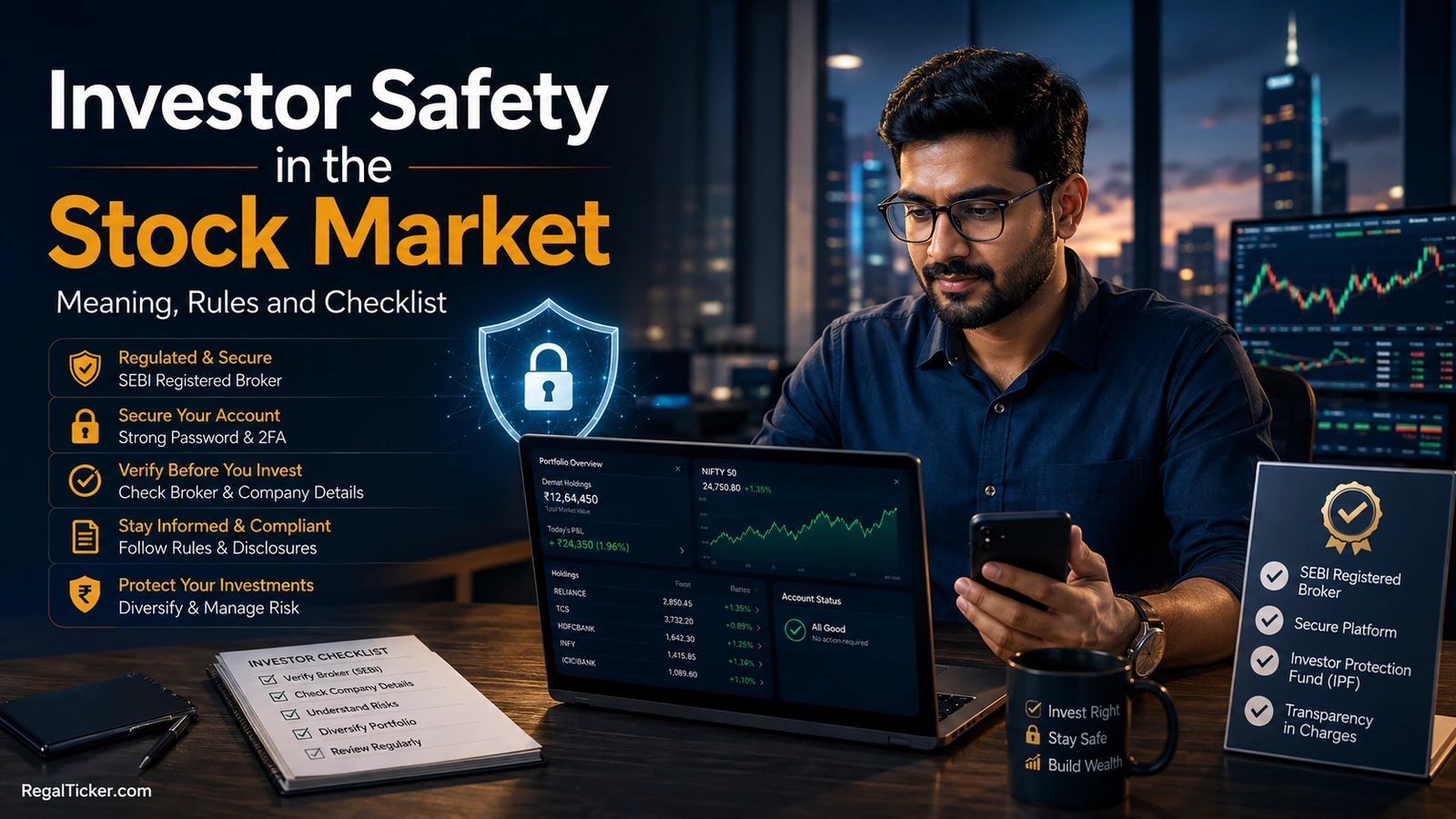
Investor safety in the stock market means protecting your money, securities, personal information and trading account from fraud, unauthorised access, misleading advice and avoidable operational mistakes. A safe investor deals only with SEBI-registered intermediaries, verifies every payment and transaction, uses strong account security, studies investment risks and reports suspicious activity quickly.
Investor safety does not remove market risk. Share prices can still rise or fall. Its purpose is to reduce risks caused by scams, weak security, unregistered entities, poor documentation and uninformed decisions.
What Is Investor Safety in the Stock Market?
Investor safety is the set of habits, checks, rights and regulatory protections that help people participate in the securities market responsibly.
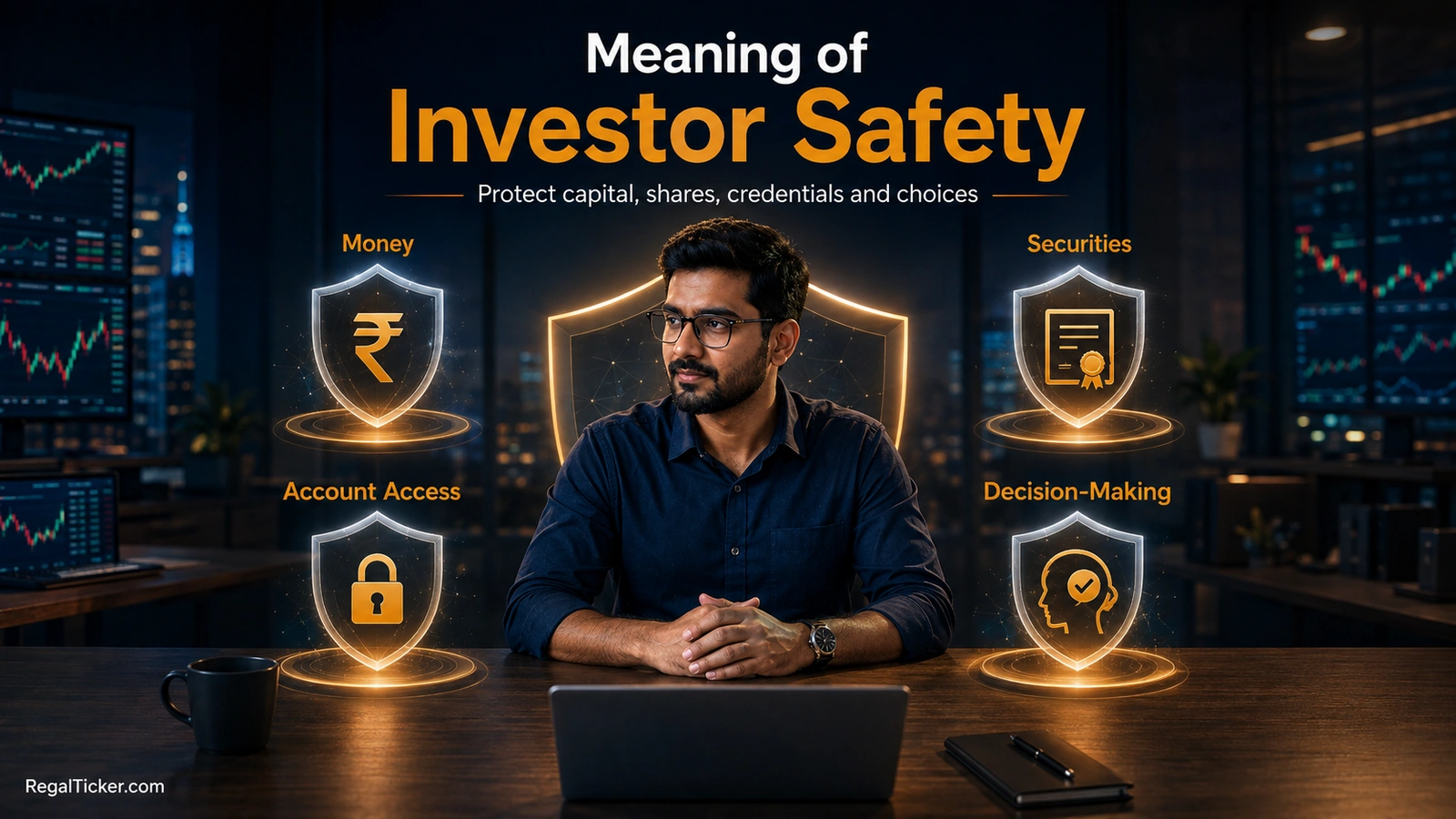
It covers much more than selecting a good stock. An investor must also protect:
- money transferred for investing or trading;
- shares and other securities held in a demat account;
- login credentials, passwords, OTPs and TPINs;
- personal KYC and bank information;
- decisions from manipulation and misleading promises;
- legal rights when dealing with brokers, advisers and listed companies.
A person can make a correct market analysis and still lose money through a fake app, unauthorised adviser, phishing link, wrong bank transfer or compromised trading account. That is why investor safety should be treated as a separate part of the investment process.
SEBI warns investors to be suspicious of guaranteed or near-certain returns, unregistered entities, pressure tactics and investment strategies that are not explained transparently. NSE also advises investors to deal only with SEBI-registered intermediaries and never share login credentials, passwords, OTPs or TPINs.
Investor Safety and Market Risk Are Different
Investor safety is sometimes misunderstood as protection from every financial loss. That is not possible in the stock market.
Market Risk
Market risk arises when the value of an investment changes because of company performance, economic conditions, interest rates, market sentiment or other financial factors.
For example, an investor may buy a fundamentally sound company, but its share price may decline because the entire market corrects.
Safety and Operational Risk
Safety risk arises when loss occurs because of fraud, account misuse, false promises, payment manipulation, weak cybersecurity or failure to verify an intermediary.
Examples include:
- sending money to a personal bank account claimed to belong to a broker;
- installing a fake trading application;
- sharing an OTP with a caller pretending to provide support;
- acting on guaranteed-return tips from an unregistered person;
- ignoring an unauthorised trade shown in an exchange message.
A safe investing process reduces preventable losses, but it cannot guarantee investment returns.
Investor note
Important point
Never treat the words “safe stock,” “risk-free trade” or “guaranteed return” as proof of safety. All securities-market investments carry some degree of risk.
Why Investor Safety Matters
India’s investing ecosystem has become more accessible through mobile trading apps, online KYC, UPI and digital account opening. This convenience also creates opportunities for impersonation, phishing, fake applications and social-media manipulation.
Investor safety matters for five main reasons.
It Protects Your Capital
A fraudulent transfer can cause an immediate and sometimes irreversible loss. Verification before payment is easier than trying to recover money after fraud.
It Protects Your Securities
Shares held in a demat account are valuable assets. Unauthorised access, incorrect instructions or compromised credentials can expose them to misuse.
It Protects Your Identity
KYC documents, PAN details, bank information and mobile access can be exploited beyond the trading account. Personal information should be shared only through verified and necessary channels.
It Improves Investment Decisions
Investors who verify information are less likely to act on rumours, manipulated screenshots, fake testimonials or high-pressure sales tactics.
It Preserves Legal Remedies
Proper contract notes, account statements, payment records and written communication can support a complaint when something goes wrong.
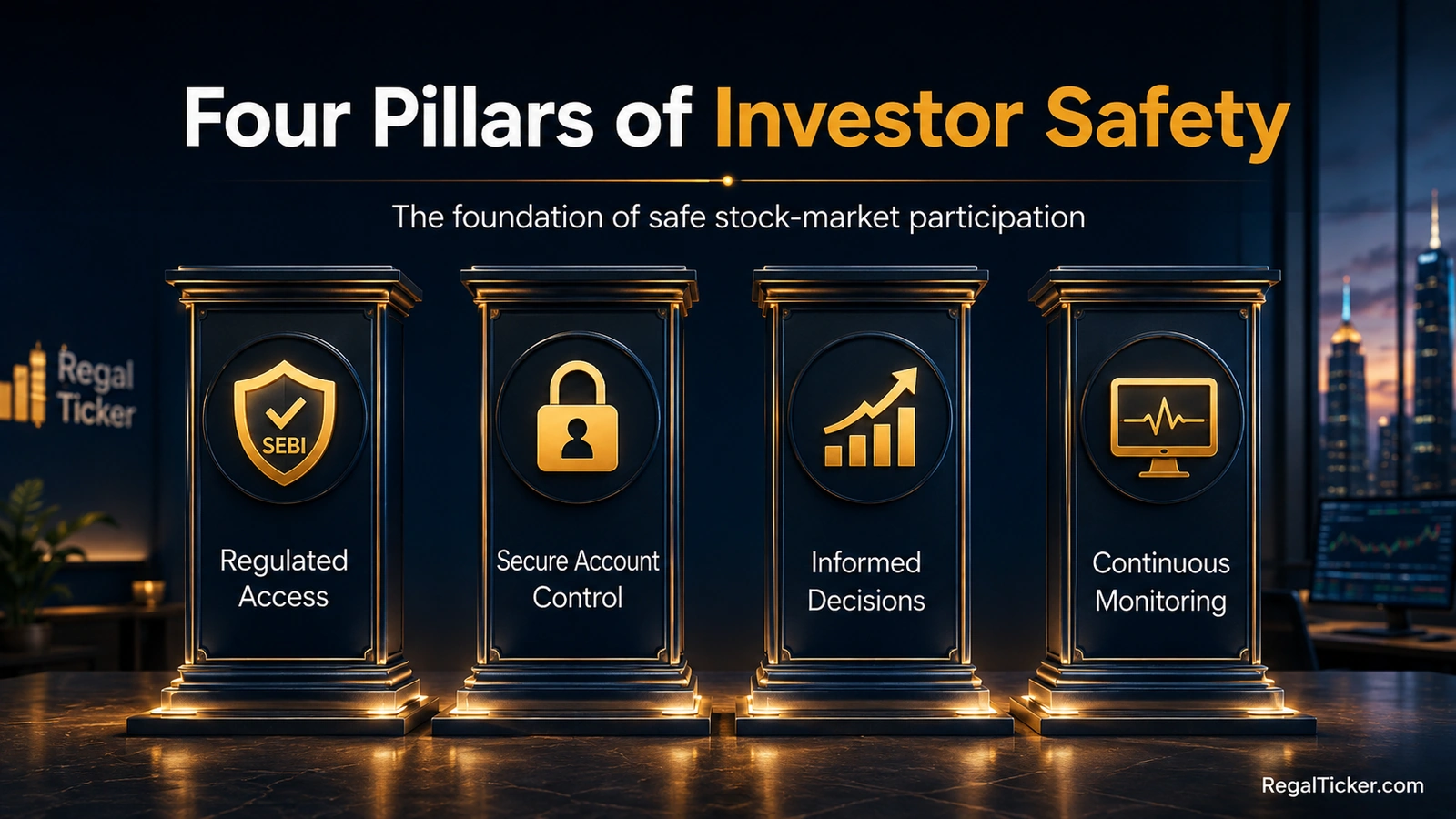
The Four Pillars of Investor Safety
A practical investor-safety framework can be divided into four pillars.
1. Regulated Access
Use only intermediaries and platforms that can be independently verified through official regulatory or exchange sources.
This includes:
- stockbrokers;
- depository participants;
- investment advisers;
- research analysts;
- portfolio managers;
- authorised trading applications.
A company name, logo, office address or social-media following does not prove registration.
2. Secure Account Control
The investor should retain exclusive control over:
- login ID;
- password;
- OTP;
- TPIN;
- registered mobile number;
- registered email account;
- device access.
Even a broker employee or support representative should not need your password or OTP to solve a routine issue.
3. Informed Decision-Making
Before investing, understand:
- what is being purchased;
- how returns may arise;
- what can cause a loss;
- applicable charges;
- liquidity;
- time horizon;
- whether the product matches your risk capacity.
A legitimate professional should be able to explain the product and its risks clearly.
4. Continuous Monitoring
Safety does not end after an account is opened.
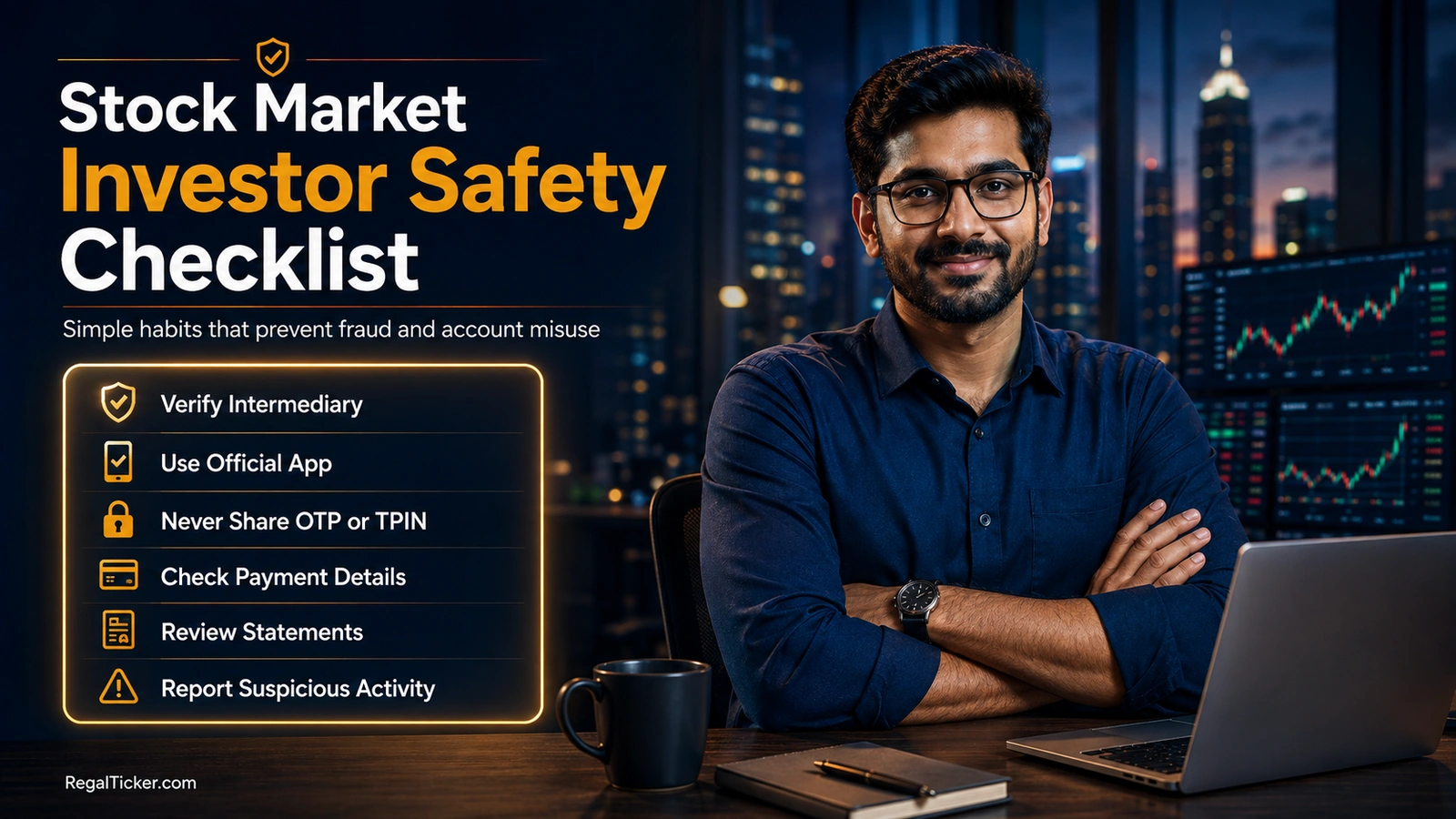
Investors should regularly review:
- exchange SMS and email alerts;
- contract notes;
- demat statements;
- ledger balances;
- pledged securities;
- open positions;
- bank transactions;
- changes to registered details.
Check Whether the Intermediary Is Genuine
The first safety check is to confirm who is offering the service.
Do not rely only on information sent by the person or displayed inside an app. Verify independently through official sources.
Verify Registration
Check whether the broker, adviser, analyst or other intermediary is registered for the service being offered.
Registration for one activity does not automatically authorise every other activity. For example, a person associated with a broking business should not be assumed to be a registered investment adviser.
Verify the Website and Application
Fraudsters may copy:
- brand names;
- logos;
- app designs;
- employee photographs;
- certificates;
- social-media profiles.
Access the official website independently instead of opening links received through unsolicited messages. Compare the domain, support details and authorised application information.
Verify Payment Details
Before transferring money, confirm that the receiving account belongs to the authorised intermediary and is intended for the stated purpose.
Do not transfer investment money to:
- a personal bank account;
- an unrelated company;
- a wallet controlled by an individual;
- an account shared through a chat group without official verification.
Verify the Service Being Promised
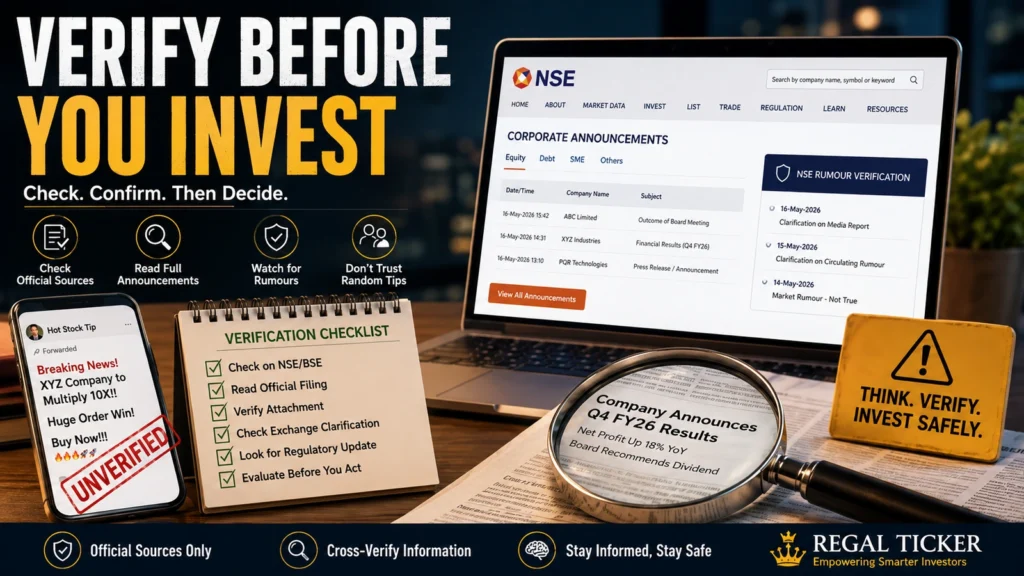
Fixed, guaranteed or regular returns in equity and derivatives should be treated as a serious warning sign. NSE states that assured-return promises in the securities market should not be trusted.
SEBI Investor — How to Spot a Scam https://investor.sebi.gov.in/spot-any-scam.html
NSE India — Do’s and Don’ts for Investors https://www.nseindia.com/static/invest/first-time-investor-fraud-dos-and-donts
Protect Your Demat and Trading Account
Your demat and trading accounts should be protected like online banking accounts.
Use Strong and Unique Passwords
Avoid passwords based on:
- your name;
- date of birth;
- mobile number;
- simple number sequences;
- passwords reused on other websites.
Use a unique password and change it immediately when compromise is suspected.
Never Share OTP, Password or TPIN
Do not share these details with:
- brokers or their employees;
- tip providers;
- customer-support callers;
- screen-sharing technicians;
- friends or relatives trading on your behalf;
- social-media group administrators.
NSE’s investor guidance specifically says not to share login ID, password, OTP or TPIN under any circumstances.
Protect the Registered Mobile Number and Email
Exchange and depository alerts are important safety controls. Keep your contact details updated and secure the connected email account with a strong password and additional authentication where available.
Avoid Unknown Remote-Access Applications
A fraudster may ask you to install a screen-sharing or remote-access application to “activate” an account, complete KYC or resolve a withdrawal problem.
This can expose:
- passwords;
- OTP messages;
- bank information;
- trading activity;
- personal documents.
Lock the Device
Use screen lock, biometric protection and current operating-system updates. Do not leave an active trading session open on a shared or public device.
Verify Every Trade, Balance and Statement
Investors should not depend only on the broker’s app dashboard.
Independent alerts and records help detect discrepancies.
Review Exchange Messages
Check SMS and email notifications relating to trades. If a transaction was not authorised, contact the broker through an official channel immediately and preserve the message.
Read Contract Notes
A contract note records executed trades and associated charges. Review:
- security name;
- quantity;
- price;
- trade date;
- brokerage;
- taxes and other charges.
Check Demat Statements
A demat statement helps verify securities credited, debited or pledged. Periodically compare it with the holdings shown in the trading application.
Review Ledger and Fund Balances
Check whether deposits, withdrawals, charges and settlement entries are correct. Report unexplained entries in writing.
Preserve Evidence
Keep copies of:
- payment confirmations;
- account statements;
- contract notes;
- emails;
- complaint references;
- screenshots;
- chat messages connected to suspicious activity.
Common Warning Signs of an Investment Scam
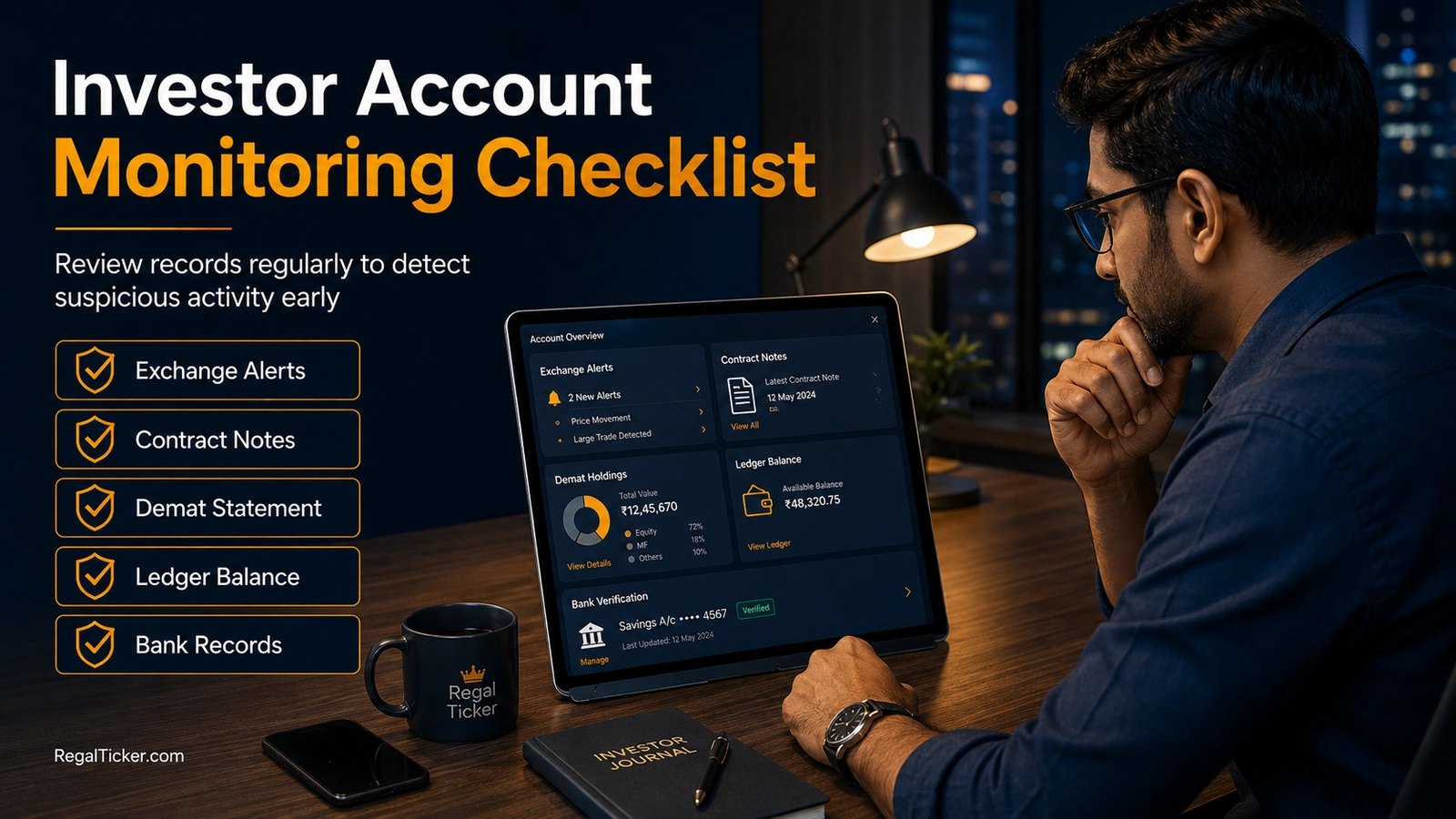
Scams differ in presentation, but many use the same psychological triggers.
Guaranteed or Unusually Consistent Returns
Every market investment carries risk. Claims of assured profit, daily fixed income or near-certain returns should trigger immediate caution.
Pressure to Act Immediately
Fraudsters may say:
- the opportunity closes today;
- only a few positions remain;
- delay will cause a major loss;
- payment must be made before verification.
SEBI advises investors not to make hurried decisions under pressure.
Unregistered or Unverifiable Operator
A polished website or professional-looking social-media page does not establish regulatory status.
Secret or Complex Strategy
Be cautious when promoters claim that profits come from a confidential algorithm, institutional connection or complex method that cannot be explained.
Payment to an Unrelated Account
The requested payment account may belong to an individual, shell entity or unrelated merchant.
Fake Profit Dashboard
A fake application can show fabricated profits while preventing actual withdrawal.
Requests for Additional Money to Release Funds
Fraudsters may demand tax, processing fees, margin, security deposits or account-unfreezing charges before allowing withdrawal.
Social Proof That Cannot Be Verified
Testimonials, screenshots, luxury images and celebrity videos can be manipulated or generated.
Safe Investing Process Before You Buy
Use the following process before making an investment or trade.
Step 1: Define the Investment
Write down what you are buying and why.
Step 2: Verify the Entity
Confirm the intermediary’s registration and official contact details independently.
Step 3: Understand the Product
Review risk, liquidity, charges and possible loss.
Step 4: Verify the Payment Route
Use only the officially authorised payment method and receiving account.
Step 5: Avoid Borrowed Conviction
Do not invest only because a friend, influencer, group administrator or stranger sounds confident.
Step 6: Start With a Controlled Amount
Do not commit a large amount before understanding the platform and product.
Step 7: Preserve Documents
Save KYC records, account-opening documents, contract notes and transaction confirmations.
Step 8: Monitor After Investing
Check alerts, balances, holdings and statements regularly.
Learn how a demat account holds securities: https://regalticker.com/what-is-a-demat-account
Understand the difference between investing and trading accounts: https://regalticker.com/demat-account-vs-trading-account
Learn stock-market risk management: https://regalticker.com/risk-management-in-stock-market
What to Do When You Notice Suspicious Activity
Speed matters when an account or payment may be compromised.
Stop Further Transactions
Do not send additional money, even when someone says it is necessary to recover the original amount.
Change Credentials
Change relevant passwords and secure the registered email and mobile access.
Contact the Intermediary Officially
Use the official website, verified application or published customer-support details. Do not continue communicating only through the number that contacted you.
Inform the Bank or Payment Provider
When money has been transferred fraudulently, report it immediately through official banking channels.
Preserve All Evidence
Do not delete messages, transaction references, account details or screenshots.
Escalate the Complaint
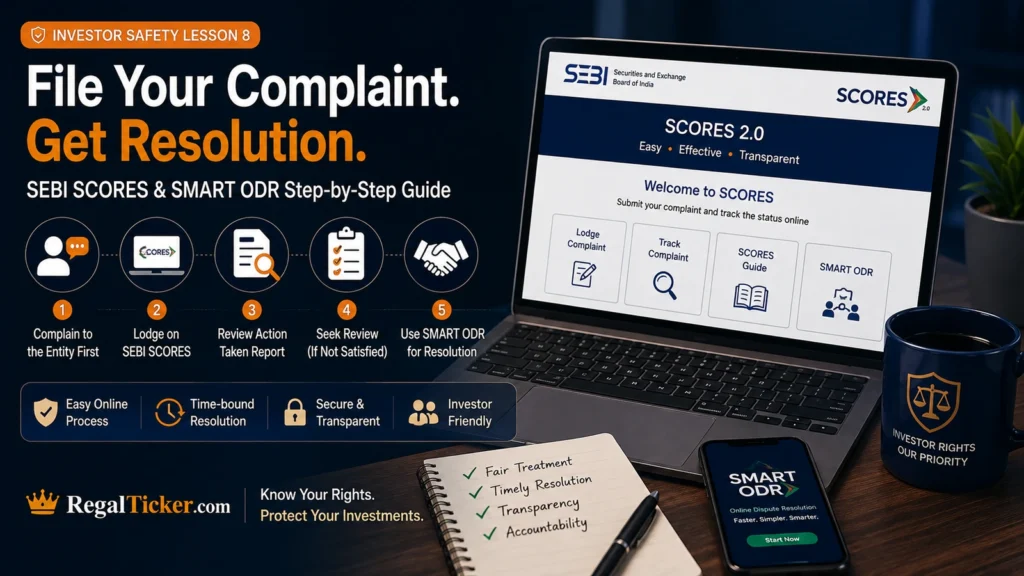
SEBI’s investor-awareness material explains that securities-market complaints should first be taken up with the concerned intermediary or company. If unresolved, the investor may approach the relevant exchange or depository and may then use SEBI’s SCORES grievance-redressal system.
This article provides general educational guidance. The correct authority and process depend on the nature of the incident.
Investor Rights and Responsibilities
Safety improves when investors understand both rights and obligations.
Important investor rights include receiving:
- a unique client code;
- copies of executed KYC and account documents;
- contract notes for trades;
- details of charges;
- funds and securities on time;
- statements of account;
- access to complaint and dispute-resolution mechanisms.
Important responsibilities include:
- providing accurate KYC information;
- understanding voluntary account conditions;
- reading risk disclosures;
- reviewing trades and statements;
- paying settlement obligations on time;
- reporting discrepancies promptly;
- supporting complaints with proper documents.
A complaint is easier to investigate when the investor has retained records and reported the issue without unnecessary delay.
Core Investor Safety Habits
Before using any stock-market service, confirm the following:
- I have independently verified the intermediary.
- I understand what service the entity is registered to provide.
- I am using the official website or authorised application.
- I am not relying on guaranteed-return promises.
- I know where my money is being transferred.
- I have not shared my password, OTP or TPIN.
- My registered mobile number and email are current.
- My device and email account are secured.
- I review exchange alerts and contract notes.
- I compare demat holdings and trading records.
- I understand the investment risk and charges.
- I preserve transaction and complaint records.
- I know how to contact the intermediary officially.
- I will stop and verify whenever pressure or urgency is created.
Final Takeaway
Investor safety is not a one-time verification. It is a continuous process of using regulated channels, securing accounts, understanding risks and checking every transaction.
The most important habits are simple:
- verify before trusting;
- understand before investing;
- protect all credentials;
- review every alert and statement;
- preserve documents;
- report suspicious activity quickly.
No safety practice can eliminate normal market losses. However, disciplined checks can significantly reduce exposure to fraud, unauthorised activity and preventable operational mistakes.
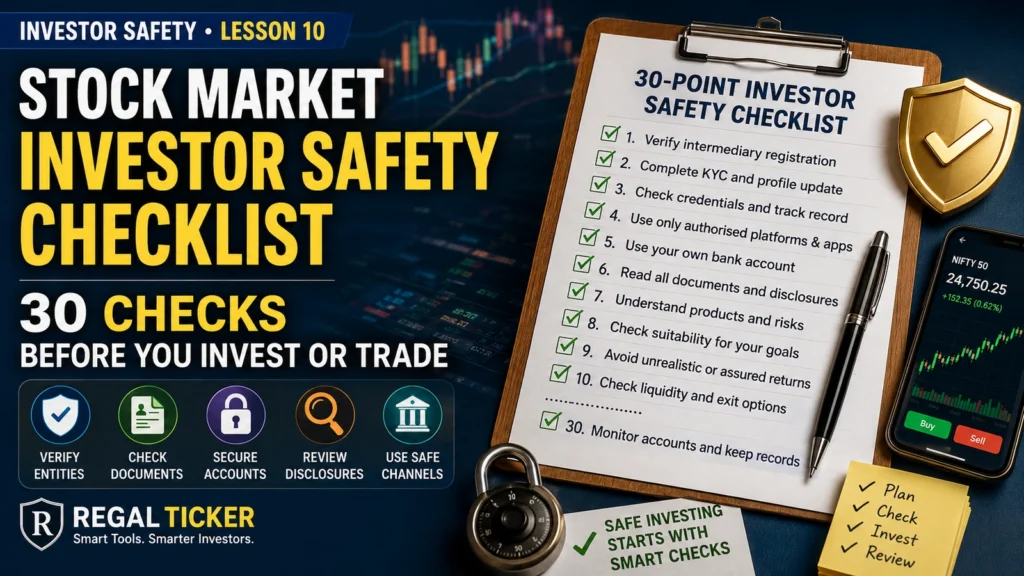
For a complete pre-investment process, use our 30-point Stock Market Investor Safety Checklist.
Explore all Regal Ticker Investor Tools before investing:
- Risk–Reward Calculator
- Stock Return Calculator
- Dividend Calculator
- CAGR Calculator
- Stock Average Calculator
Frequently asked questions
What is investor safety in the stock market?
Investor safety means protecting money, securities, personal information and investment accounts through regulated intermediaries, secure credentials, informed decisions and regular monitoring.
Does investor safety guarantee that I will not lose money?
No. Investor safety reduces fraud, account-security and operational risks. It does not remove market risk or guarantee investment returns.
How can I check whether a broker is genuine?
Verify the broker’s regulatory and exchange details independently through official sources. Do not rely only on links, screenshots or registration claims provided by the broker.
Can a broker employee ask for my OTP or TPIN?
Investors should not share login IDs, passwords, OTPs or TPINs. These credentials can authorise access or transactions and should remain confidential.
Are guaranteed stock-market returns genuine?
Guaranteed, fixed or near-certain return claims in equity and derivatives are major warning signs. Securities-market investments carry risk.
Why should I check contract notes?
Contract notes help verify the security, quantity, price, charges and trade details recorded for executed transactions.
What should I do after noticing an unauthorised trade?
Contact the intermediary immediately through an official channel, secure account credentials, preserve records and escalate the complaint through the applicable mechanism.
Is a popular social-media trader automatically trustworthy?
No. Followers, testimonials and professional presentation do not prove registration, competence or legitimacy.
Verify through official sources
Official references
- 1. Securities and Exchange Board of India — SEBI Investor: How to Spot a Scam
- investor.sebi.gov.in/spot-any-scam.html
- 2. Securities and Exchange Board of India — Staying Away from Investment Frauds and Get Rich Quick Schemes
- investor.sebi.gov.in/beware-of-investment.html
- 3. National Stock Exchange of India — Do’s and Don’ts for Investors
- www.nseindia.com/static/invest/first-time-investor-fraud-dos-and-donts
- 4. National Stock Exchange of India — Be a Smart Investor
- www.nseindia.com/static/invest/be-a-smart-investor
- 5. National Stock Exchange of India — Know Your Rights and Responsibilities
- www.nseindia.com/static/invest/first-time-investor-know-your-rights
Educational disclaimer: This article is for education and general information only. It does not provide investment, legal, tax, cybersecurity or financial advice. Stock-market investments are subject to market risk. Verify intermediaries, applications, payment details and regulatory information independently through official sources before acting. Complaint and fraud-reporting procedures may vary depending on the facts and authority involved.