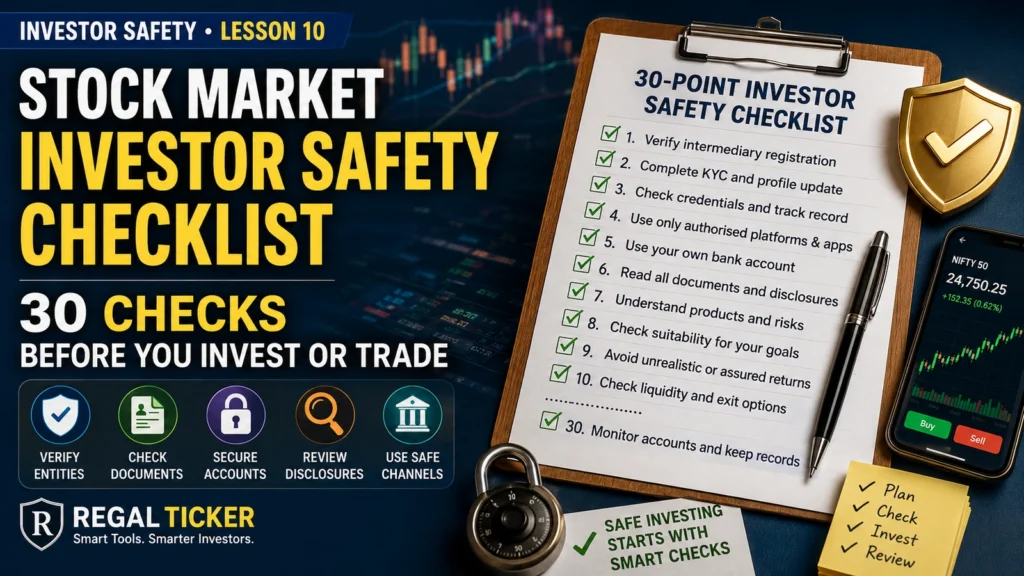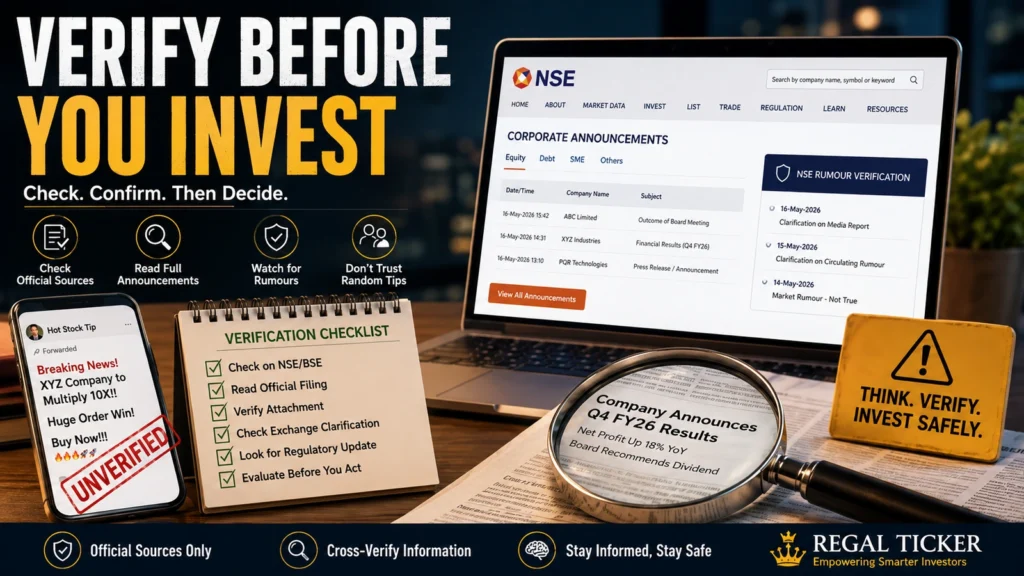


⚡ Quick answer
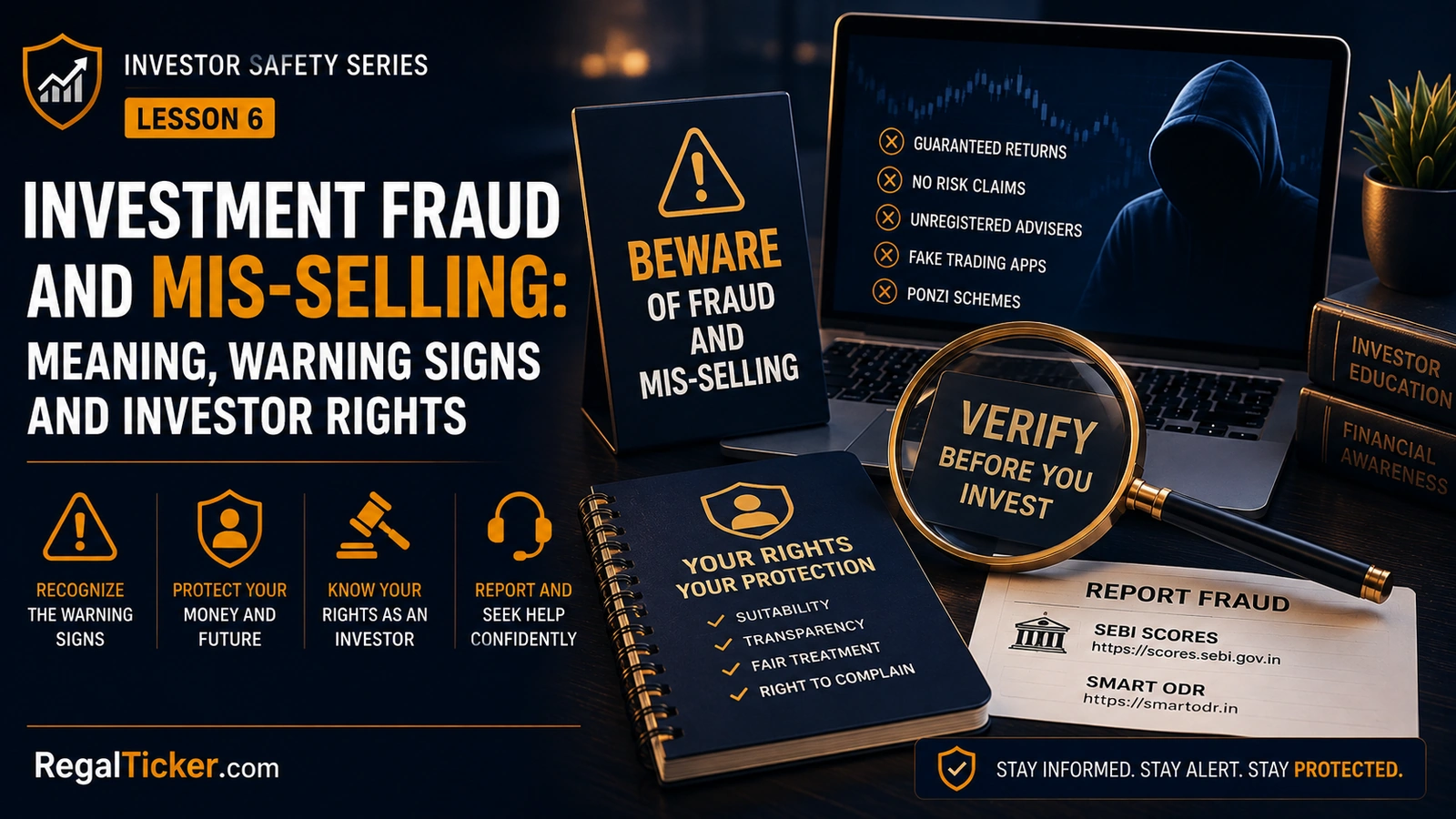
Investment fraud involves deception intended to obtain money, account access or an unfair financial benefit. Investment mis-selling occurs when a security, strategy or financial service is sold through false or misleading statements, omission of important facts or risks, unsuitable recommendations, hidden charges or pressure that prevents an informed decision.
An investment may be genuine and still be mis-sold. For example, a high-risk derivatives service may be legal, but selling it to a conservative beginner without proper risk profiling, while promising loss recovery, can be unsuitable and misleading.
What Are Investment Fraud and Mis-Selling?
Investment fraud and mis-selling both damage investor decision-making, but they are not always identical.
Fraud generally involves intentional deception. The offer, platform, performance, identity or transaction may be fabricated.
Mis-selling can involve a genuine intermediary, genuine security or genuine service that is presented unfairly or sold to the wrong investor.
SEBI enforcement materials describe securities-market mis-selling in terms that include knowingly making false or misleading statements, concealing material facts or associated risks, or failing to take reasonable care to ensure suitability for the buyer.
Mis-selling can occur through:
- a broker representative;
- investment adviser;
- research analyst;
- distributor;
- social-media promoter;
- course seller;
- referral partner;
- unregistered tip provider;
- fraudulent impersonator.
This lesson follows How to Verify a SEBI-Registered Intermediary, because regulatory registration is the first check—but not the final suitability or conduct check.
Investment Fraud vs Investment Mis-Selling
The difference is easier to understand through examples.
Investment Fraud
Fraud may involve:
- a fake trading application;
- a fabricated portfolio balance;
- an impersonated broker;
- forged documents;
- a Ponzi or deposit-taking scheme;
- diversion of investor money;
- false claims that trades were executed;
- stolen login credentials.
The product or transaction may not exist at all.
Investment Mis-Selling
Mis-selling may involve:
- a real investment sold with false return claims;
- a high-risk service recommended to a low-risk client;
- important charges omitted during the sales discussion;
- risks hidden while benefits are exaggerated;
- automatic upgrading to a more expensive service;
- a recommendation designed mainly to generate commission;
- a loss-recovery plan that increases the investor’s risk.
The investment can exist, but the sales process may prevent an informed and suitable decision.
Overlap Between the Two
Fraud and mis-selling can overlap.
A registered entity may make misleading promises. An unregistered operator may copy genuine product documents. A salesperson may conceal risk to earn a fee, while a fake platform fabricates the performance.
The investor should therefore verify both:
- whether the entity and product are genuine; and
- whether the recommendation is fair, transparent and suitable.
How Investment Mis-Selling Happens
Mis-selling usually exploits information imbalance. The seller understands the product, fees or risks better than the buyer.
Benefits Are Emphasised, Risks Are Minimized
The seller discusses potential profit repeatedly but treats loss as unlikely or temporary.
Complex Language Replaces Clear Explanation
The investor may be told that an algorithm, institutional system or proprietary strategy creates an advantage that cannot be explained fully.
Urgency Reduces Due Diligence
The offer is described as limited, time-sensitive or available only to selected investors.
Previous Losses Are Used as Leverage
An investor who has already lost money may be offered a higher-risk service to recover the loss quickly.
Fees Influence the Recommendation
A seller may recommend the product that pays the highest fee rather than the one best suited to the investor.
Consent Is Treated as a Formality
Documents may be signed quickly without explaining risk, fees, lock-ins, liquidity or exit conditions.
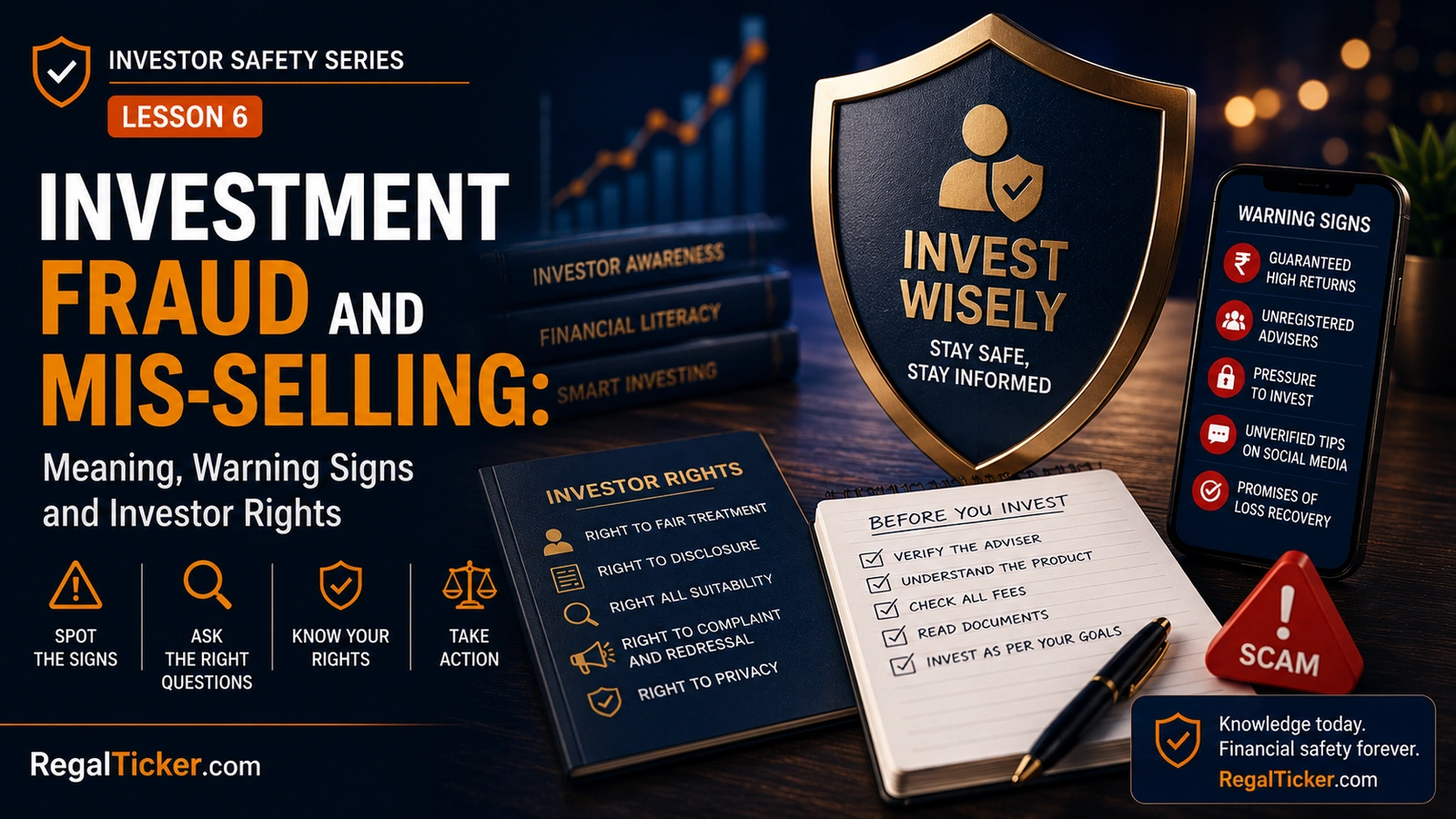
Common Mis-Selling Warning Signs
Several warning signs often appear together.
Guaranteed or Assured Returns
SEBI investor guidance states that securities-market investments carry risk and that guaranteed or near-certain returns should raise suspicion.
Use the Regal Ticker Stock Return Calculator to convert a promised rupee gain into a percentage return.
For multi-year projections, use the CAGR Calculator to calculate the annual growth rate being implied.
Loss-Recovery Promises
A seller may say that a new service, derivatives strategy or larger account will recover previous losses.
This can increase exposure precisely when the investor is financially and emotionally vulnerable.
High Fees Before Service Begins
Large upfront charges can create pressure to continue even when the service is unsuitable.
Hidden or Incomplete Charges
The investor may not be told about:
- advisory fees;
- brokerage;
- platform charges;
- subscription renewals;
- exit costs;
- taxes;
- performance-linked charges;
- referral commissions.
Automatic Upgrade to a Higher-Risk Plan
A basic service may be replaced with options, futures or intraday calls without a fresh suitability assessment and clear consent.
Only Profitable Examples Are Shown
The seller highlights successful calls while hiding losing recommendations, drawdowns or total client outcomes.
Refusal to Provide Written Documents
A verbal promise that disappears from the agreement or invoice should not be relied upon.
Suitability and Risk Profiling
A recommendation should fit the investor—not merely exist in the market. The position-sizing and loss-control principles in Risk Management in the Stock Market can help investors judge whether the proposed exposure is financially manageable.
SEBI’s updated Investor Charter for investment advisers emphasises proper and unbiased risk profiling and suitability assessment.
Financial Goals
The product should relate to an identifiable goal rather than a vague desire for maximum returns.
Time Horizon
Money needed soon should not automatically be placed in a volatile or illiquid strategy.
Capacity to Bear Loss
The investor’s financial ability to absorb loss differs from emotional willingness to take risk.
Knowledge and Experience
A beginner may not understand leverage, margin calls, option decay or circuit-related liquidity risk.
Existing Obligations
Debt, emergency savings, insurance needs and dependent-family responsibilities affect suitability.
Product Complexity
A complex product should not be sold merely because the investor signs a standard risk disclosure.
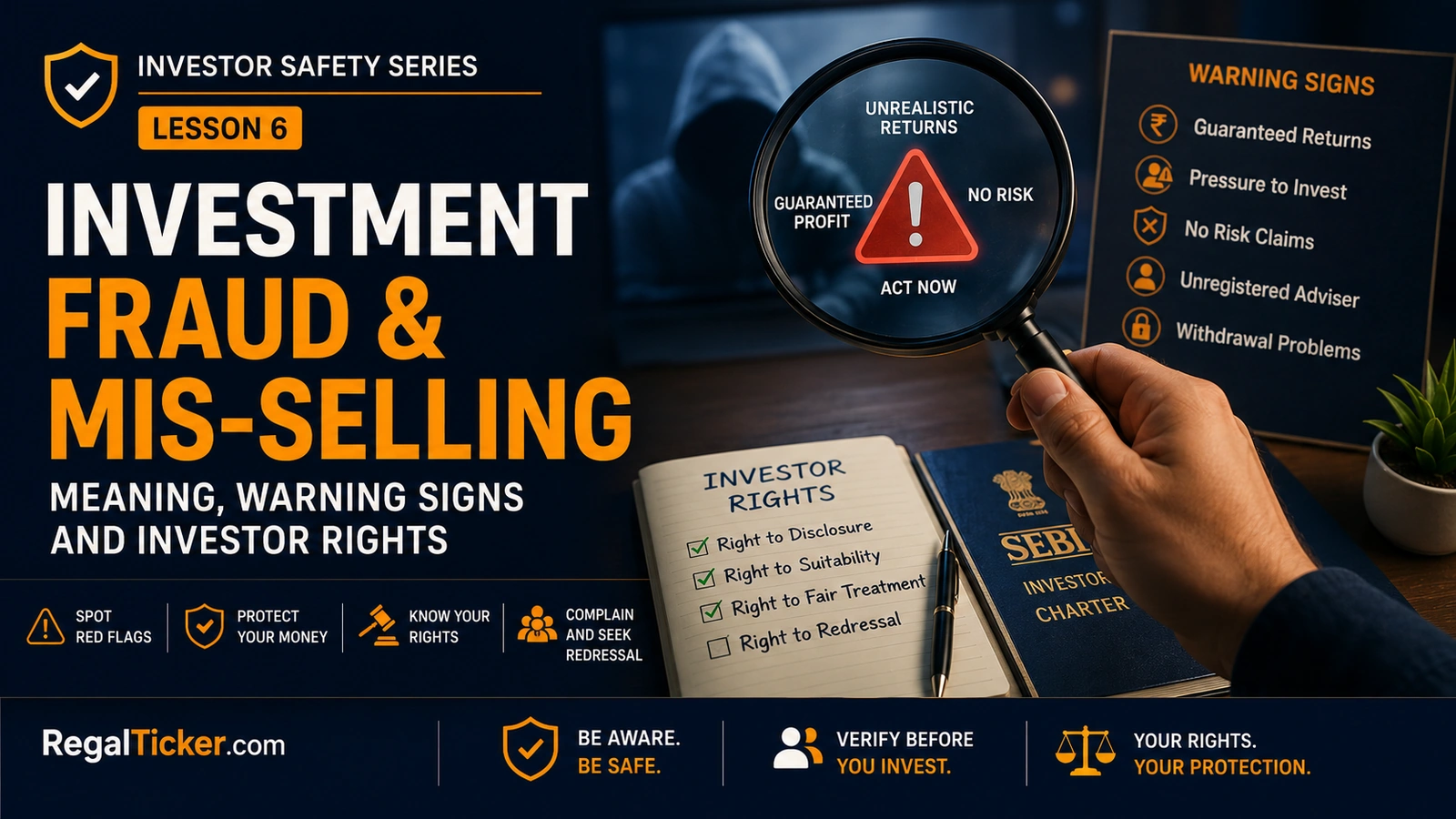
Suitability Example
Assume an investor:
- is 58 years old;
- needs the money within two years;
- has no derivatives experience;
- depends on the capital for essential expenses;
- says that a 15% loss would create financial stress.
The seller recommends an options-trading service and says losses can be recovered through larger positions.
Even if the service is offered by a genuine entity, the recommendation may be unsuitable because the investor’s horizon, experience and loss capacity do not match the product risk.
The Risk–Reward Calculator can help analyse a trade’s entry, target and stop-loss, but a favourable ratio does not make a leveraged strategy suitable for every investor.
Misleading Return Projections
Return projections are often used to make a service appear safer or more certain than it is.
Large Future Values Without Assumptions
A projection should disclose the assumed return, contribution period and uncertainty.
If someone claims that a monthly contribution can become a very large corpus, use the SIP Calculator to test the assumption independently.
Past Performance Presented as a Promise
Historical performance does not guarantee future results.
Ask whether the displayed performance:
- is audited;
- includes all calls;
- includes fees and taxes;
- reflects actual client outcomes;
- covers losing periods;
- uses realistic execution prices.
Daily or Monthly Fixed Income Claims
Markets do not produce uniform returns on command.
Perfectly consistent profits may indicate selective reporting, hidden risk or fabrication.
Fees, Commissions and Conflicts of Interest
The investor should understand how the seller is paid.
Direct Fee
An adviser may charge the client directly for advice.
Brokerage or Transaction Income
A recommendation that encourages frequent trading may increase transaction revenue.
Referral Commission
A promoter may earn money when followers open accounts, subscribe to services or buy products.
Product-Linked Compensation
The seller may receive higher compensation from one product than another.
Performance-Sharing Claim
An unregistered operator may ask for a share of profit while refusing to share losses.
A conflict does not automatically prove misconduct, but undisclosed compensation can influence the recommendation.
Ask for written disclosure of:
- total fees;
- payment schedule;
- refund conditions;
- commissions;
- related-party relationships;
- conflicts of interest.
“Stock Market Guru” and Course Mis-Selling
Some promoters begin with educational content and later sell advisory services, paid groups or account-handling arrangements.
SEBI Investor’s “Stock Market Guru” scam material warns about:
- self-promotion through selected profitable trades;
- exclusive courses promising high returns;
- private groups selling insider-style tips;
- misleading guaranteed-profit claims;
- hidden referral income;
- disappearance after collecting fees.
Education becomes risky when the promoter:
- gives personalised advice without appropriate registration;
- guarantees results;
- conceals referral income;
- asks for investment capital;
- requests account credentials;
- presents a course as a loss-recovery system.
Read Fake Trading Apps and Telegram Stock Tips before joining a private investment group.
Documents, Investor Rights and Responsibilities
Proper documentation helps the investor understand the service and preserve evidence.
Depending on the intermediary and service, review:
- registration details;
- agreement;
- fee schedule;
- risk-profiling questionnaire;
- suitability assessment;
- research report;
- conflict disclosures;
- invoice or receipt;
- refund policy;
- complaint mechanism;
- investor charter;
- transaction records.
Do not sign blank forms or documents that contain information you do not understand.
Preserve the version of the advertisement or sales message that influenced the purchase. The final agreement may not include the promises used during the sale.
How to Evaluate an Investment Offer
Use a structured review before paying.
Verify the Seller
Check registration and identity independently.
Define the Product or Service
Write down exactly what you are purchasing.
Identify the Risk
Ask how and how much you can lose.
Test the Return Claim
Calculate the implied percentage and annualised return.
Review Suitability
Compare the product with your goals, horizon, knowledge and loss capacity.
Calculate the Total Cost
Include fees, brokerage, taxes, subscriptions and exit costs.
Review Conflicts
Ask how the seller, promoter or platform earns money.
Demand Written Documentation
Verbal assurances should not replace formal disclosure.
Delay the Decision
A suitable investment should survive a reasonable verification period.
The Regal Ticker Investor Tools hub contains calculators for testing return, compounding and trade-risk assumptions.
Investor Rights When Taking Advice
SEBI’s investment-adviser Investor Charter lists rights that include:
- privacy and confidentiality;
- transparent practices;
- fair and equitable treatment;
- adequate information;
- statutory and continuing disclosures;
- fair and true advertising;
- awareness of service standards;
- grievance redressal;
- protection from coercive and unfair clauses.
These rights support an informed decision, but investors also have responsibilities.
Investors should:
- deal with registered entities;
- provide accurate information for risk profiling;
- read agreements and disclosures;
- pay through banking channels;
- keep receipts;
- report discrepancies promptly;
- avoid sharing passwords, OTPs and TPINs.
What to Do After Suspected Mis-Selling
Stop Additional Payments
Do not buy a more expensive service merely because the seller promises recovery.
Preserve Evidence
Keep:
- advertisements;
- call recordings where lawfully available;
- messages;
- emails;
- agreements;
- invoices;
- bank records;
- performance screenshots;
- risk-profile documents;
- complaint references.
Write to the Entity
Describe the misleading statement, omitted risk, unsuitable recommendation or disputed charge clearly.
Ask for the Relevant Records
Request the agreement, suitability assessment, fee details, research report and complaint procedure.
Secure Accounts
Change credentials if the seller received account or device access.
Separate Market Loss From Conduct Complaint
A falling investment price does not automatically prove mis-selling. The complaint should focus on misleading conduct, hidden information, suitability, unauthorised activity or contractual failure.
Complaint and Dispute Resolution
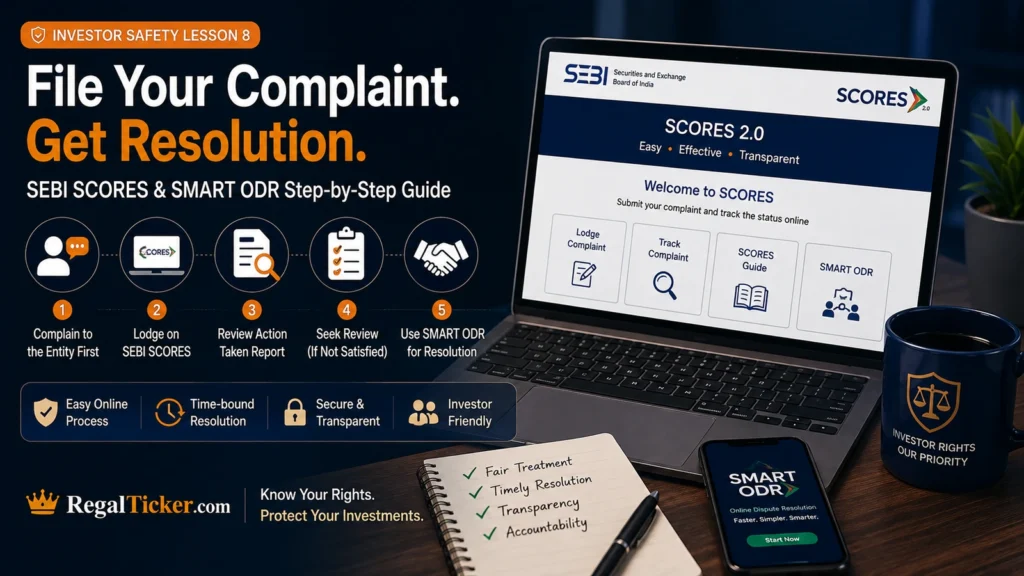
For complaints against a listed company or SEBI-registered intermediary, SEBI Investor advises approaching the concerned entity first.
If the complaint remains unresolved, investors may use the SEBI SCORES grievance system.
SEBI Investor also describes SMART ODR as an online dispute-resolution framework available for disputes involving specified securities-market intermediaries and regulated entities.
The appropriate route depends on:
- the entity involved;
- whether it is registered;
- the nature of the complaint;
- whether fraud, cybercrime or a service dispute is alleged.
Fraud involving an unregistered platform may also require bank, payment-provider, police or cybercrime reporting.
Investment Mis-Selling Checklist
Before accepting an investment product, advisory service or paid recommendation, confirm:
- The seller’s identity is verified.
- The registration category matches the service.
- The product or service is described clearly.
- Risks are explained as clearly as benefits.
- No assured return is promised.
- My goals and time horizon were considered.
- My loss capacity was assessed.
- Fees and commissions are disclosed.
- Conflicts of interest are disclosed.
- Past performance is not presented as a guarantee.
- The payment account is verified.
- I received the agreement and relevant disclosures.
- I understand the cancellation or refund terms.
- I am not being pressured to act immediately.
- I am not being sold a higher-risk service to recover losses.
- I know where and how to complain.
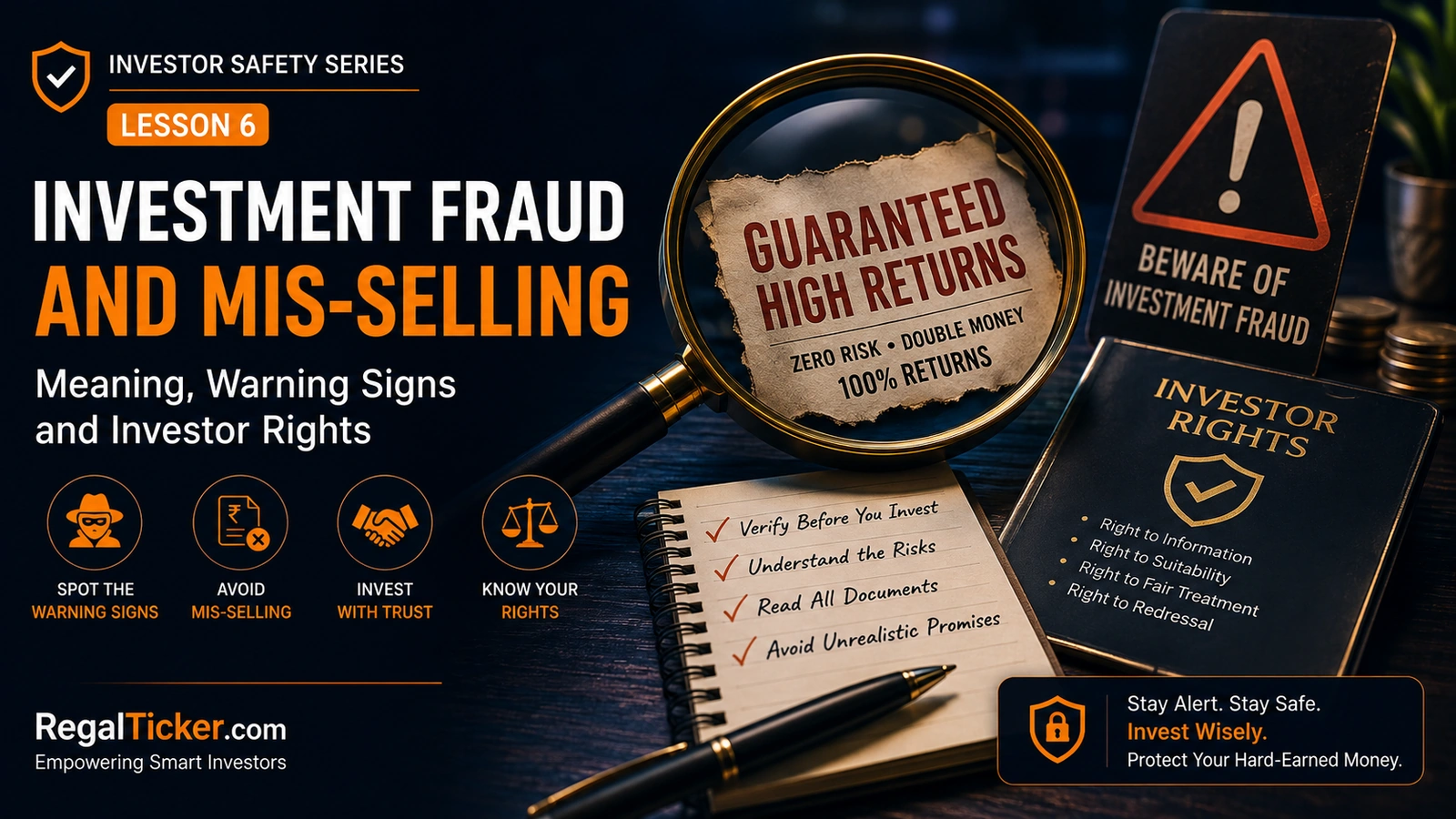
Final Takeaway
Investment fraud and mis-selling both interfere with informed investor choice.
Fraud may fabricate the opportunity. Mis-selling may take a genuine product or service and sell it through misleading claims, hidden risks, unsuitable advice or undisclosed incentives.
The strongest protection is to verify five things:
- the seller;
- the product or service;
- the suitability;
- the total cost and conflicts;
- the documentation and complaint route.
Registration is important, but registration alone does not prove that every recommendation is suitable or fairly sold.
Frequently asked questions
What is investment mis-selling?
Investment mis-selling occurs when a security or financial service is sold through misleading statements, omitted risks, hidden charges, unsuitable recommendations or inadequate care for the buyer’s circumstances.
Is mis-selling the same as investment fraud?
Not always. Fraud usually involves deliberate deception, while mis-selling can also involve a genuine product sold unfairly or without considering suitability. The two can overlap.
Can a SEBI-registered entity mis-sell a service?
Registration confirms regulatory status for an activity. It does not guarantee that every sales practice or recommendation is fair, suitable or compliant.
Is promising to recover trading losses a warning sign?
Yes. Loss-recovery promises may be used to sell a higher-risk or more expensive service when the investor is vulnerable.
Why is risk profiling important?
Risk profiling helps match the recommendation with the investor’s goals, knowledge, time horizon and capacity to bear loss.
Are high advisory fees proof of mis-selling?
Not by themselves. The concern increases when fees are hidden, disproportionate, pressured, linked to false promises or attached to an unsuitable service.
What evidence should I preserve after suspected mis-selling?
Preserve advertisements, messages, emails, agreements, invoices, payment records, risk-profile documents, performance claims and complaint references.
Where can I complain about a SEBI-registered intermediary?
First approach the intermediary. If the issue remains unresolved, eligible complaints may be lodged through SEBI SCORES, with SMART ODR available for applicable disputes.
Verify through official sources
Official references
- 1. SEBI Investor — Staying Away from Investment Frauds and Get Rich Quick Schemes (https://investor.sebi.gov.in/beware-of-investment.html)
- 2. SEBI Investor — How to Spot a Scam https://investor.sebi.gov.in/spot-any-scam.html
- 3. SEBI Investor — Caution Against Unregistered Investment Advisers and Mis-Selling https://investor.sebi.gov.in/cautiontoinvestor.html
- 4. SEBI — Updated Investor Charter for Investment Advisers, June 2025 https://www.sebi.gov.in/sebi_data/attachdocs/jun-2025/1748863758785.pdf
- 5. SEBI Investor — Investor Charter for Research Analysts https://investor.sebi.gov.in/pdf/investor-charter/Registered%20Research%20Analysts.pdf
- 6. SEBI Investor — Stock Market Guru Scams https://investor.sebi.gov.in/pdf/Stock%20Market%20Guru%20Scams%20final.pdf
- 7. SEBI Investor — Grievance Redressal Through SCORES https://investor.sebi.gov.in/securities-resolvedispute.html
- 8. SEBI Investor — SMART ODR https://investor.sebi.gov.in/smart_orr.html
- 9. SEBI Enforcement Order Discussing Securities-Market Mis-Selling, August 2025 https://www.sebi.gov.in/sebi_data/attachdocs/aug-2025/1754993102763_1.pdf
Educational disclaimer: This article is for education and general information only. It does not provide investment, legal, regulatory or financial advice. Whether particular conduct amounts to fraud, mis-selling or a regulatory violation depends on the facts and applicable law. Verify entities, products, fees, risk disclosures and complaint procedures through current official sources before acting.