
A trade appears instantly on a screen, but the legal and operational exchange of money and securities occurs through settlement.
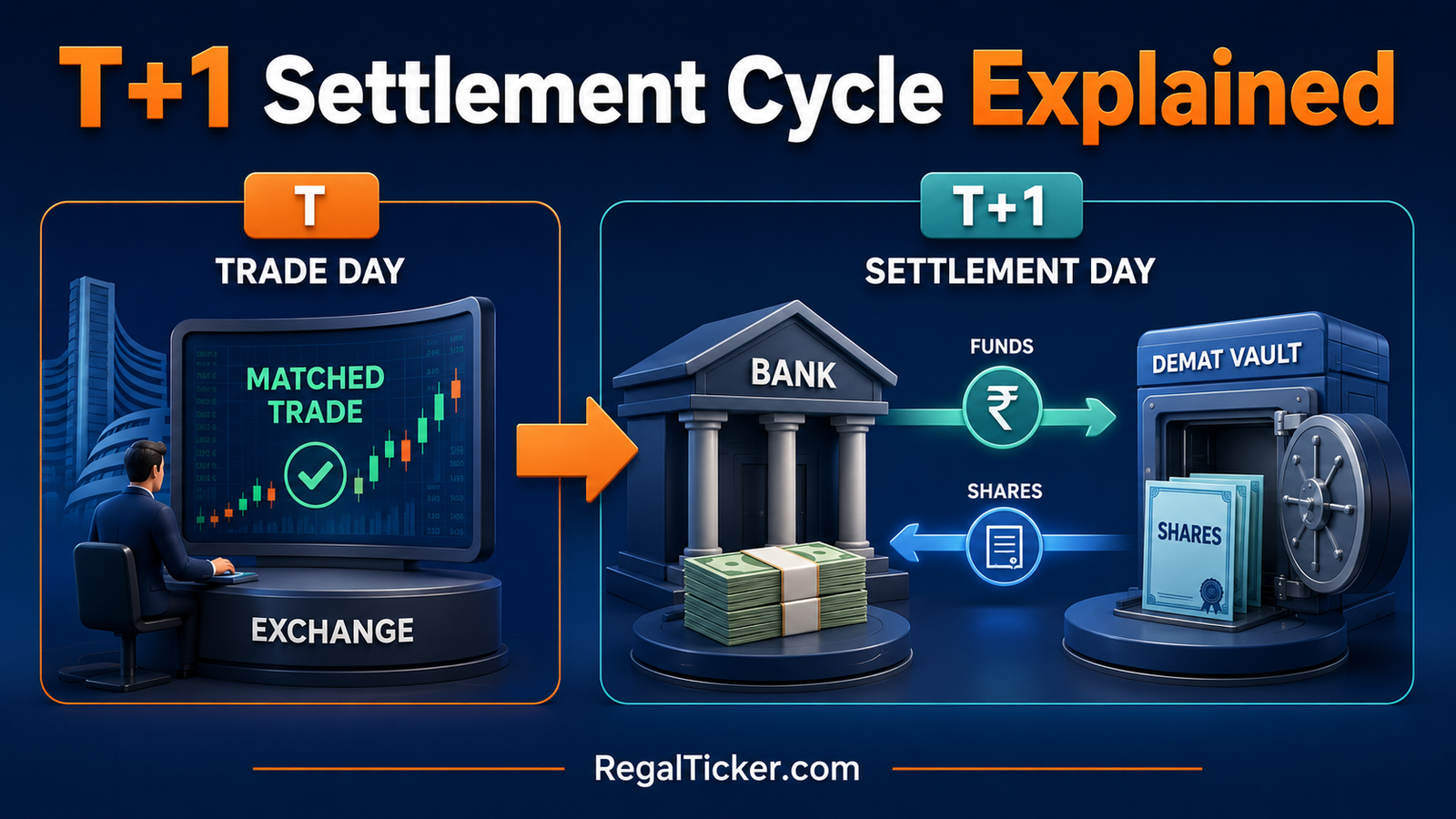
In India’s equity cash market, the standard rolling cycle is commonly T+1: a trade executed on day T is scheduled to settle on the next working day, T+1. The buyer’s funds obligation and the seller’s securities obligation are processed through brokers, clearing corporations, clearing members, banks and depositories.
Understanding this process explains why a completed order, an available balance and a settled Demat holding are not always the same thing.
What Is Trade Settlement?
Trade settlement is the process through which the buyer pays for securities and receives them, while the seller delivers securities and receives the sale proceeds.
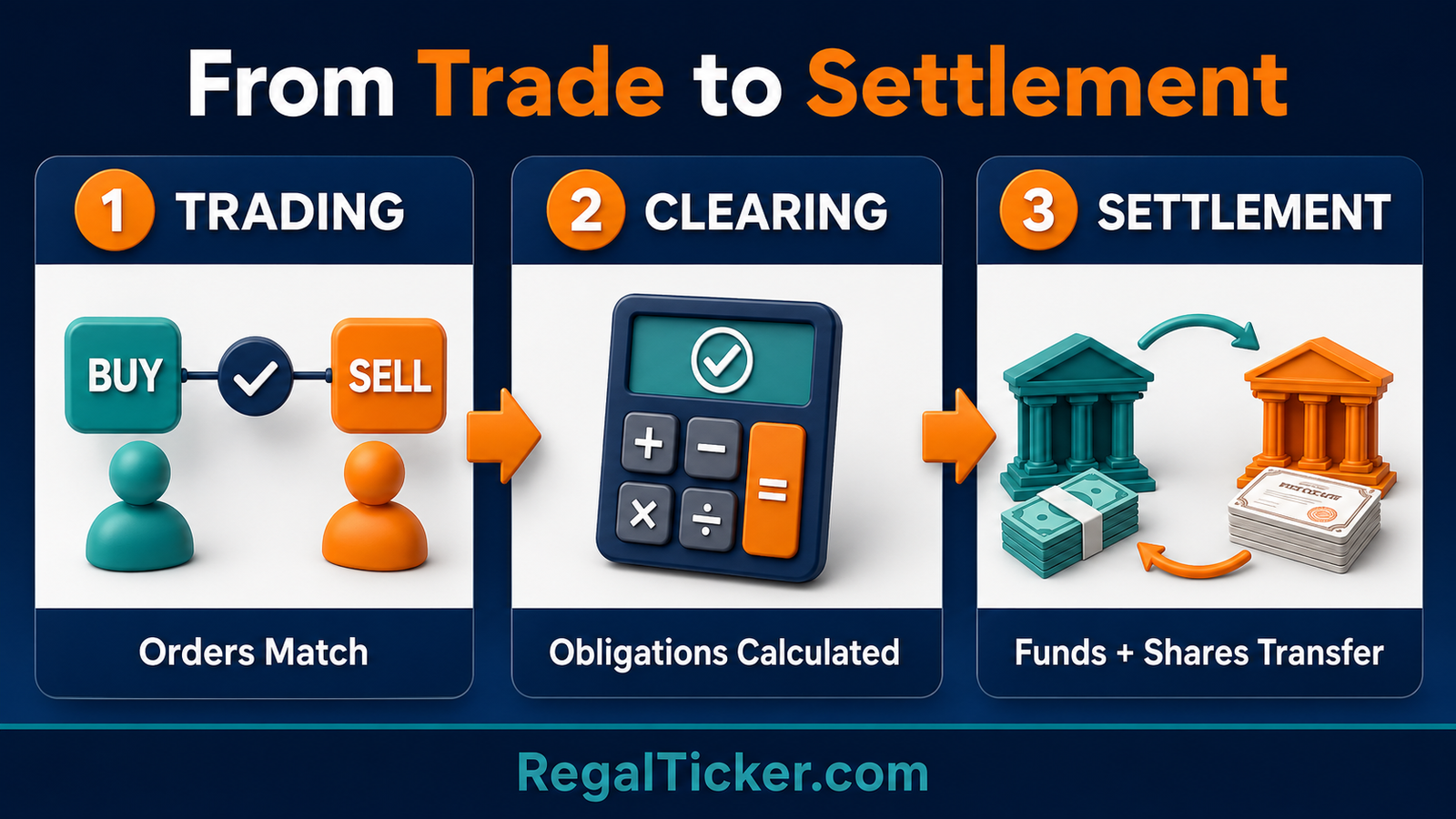
Trading and settlement are related but distinct:
- Trading creates a matched transaction on the exchange.
- Clearing calculates the obligations of participants.
- Settlement completes the transfer of funds and securities.
If you need the account foundation first, read Demat Account vs Trading Account vs Bank Account. The trading account places the order, the bank account supports funds movement and the Demat account holds securities electronically.
What Do T and T+1 Mean?
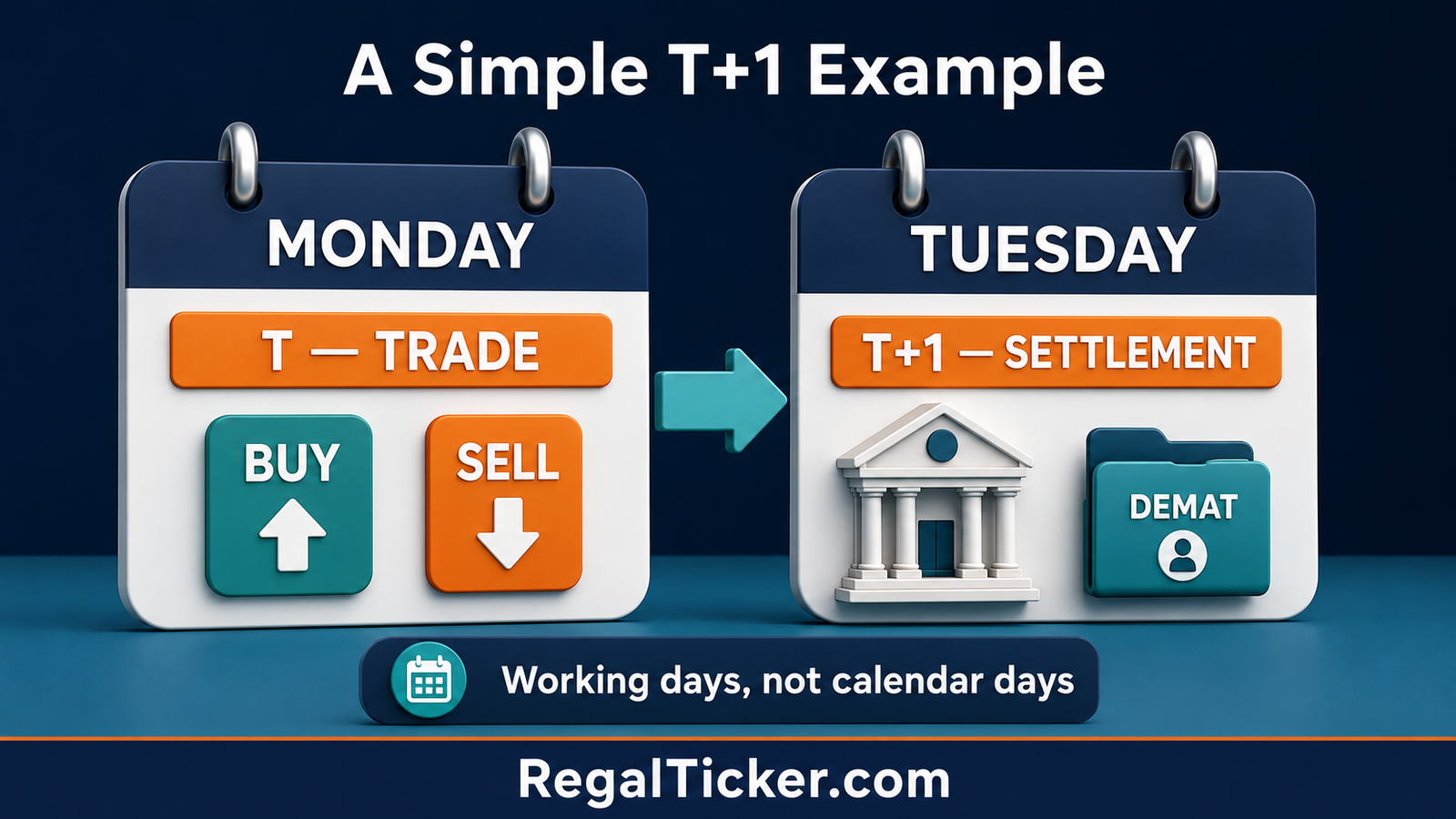
T means trade date—the working day on which the buy and sell orders match.
T+1 means the next settlement working day. It is not necessarily the next calendar day because exchange settlement holidays and weekends matter.
For a simple illustration:
- Monday: trade executed (T)
- Tuesday: scheduled settlement (T+1)
If Monday’s trade is followed by a settlement holiday on Tuesday, settlement moves according to the exchange’s official calendar. Do not calculate solely by adding 24 hours.
A Simple T+1 Example
Suppose Asha buys 10 shares of a listed company at ₹500 each on Monday, while Ravi sells 10 shares at the matching price.
On Monday: Trade Date
The exchange matches their orders. Asha has a purchase obligation and Ravi has a delivery obligation. Their brokers issue contract notes containing transaction and charge details.
On Tuesday: Settlement Date
Subject to the applicable timetable, the clearing and settlement system processes funds and securities:
- Funds are collected against the buyer-side obligation.
- The seller-side securities are delivered into the clearing process.
- Securities are paid out toward the buyer.
- Funds are paid out toward the seller.
Asha’s broker and depository participant reflect the share credit according to their process. Ravi’s sale proceeds become available according to the broker’s withdrawal and funds policy.
The visible timing in an app can differ from the clearing corporation’s underlying pay-out time. A balance labelled “available to trade” may not always be immediately withdrawable.
Who Is Involved in Settlement?
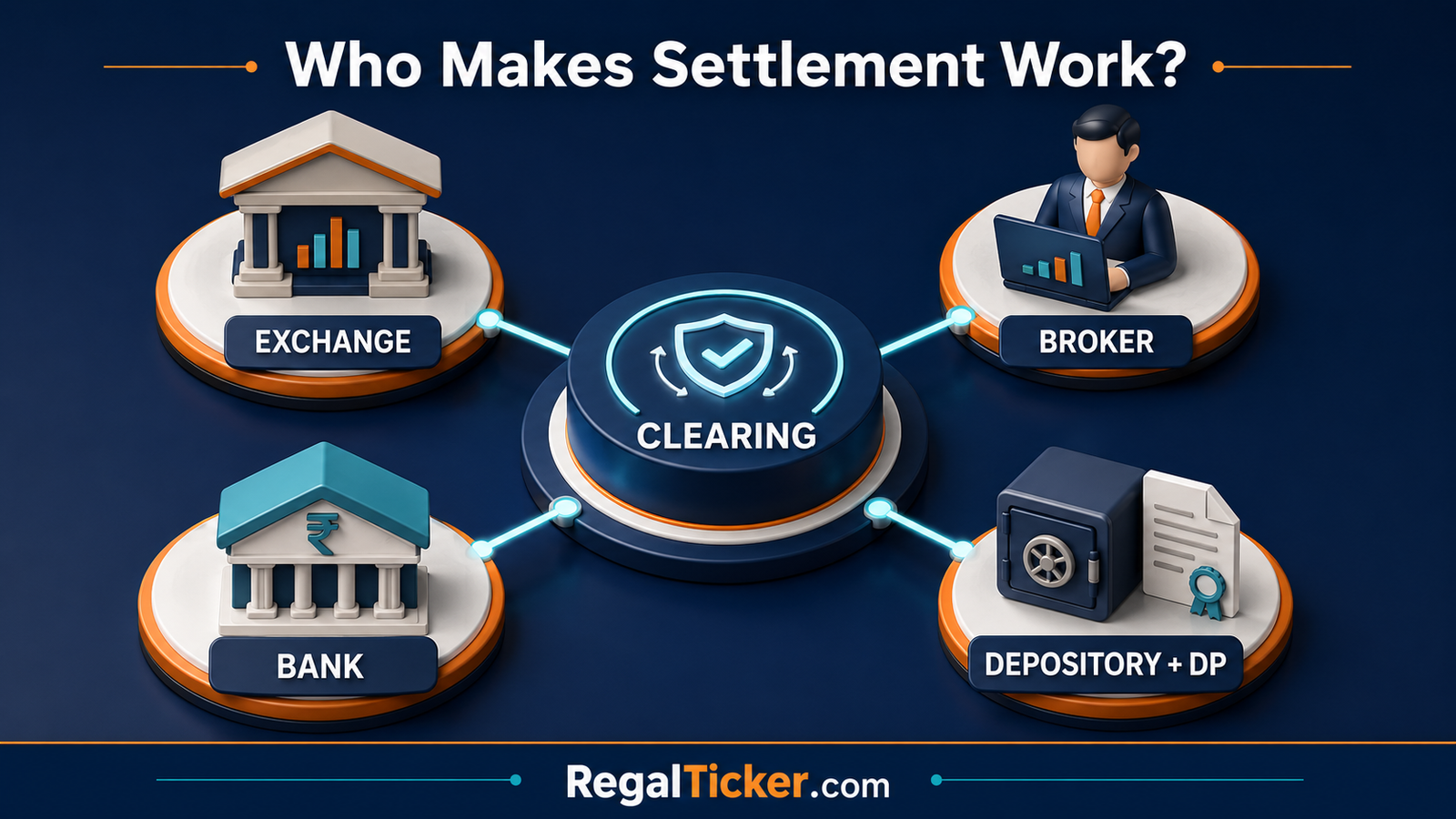
Stock exchange
The exchange provides the trading platform on which orders are matched.
Clearing corporation
The clearing corporation determines obligations, manages clearing and coordinates settlement. It also applies risk-management and default-handling mechanisms under the regulatory framework.
Stock broker and clearing member
The broker serves the investor and routes trades. A clearing member handles clearing and settlement obligations directly or through the permitted arrangement.
Depository and depository participant
NSDL and CDSL maintain securities in electronic form through depository participants. Your Demat account is opened with a DP. Learn the setup in What Is a Demat Account and How Does It Work?.
Clearing banks
Designated banks support the funds side of settlement.
This wider ecosystem is introduced in Who Participates in the Stock Market?.
Pay-In and Pay-Out
Pay-in is the stage at which funds and securities due from clearing members are made available to the clearing corporation.
Pay-out is the stage at which the clearing corporation releases funds and securities due to clearing members.
At the investor level, the broker and DP complete corresponding debits and credits. The exact deadlines are operational matters; investors should keep adequate cleared funds and deliverable securities ready within the broker’s stated timelines.
How Delivery and Intraday Trades Differ
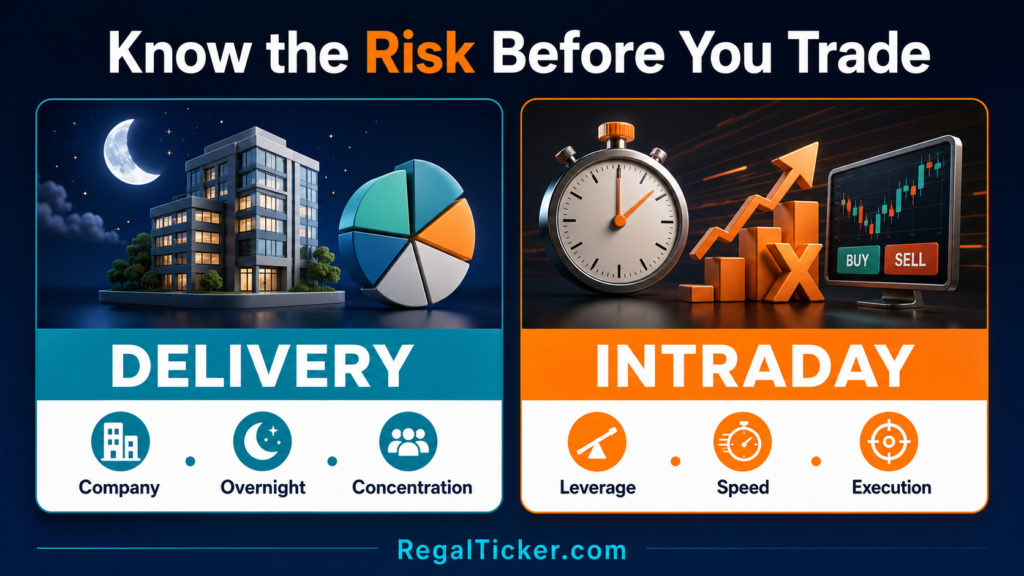
A delivery purchase is intended to create a settled Demat holding. A delivery sale requires valid securities delivery.
A fully squared-off intraday position has no continuing net equity delivery because the buy and sell quantities offset within the session, subject to the applicable clearing process. This distinction is explained in Delivery Trading vs Intraday Trading.
Order execution still comes first. A market, limit or stop order must match in the market before any settlement obligation exists.
When Can a Buyer Sell Purchased Shares?
Broker platforms may allow a buyer to sell recently purchased shares before the original purchase has fully settled, often described as BTST or “buy today, sell tomorrow.” This creates additional risk.
If the original seller fails to deliver and the buyer has already sold onward, the investor may face auction, close-out or other consequences under exchange rules. Availability and treatment vary, so check the broker’s policy rather than assuming the shares are fully settled.
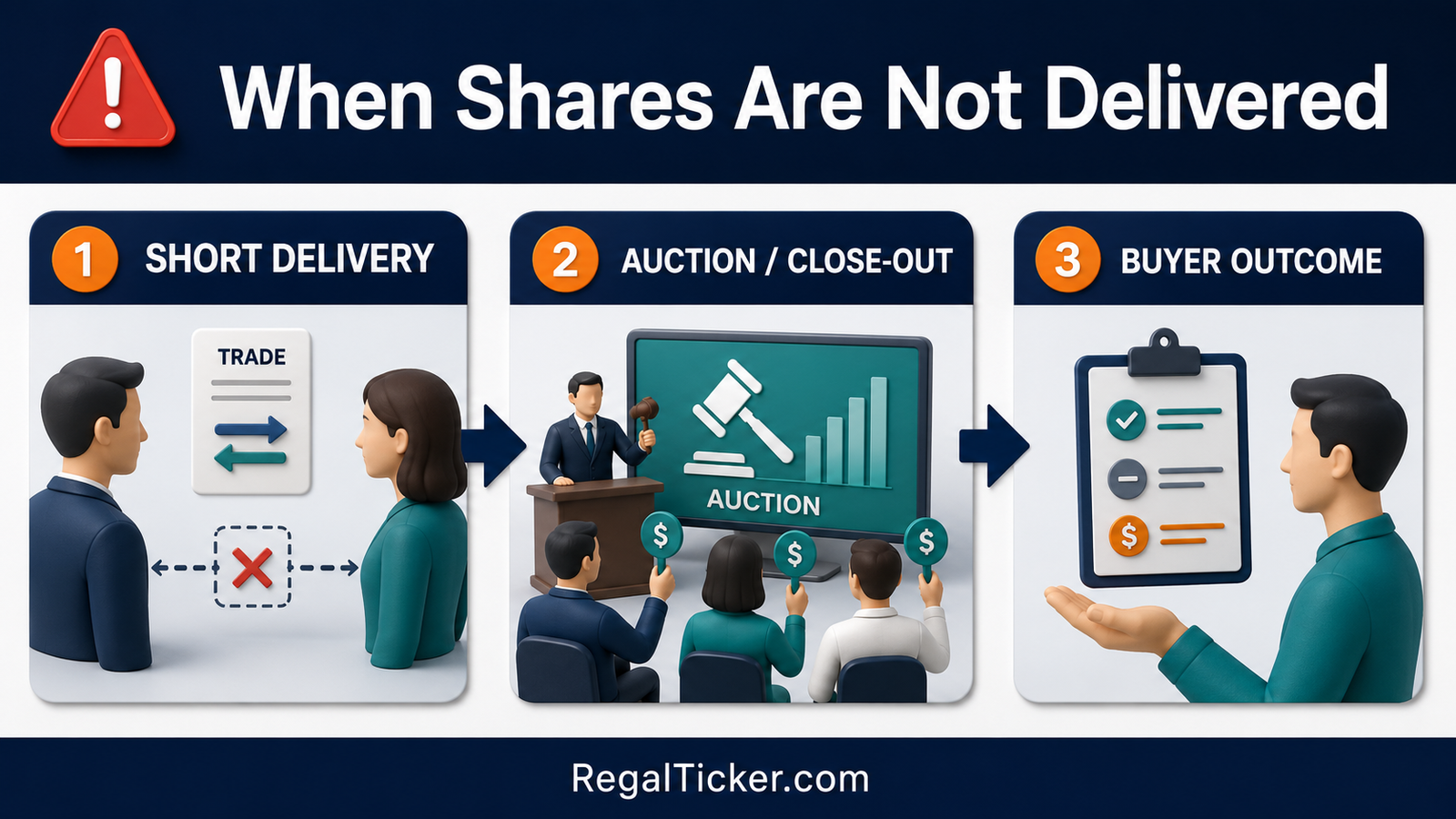
What Is Short Delivery?
Short delivery occurs when the securities due for settlement are not delivered in full.
Possible reasons include:
- The seller did not have deliverable shares.
- A pledge, lock or operational restriction prevented debit.
- The depository instruction or authorisation failed.
- A person sold unsettled shares that were not ultimately received.
The clearing corporation can use an auction or close-out process according to applicable rules. The buyer may receive securities later or receive a financial close-out instead. Outcomes and timelines depend on the security and exchange framework.
Never sell shares merely because they appear in an interface. Confirm that they are free, settled and available for delivery.
What About T+0 Settlement?
India also has an optional T+0 settlement facility for specified eligible securities and participating investors/intermediaries. T+0 means settlement on the trade date itself, subject to its separate timetable and operational conditions.
T+0 has not simply replaced T+1 for every equity transaction. CDSL’s investor FAQ states that T+0 is optional and T+1 continues. A beginner should therefore check which settlement segment is selected and whether the security and broker support it.
The existence of optional T+0 is why this article uses “standard T+1 cycle” rather than claiming that every Indian equity trade follows only one cycle.
Available to Trade vs Available to Withdraw
Broker applications may show several balances:
- Ledger balance
- Available cash
- Collateral or margin
- Unsettled credits
- Available-to-trade balance
- Withdrawable balance
These labels are not interchangeable. Sale proceeds may be usable for permitted trades before they are withdrawable to the bank. Pledged securities may provide collateral without becoming cash.
Read the broker’s balance-breakup screen and contract note. Never infer immediate bank withdrawal from a single headline balance.
Contract Note and Trade Verification
A broker must provide a contract note containing details such as:
- Security and quantity
- Buy or sell side
- Trade price and value
- Trade and order identifiers
- Brokerage and statutory charges
- Exchange and settlement information
Check it against the order history. NSE also provides a trade-verification facility for eligible trades, with data stated as available on T+1.
Costs are covered in the next lesson, Brokerage, STT, Exchange Charges and Other Trading Costs. Relevant calculators can be found in the Regal Ticker Investor Tools hub.
Common Settlement Mistakes
Counting calendar days
T+1 refers to the next settlement working day, not always tomorrow.
Spending or withdrawing the same balance twice
An app may show provisional or unsettled credits. Check the detailed balance.
Selling unavailable securities
Shares may be pledged, locked, unsettled or otherwise not free for delivery.
Ignoring depository authorisation
A delivery sale may require an approved debit mechanism such as a valid instruction or applicable electronic authorisation.
Confusing execution with settlement
An “executed” order confirms a trade. It does not necessarily mean the shares have already completed settlement into the Demat account.
Assuming T+0 applies automatically
T+0 is optional and subject to eligibility and operational support.
A Beginner’s Settlement Checklist
- Maintain sufficient cleared funds before buying.
- Confirm that sold shares are settled and available.
- Review the product and settlement segment.
- Download and check the contract note.
- Count exchange working days, not calendar days.
- Distinguish trading balance from withdrawable balance.
- Review Demat debits and credits.
- Raise discrepancies promptly with the broker or DP.
If you have not opened the accounts yet, use How to Open a Demat and Trading Account in India and complete the stock-market KYC process only through registered intermediaries.
Key Takeaway
T+1 means a trade is scheduled to settle on the next settlement working day after the trade date. Trading matches the order, clearing calculates obligations and settlement transfers funds and securities.
The process involves exchanges, clearing corporations, brokers, banks, depositories and DPs. Keep funds and deliverable shares ready, verify the contract note and remember that optional T+0 exists alongside—not as a universal replacement for—the standard T+1 cycle.
Frequently Asked Questions
Does T+1 mean exactly 24 hours?
No. It means the next settlement working day according to the exchange calendar.
When do purchased shares enter my Demat account?
They are credited through the settlement and broker/DP process, generally around the scheduled T+1 settlement for standard trades. The precise app display time can vary.
Can I withdraw sale proceeds immediately?
Not necessarily. Available-to-trade and withdrawable balances can differ while settlement is pending.
What happens if the seller does not deliver shares?
Exchange mechanisms may include auction or close-out according to applicable rules. The final outcome can vary.
Has T+0 replaced T+1 in India?
No. T+0 is an optional facility for eligible securities and participants; T+1 continues.
Where can I verify the official process?
See NSE Clearing’s equity clearing and settlement page, CDSL’s settlement FAQ and CDSL’s T+0 investor FAQ.