
When placing an equity order, a beginner often sees product choices such as delivery and intraday. Both can involve the same share on the same exchange, yet they create very different obligations.
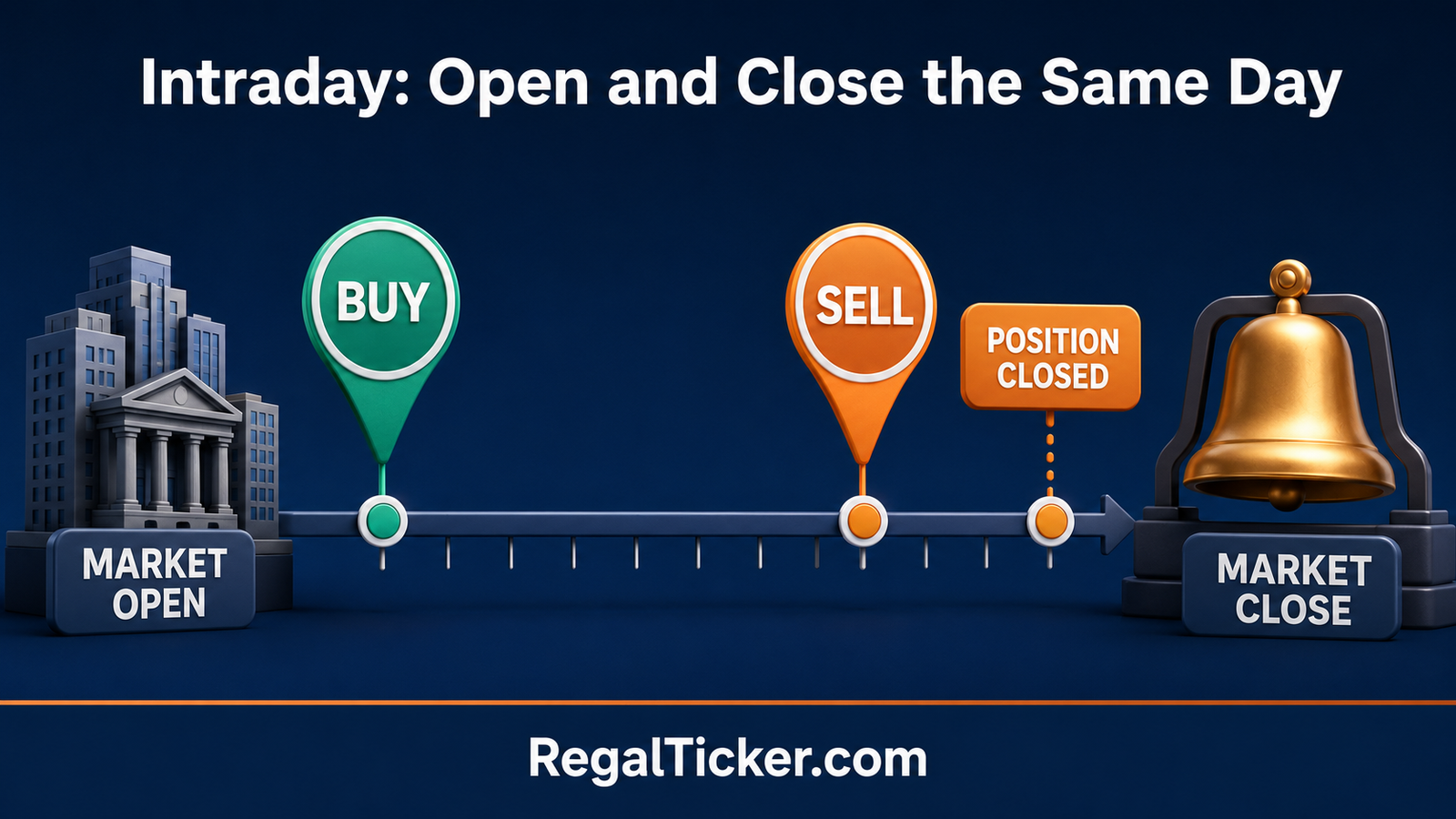
In delivery trading, purchased shares are intended to move into your Demat account and can be held beyond the trading day. In intraday trading, the position is intended to be opened and closed within the same trading session. You generally seek a change in price during that day rather than long-term ownership.
This difference affects settlement, capital requirements, risk, costs and the way a position must be managed. Before continuing, understand what a Demat account does and how a trading account works.
What Is Delivery Trading?
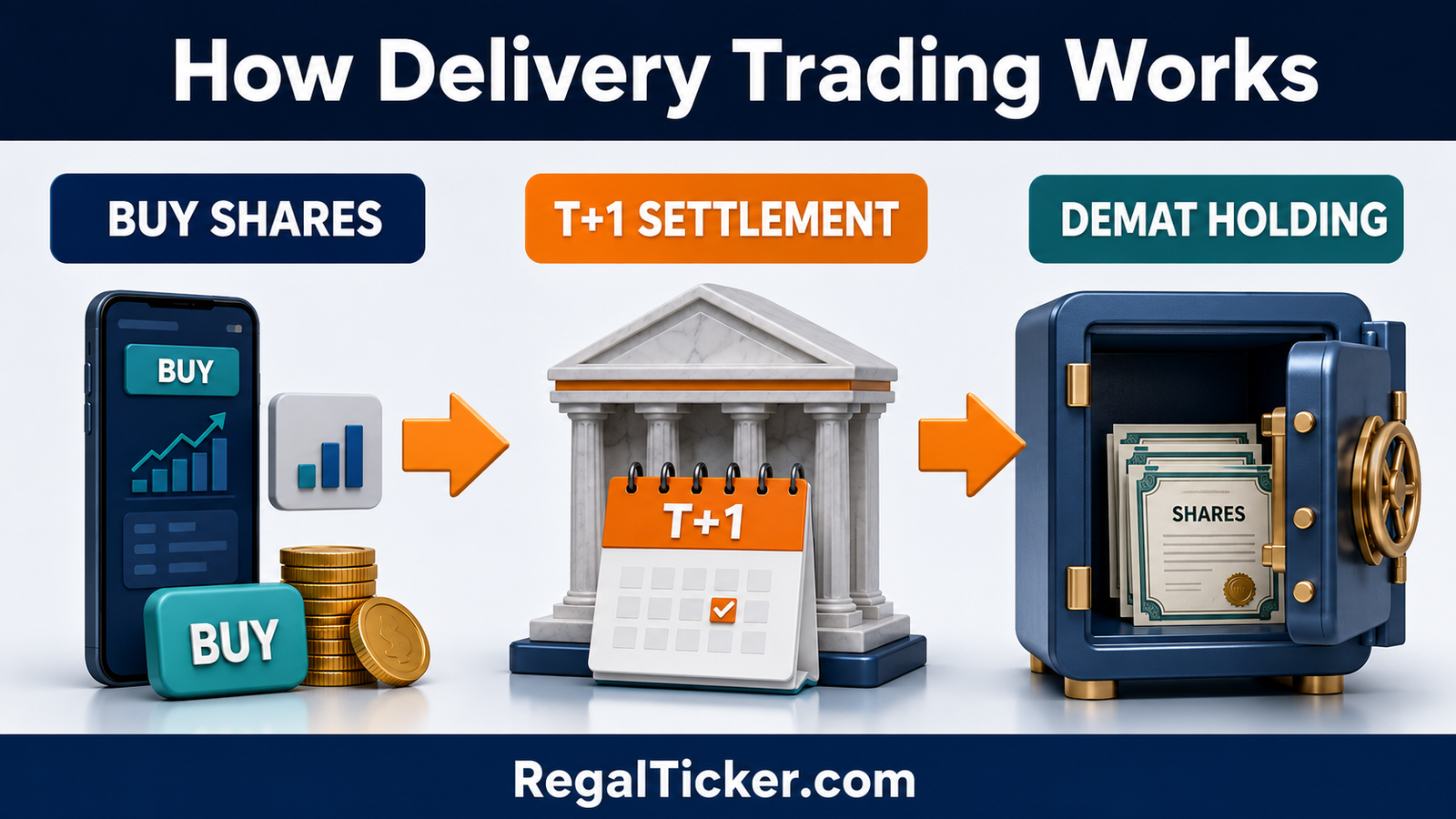
Delivery trading means buying shares for delivery to your Demat account or selling shares that you own and can deliver. A delivery purchase is not required to be closed on the same day.
Suppose you buy 20 shares at ₹500 each using the delivery product. The gross purchase value is ₹10,000, excluding charges. After settlement, the shares are credited to your Demat account. You may hold them for days, months or years, subject to your own plan.
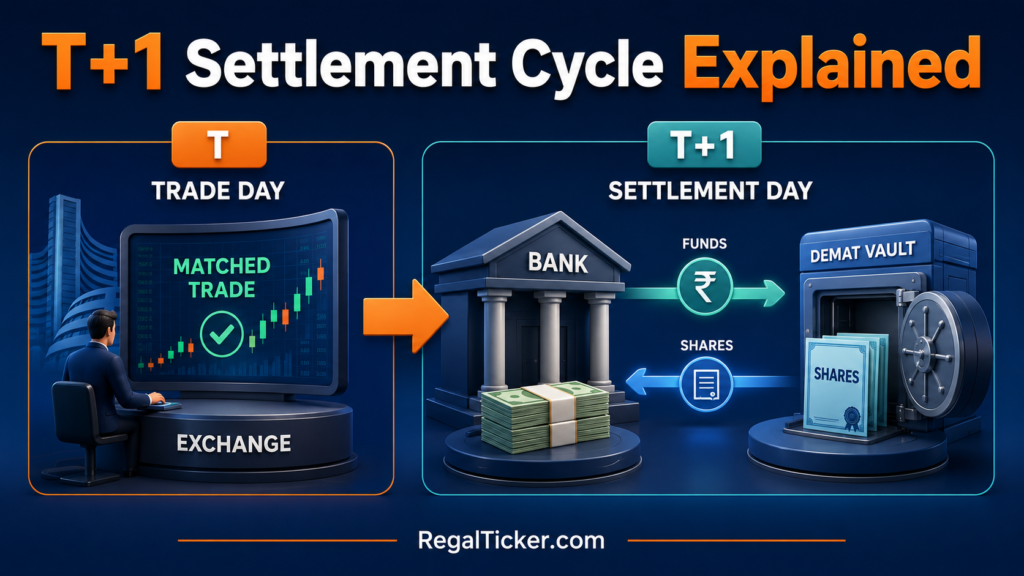
When you later sell those shares, they are debited from your Demat account and delivered through the settlement system. The exact movement of funds and securities is covered in Trade Settlement and the T+1 Settlement Cycle.
Main Features of Delivery Trading
- Shares are intended to be credited to your Demat account after settlement.
- The position may remain open beyond the trading day.
- A buyer normally needs the required funds according to the broker’s and clearing process.
- A seller must own or arrange valid delivery of the shares.
- Returns depend on the price movement during the holding period and, where applicable, corporate benefits.
- Market risk continues for as long as the shares are held.
Delivery does not mean “safe.” A share can fall substantially after purchase. It only describes how the trade is carried and settled.
What Is Intraday Trading?
Intraday trading means opening and closing a position in the same security during the same trading session. The trader attempts to benefit from short-term price movement and does not intend to carry the equity position overnight under that product.
For example, you buy 100 shares at ₹200 and sell them later that day at ₹202. The gross price difference is ₹200 before brokerage, taxes and other charges. If the price falls to ₹198 and you exit, the gross loss is ₹200 before costs.
An intraday position may begin with a purchase and end with a sale, or—where permitted—begin with a sale and end with a purchase. Short selling in the cash market creates special risks because the price can rise and the position still has to be closed or otherwise handled according to exchange and broker rules.
What Happens If an Intraday Position Is Not Closed?
Brokers generally specify a square-off time and their treatment of open intraday positions. They may attempt to close the position automatically, but execution is not guaranteed. Liquidity, price bands, circuit filters, system conditions or other restrictions can prevent closure.
Some brokers may convert an eligible buy position to delivery if sufficient funds are available; others may follow a different policy. Never assume automatic square-off or conversion will rescue an unmanaged position. Read your broker’s current product rules.
Delivery Trading vs Intraday Trading
| Feature | Delivery trading | Intraday trading |
|---|---|---|
| Intended holding period | Beyond the trading day is allowed | Position intended to close the same day |
| Share ownership after settlement | Purchased shares enter the Demat account | No continuing equity holding if squared off |
| Settlement delivery | Funds and securities move through settlement | Net same-day position is generally closed |
| Capital | Usually requires funds for the delivery purchase | Broker may provide permitted intraday exposure |
| Main focus | Ownership and longer holding period | Short-term price movement |
| Overnight risk | Yes | Normally avoided if fully closed |
| Execution pressure | No same-day exit requirement for a funded purchase | Position must be managed before market close |
| Typical risk | Business, valuation and market risk over time | Fast price movement, leverage and execution risk |
The table describes the products, not a recommendation. A poorly researched delivery purchase can be riskier than a carefully controlled intraday trade, while leverage can make even a small intraday move financially severe.
Capital and Leverage
Delivery buyers generally need sufficient funds to meet the purchase obligation. Intraday products may require a smaller upfront amount than the full trade value when permitted margins apply.
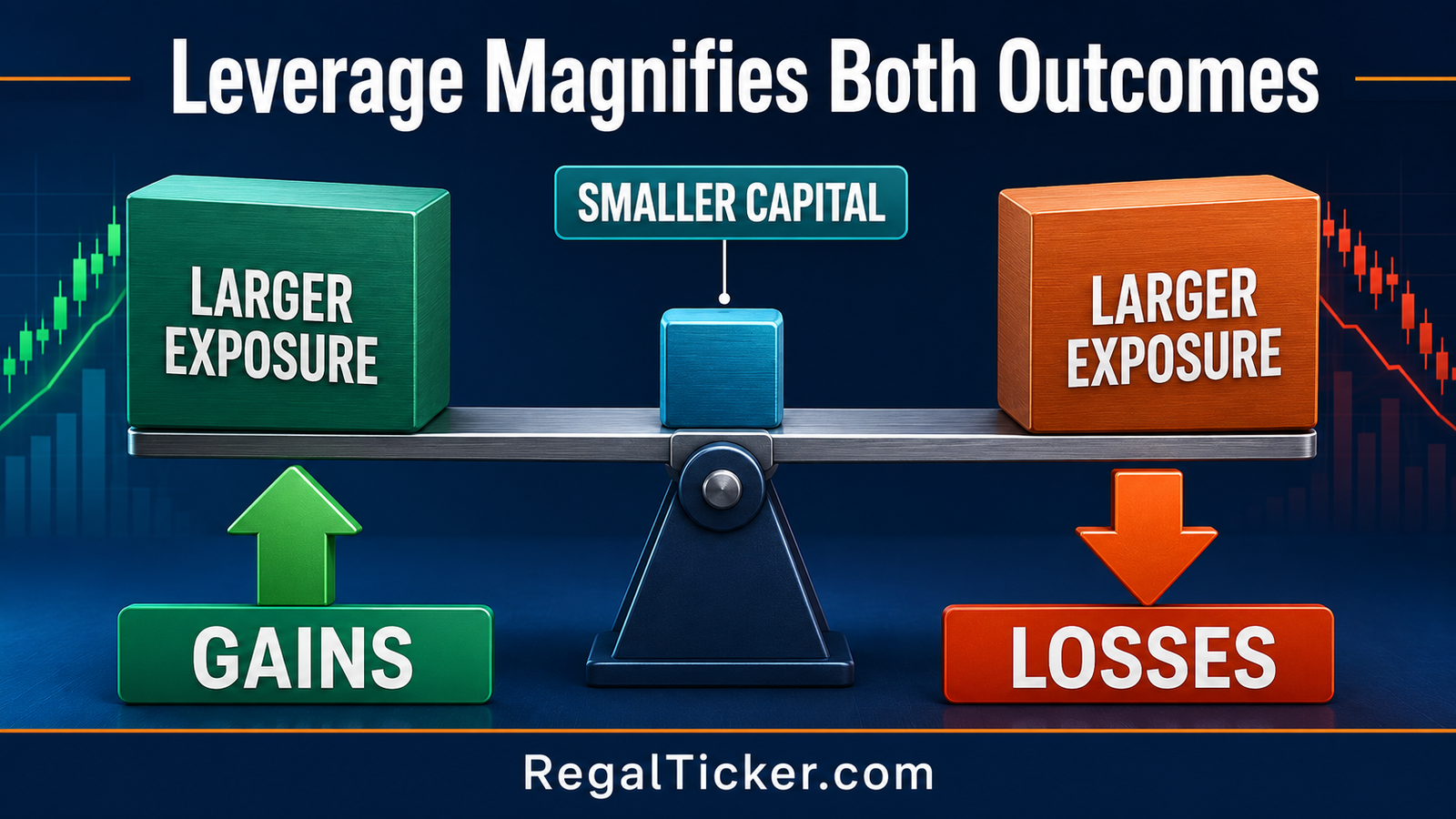
That does not make the trade cheaper. It creates exposure larger than the cash committed.
Suppose ₹20,000 controls an intraday position worth ₹100,000. A 1% adverse move in the position equals ₹1,000 before costs—5% of the ₹20,000 committed. A 3% adverse move equals ₹3,000, or 15% of that amount.
Leverage magnifies gains and losses. It can also lead to forced closure if margin requirements are not met. Beginners should never treat available exposure as an amount they can afford to lose.
How Orders Work in Both Products
Delivery and intraday are product choices; market, limit and stop orders are execution instructions. You can learn the distinction in Market Order, Limit Order, Stop-Loss and Stop-Limit Order.
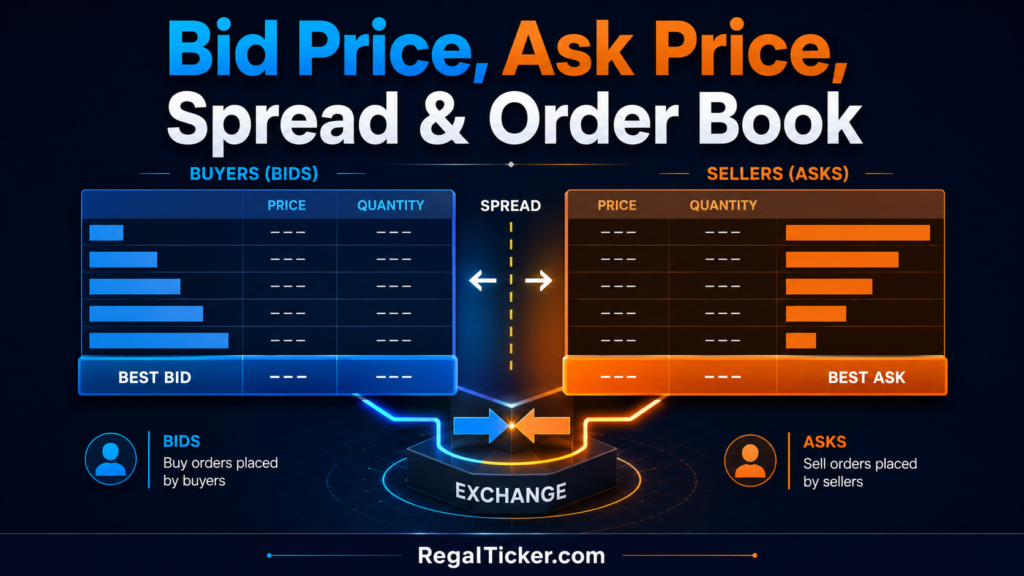
Your order then interacts with available buyers and sellers. The bid price, ask price, spread and order book determine whether it can execute and at what prices. A product label cannot guarantee a fill or remove slippage.
Costs and Taxes
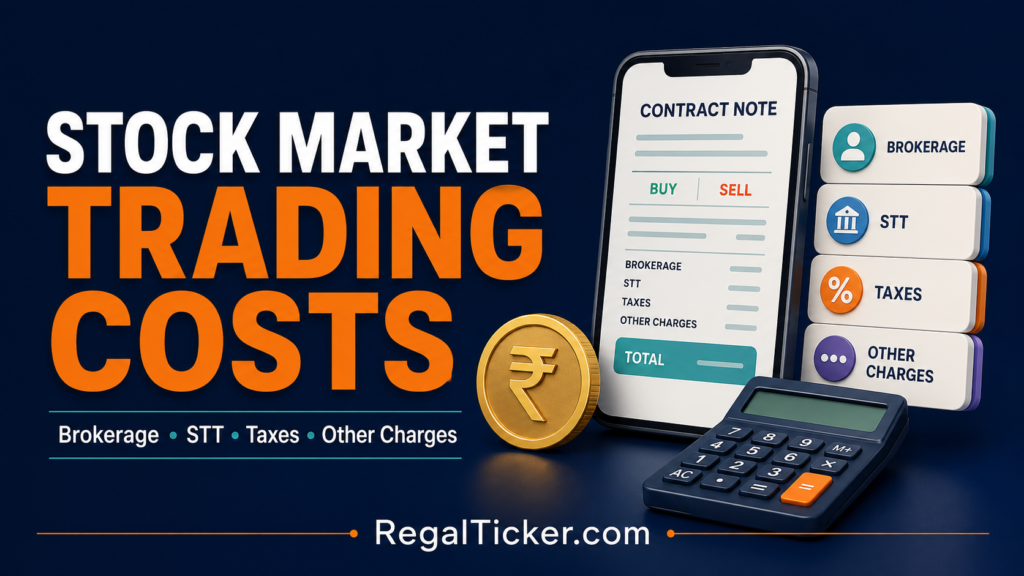
Both styles can involve brokerage and statutory charges, but their cost structures are not identical. Delivery and non-delivery equity transactions can attract different Securities Transaction Tax treatment. Other charges may include exchange transaction charges, SEBI turnover fees, GST and stamp duty.
Frequent intraday turnover can make apparently small charges meaningful. Delivery trading may involve Demat-related charges when shares are sold. Rates can change, so use your broker’s official tariff and contract note rather than relying on an old online example.
For a detailed breakdown of brokerage, STT, exchange charges, GST, stamp duty and DP charges, read Brokerage, STT, Exchange Charges and Other Trading Costs. You can also use the Brokerage Calculator to estimate transaction charges using your actual trade details.
Tax treatment depends on facts, frequency and applicable law. Educational comparisons are not a substitute for advice from a qualified tax professional.
Risks of Delivery Trading
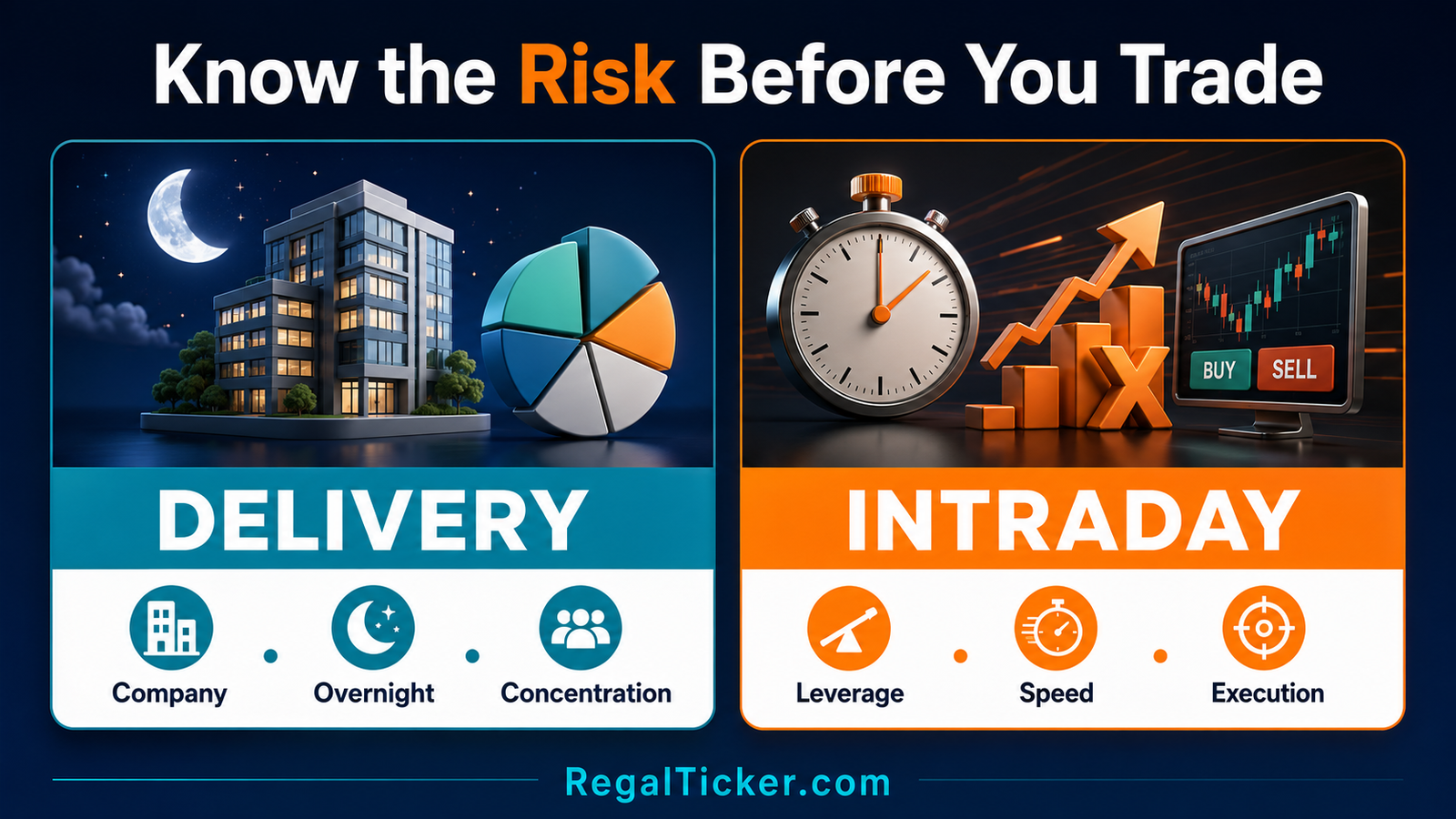
Company and valuation risk
The company’s earnings, finances, governance or competitive position may weaken. Market capitalisation alone does not prove quality; review what market capitalisation means.
Overnight and event risk
News may arrive when the market is closed, causing the next session to open sharply higher or lower.
Concentration risk
Putting a large share of capital into one company or sector can make one adverse event disproportionately damaging.
Liquidity risk
Some shares may be difficult to sell in the desired quantity without affecting the price.
Risks of Intraday Trading
Leverage risk
A small market move can cause a large percentage gain or loss relative to the amount committed.
Execution and slippage risk
Fast markets and thin order books can produce fills far from the visible last traded price.
Forced square-off risk
The broker may close a position under its risk policy, but the obtainable price is uncertain.
Behavioural risk
Speed can encourage overtrading, revenge trading and repeated decisions without a tested process. The Bull, Bear and Sideways Markets lesson explains why market conditions can change the behaviour of the same setup.
Is Delivery Trading the Same as Investing?
No. Delivery is a settlement and holding product; investing is an approach.
A person can take delivery and sell two days later based only on a short-term price view. Another can hold for years after studying business quality and valuation. Both use delivery, but only the second clearly follows a longer-term investment process.
Similarly, investing and trading differ mainly in objective, analysis, time horizon and decision rules—not merely which button is selected.
Which Is Better for Beginners?
There is no universal answer, but intraday trading demands continuous attention, strict risk limits and comfort with rapid execution. Leverage and same-day closure pressure can punish mistakes quickly.
A beginner considering either approach should first be able to:
- Explain why the trade is being taken.
- Define the maximum acceptable loss.
- Understand the chosen order type.
- Read the spread and available depth.
- Calculate all costs.
- Know what happens if the position cannot be exited as planned.
- Verify the transaction in the contract note.
If these points are unclear, the practical next step is education and simulated observation—not a larger position.
Common Beginner Mistakes
- Selecting intraday when delivery was intended, or vice versa.
- Assuming broker-provided exposure is free capital.
- Treating automatic square-off as guaranteed.
- Using a market order without checking spread and depth.
- Ignoring brokerage, STT and other charges.
- Carrying a delivery position without understanding the company.
- Averaging losses without a predefined plan.
- Selling shares not available for valid delivery.
Review the order ticket before confirming the product, side, quantity, order type and price.
Key Takeaway
Delivery trading allows purchased shares to enter your Demat account and remain held beyond the trading day. Intraday trading aims to open and close the position within the same session.
The key difference is not simply duration. Delivery creates ownership and settlement obligations, while intraday creates same-day execution pressure and may involve leveraged exposure. Choose only after understanding the product, order book, costs and maximum possible loss.
Frequently Asked Questions
Can I sell delivery shares on the same day?
Depending on exchange and broker processes, a buy and sell in the same security on the same day may be netted or treated according to the selected product and broker policy. Check the order and contract note rather than assuming delivery occurred.
Can intraday shares enter my Demat account?
A fully squared-off intraday position does not create a continuing shareholding. An eligible open buy position may sometimes be converted under broker rules if adequate funds exist, but this should not be assumed.
Is intraday trading cheaper than delivery?
Not automatically. Charges and tax rates differ, and frequent turnover can make total costs significant.
Is delivery trading risk-free?
No. It avoids mandatory same-day closure but remains exposed to company, market, liquidity and overnight risks.
Is intraday trading allowed for every investor?
Eligibility and restrictions can depend on investor category, security, segment and applicable rules. For example, NSE states that NRI investors cannot undertake intraday cash-market transactions and must trade on a delivery basis.
Where can I verify official charges and investor rules?
Use SEBI-registered intermediaries and refer to NSE’s official page on STT and other levies and SEBI Investor education resources.