
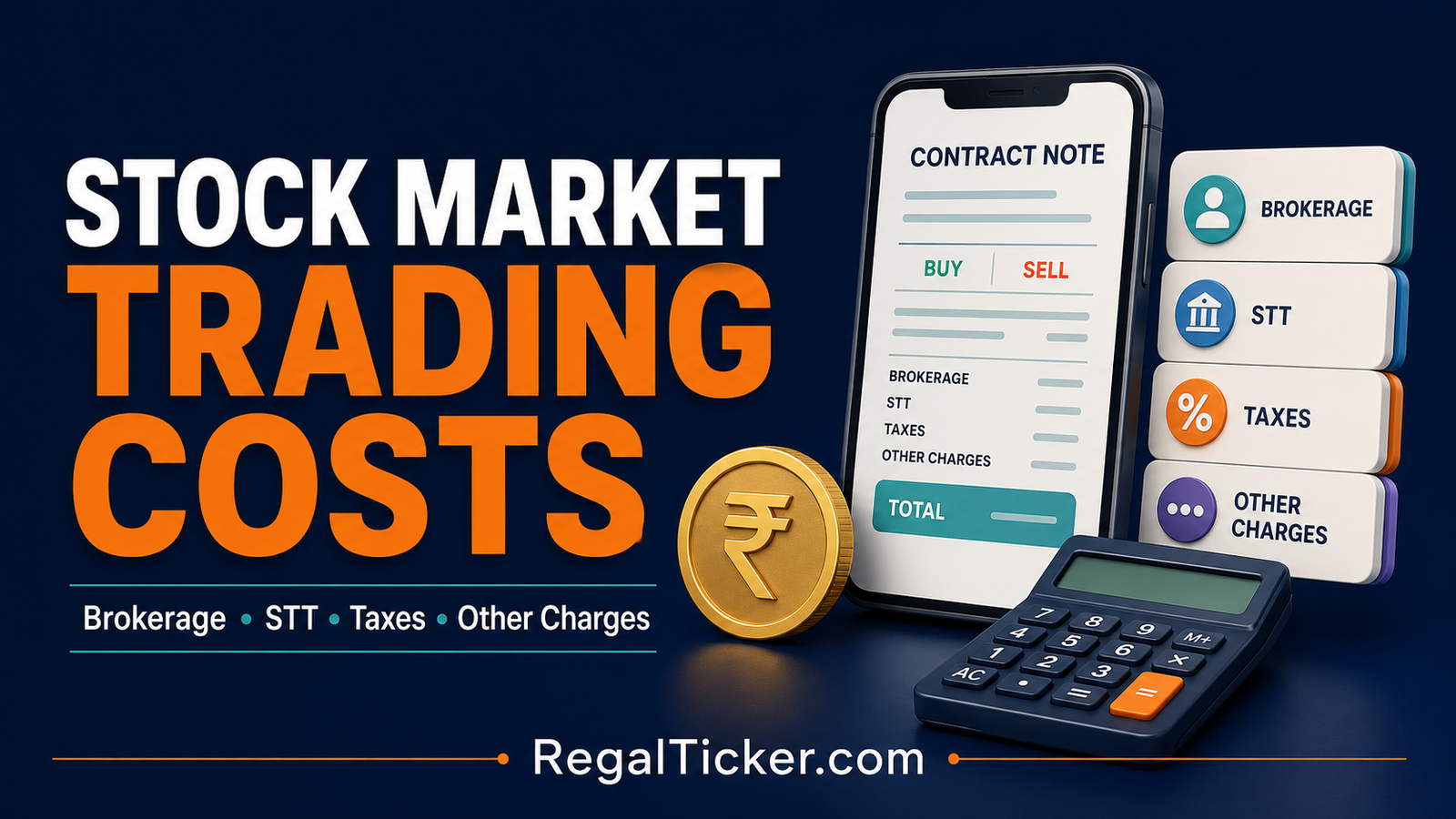
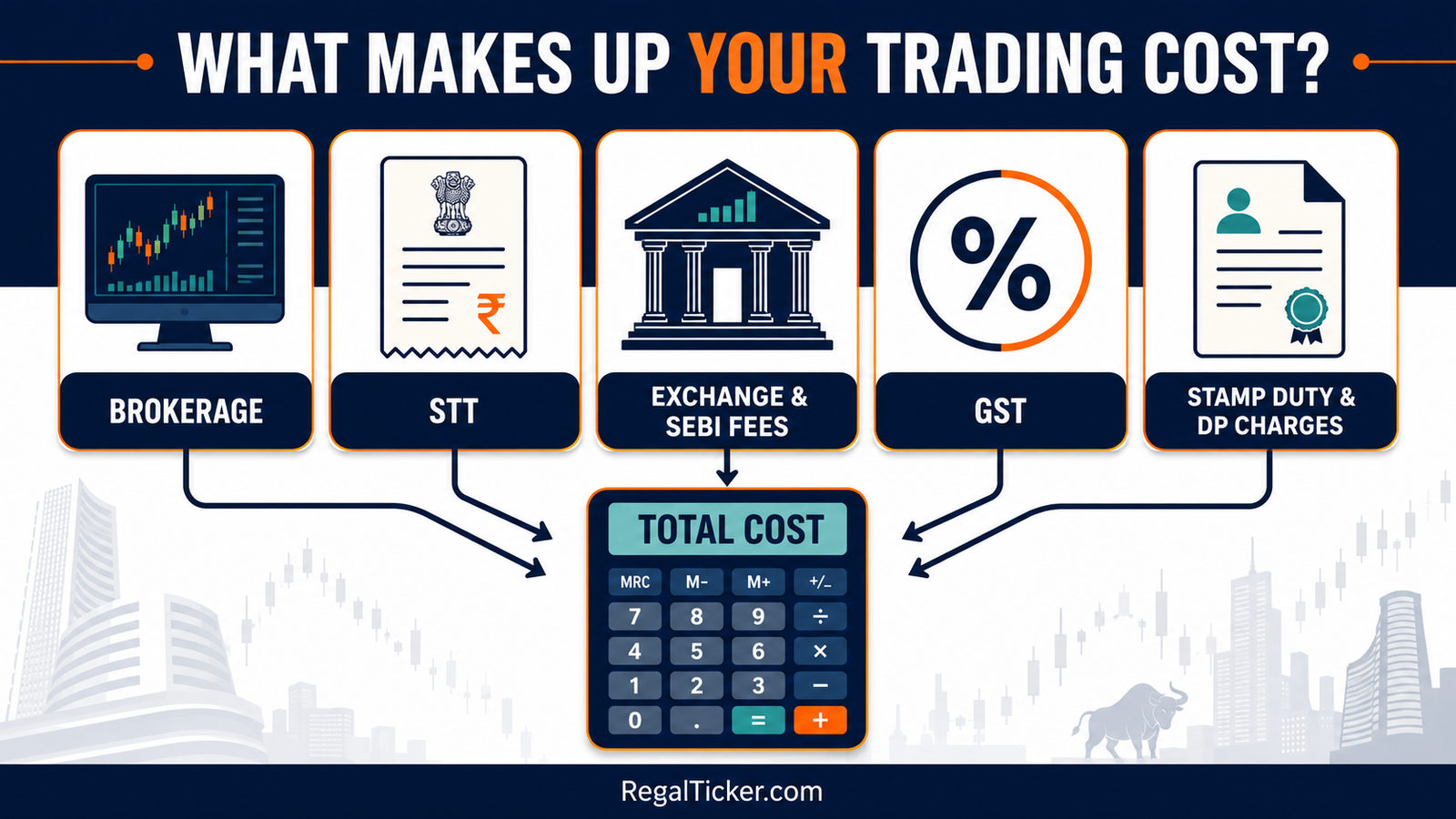
Buying a share at ₹500 and selling it at ₹510 does not necessarily mean you earned ₹10 per share. Every trade may include brokerage, Securities Transaction Tax (STT), exchange transaction charges, a SEBI fee, Goods and Services Tax (GST), stamp duty and, in some cases, a depository participant charge. These deductions reduce your actual return.
Understanding these costs is essential before you place an order. A small charge may appear insignificant on one transaction, but frequent trades can turn several small deductions into a meaningful amount. Trading costs matter even more when the expected profit per trade is narrow.
This guide explains the main stock-market charges in India, who collects them, which side of a transaction generally bears them, and how to find the exact amount in your contract note.
> Rate check: The regulatory information in this article was reviewed on 30 July 2026. Statutory and exchange rates can change. Always verify the current schedule and your broker’s tariff sheet before trading.
What Are Stock-Market Trading Charges?
Trading charges are the costs added to or deducted from a securities transaction. They do not all go to your broker.
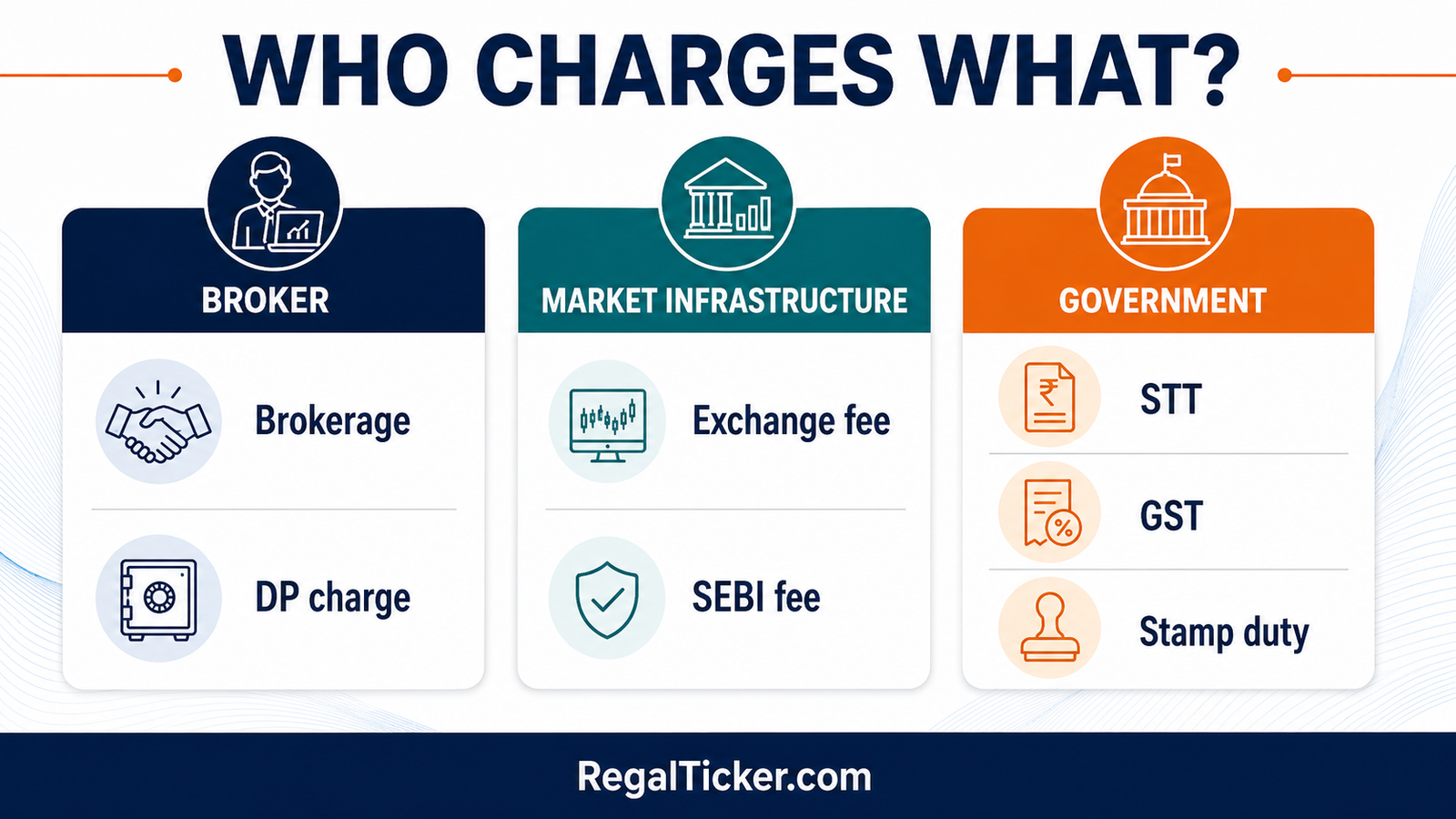
The total cost can contain three broad groups:
- Broker and depository charges, such as brokerage and a DP charge.
- Market-infrastructure charges, such as exchange transaction charges and the SEBI turnover fee.
- Government levies, such as STT, GST and stamp duty.
The exact mix depends on what you trade, whether the transaction creates delivery, whether it is intraday, and whether you are buying or selling. It can also differ between equity cash, futures, options and other segments.
If you are new to execution, first understand market, limit, stop-loss and stop-limit orders. Your order type affects the price at which a trade may execute, while the charges discussed here affect its final cost.
1. Brokerage
Brokerage is the fee charged by a stockbroker for providing trading access and executing orders. It is a commercial charge, not a government tax.
A broker may use one or more pricing models:
- a percentage of transaction value;
- a flat fee per executed order;
- zero brokerage for a particular segment;
- a subscription or bundled plan; or
- a different tariff for equity delivery, intraday and derivatives.
“Zero brokerage” does not mean “zero trading cost.” STT, GST, exchange charges, the SEBI fee, stamp duty and applicable DP charges may still remain.
Per order does not always mean per trade
One order may be filled in several smaller trades because available quantities appear at different prices. A broker’s tariff should explain whether its stated fee applies per executed order, per trade, per lot or by turnover.
Before selecting a broker, read the tariff sheet rather than relying only on an advertisement. The comparison process is covered in how to open a Demat and trading account in India.
2. Securities Transaction Tax
Securities Transaction Tax is a statutory levy on specified securities transactions. The applicable rate, taxable value and responsible side depend on the market segment and transaction.
For listed equity delivery transactions, STT generally applies to both the purchase and sale. For non-delivery equity transactions, it is generally collected on the sell side. Derivatives follow their own rules.
The NSE STT schedule explains the applicable treatment for different exchange-traded products. From 1 April 2026, the Finance Act changes increased the STT rates for specified futures and options transactions. Because tax schedules can change, do not copy an old rate table from a broker blog and assume it remains current.
STT is based on the applicable transaction value—not on whether you made a profit. A losing trade can still attract STT.
3. Exchange Transaction Charges
The stock exchange levies a transaction charge for providing its trading infrastructure. This charge is normally calculated from turnover, although the applicable rate can differ by exchange and segment.
Exchange charges are generally much smaller than the trade value, but they are still part of the total. They may be revised through exchange circulars, so the contract note is more reliable for an individual transaction than a permanently copied example.
The charge is different from the bid–ask spread. An exchange fee is an explicit deduction. The spread and market impact are implicit execution costs that can affect the price you receive.
4. SEBI Turnover Fee
SEBI levies a regulatory fee on market transactions. Brokers collect the applicable amount and show it in the contract note or charge statement.
It is usually a small component, but omitting it from a cost calculation means the result is not complete. The official NSE investor page on SEBI turnover fees, STT and other levies summarises several statutory components.
5. GST
GST is applied to taxable services connected with the transaction. It is commonly calculated on components such as brokerage, exchange transaction charges and the SEBI fee—not simply on the full value of shares purchased.
This distinction matters. If you buy shares worth ₹1 lakh, GST is not normally calculated as 18% of ₹1 lakh. It applies to the relevant taxable service charges.
The exact taxable base is visible in the broker’s contract note. If a cost calculator applies GST directly to the entire trade value, its result is likely misleading.
6. Stamp Duty
Stamp duty is generally collected on the buy side. The rate depends on the type of transaction.
The harmonised schedule distinguishes delivery-based securities transactions, non-delivery transactions, equity futures, equity options and certain other instruments. For example, the official investor schedule lists separate rates for delivery and non-delivery equity transactions.
Stamp duty is a transaction levy. It is not the same as STT, and the two should not be merged into a single “tax” line when you are trying to understand the calculation.
7. Depository Participant Charges
A DP charge can arise when shares are debited from your Demat account, commonly when you sell delivery holdings. It relates to the depository service, not to exchange order execution.
Depending on the tariff, it may include a depository component and a participant component. It may be charged per debit instruction or per security on a day rather than as a simple percentage of sale value.
This is why DP charges can be especially noticeable on a small delivery sale. A broker advertising zero delivery brokerage may still collect an applicable DP charge when securities leave the Demat account.
To understand why a sale causes a Demat debit, revisit what a Demat account is and how it works and the comparison of a Demat account, trading account and bank account.
Who Receives Each Charge?
It is useful to separate the collector from the ultimate recipient:
| Charge | Nature | Ultimately associated with |
|---|---|---|
| Brokerage | Commercial fee | Stockbroker |
| DP charge | Depository service fee | Depository participant/depository structure |
| Exchange transaction charge | Market-infrastructure fee | Stock exchange |
| SEBI turnover fee | Regulatory fee | SEBI |
| STT | Statutory tax | Government |
| GST | Indirect tax on taxable services | Government |
| Stamp duty | Statutory duty | Government |
Your broker generally calculates and collects these amounts through the transaction statement. That does not make every line “brokerage.”
Buy-Side and Sell-Side Charges
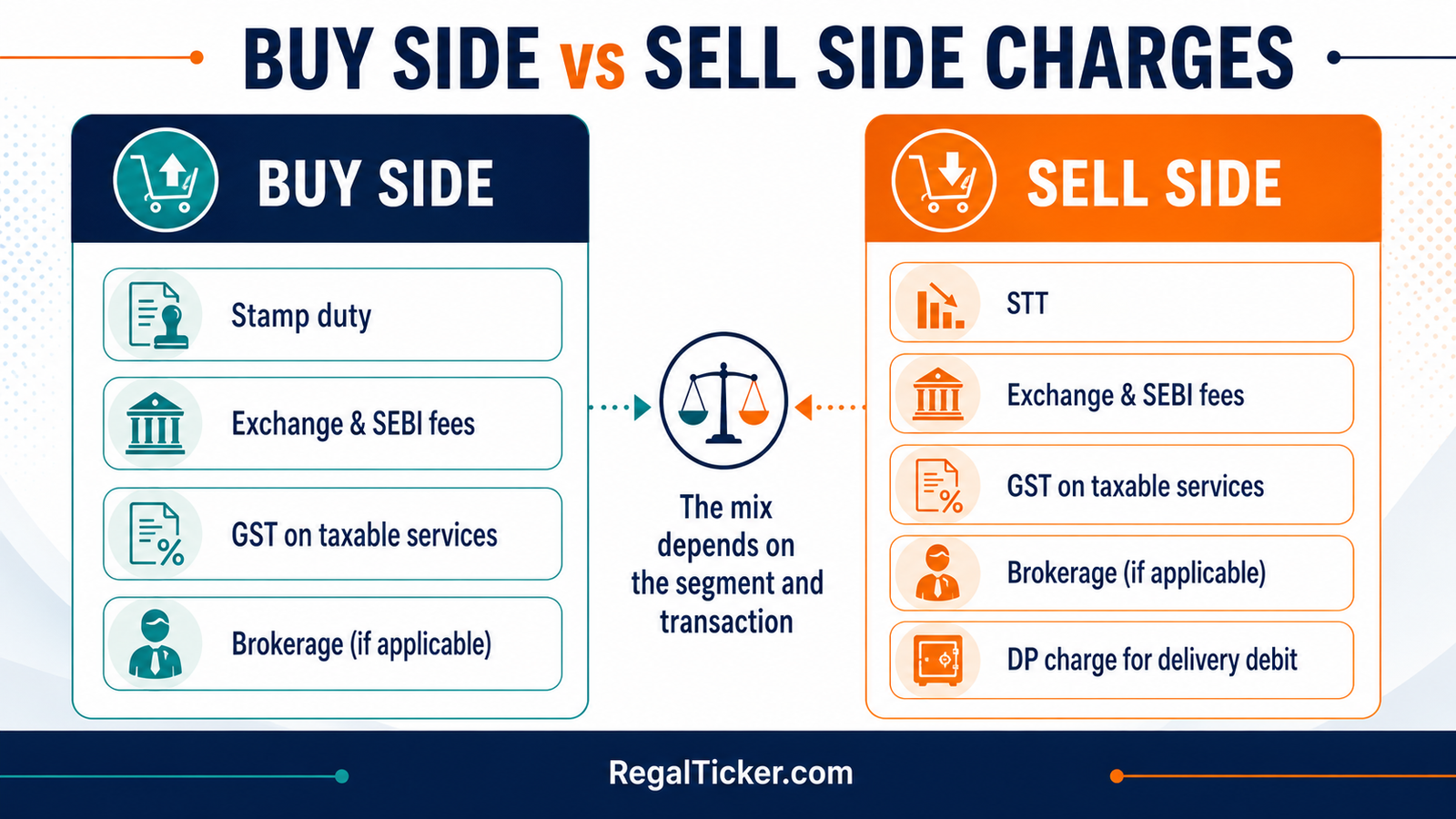
Not every component is charged on both legs.
On the buy side
A purchase can include:
- brokerage, if the tariff applies;
- exchange transaction charges;
- SEBI turnover fee;
- GST on taxable service components;
- stamp duty; and
- STT where the relevant transaction is taxable on purchase.
On the sell side
A sale can include:
- brokerage, if applicable;
- exchange transaction charges;
- SEBI turnover fee;
- GST on taxable service components;
- STT where applicable; and
- a DP charge when delivery securities are debited.
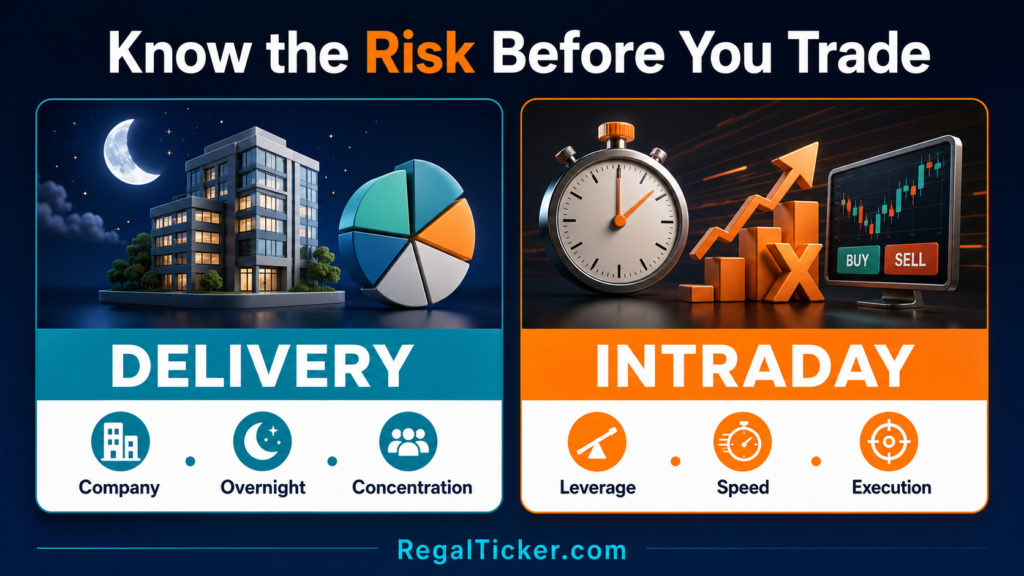
The segment controls the exact treatment. A delivery trade and an intraday trade are not charged identically. Read delivery trading versus intraday trading before comparing their apparent costs.
An Illustrative Cost Calculation
Assume an investor buys 20 shares at ₹500 and later sells 20 shares at ₹510.
- Purchase value: 20 × ₹500 = ₹10,000
- Sale value: 20 × ₹510 = ₹10,200
- Gross price difference: ₹200
The investor’s net result is not automatically ₹200. The calculation is:
Net result = sale value − purchase value − total buy charges − total sell charges
The total charges can include the components discussed above. If shares were held in the Demat account, a DP charge may also apply on sale.
This example deliberately does not invent a universal rupee total. Brokerage and DP tariffs differ among brokers, and statutory or exchange rates can change. For a real trade, use:
- the broker’s current tariff sheet;
- the current official levy schedule;
- the executed turnover; and
- the final contract note.
For planning, you can use the relevant calculator available through RegalTicker.com Investor Tools. A calculator is an estimate; the contract note remains the transaction-specific record.
Explicit Costs and Hidden Execution Costs
Brokerage and taxes are explicit because they appear as line items. Investors should also recognise implicit costs.
Bid–ask spread
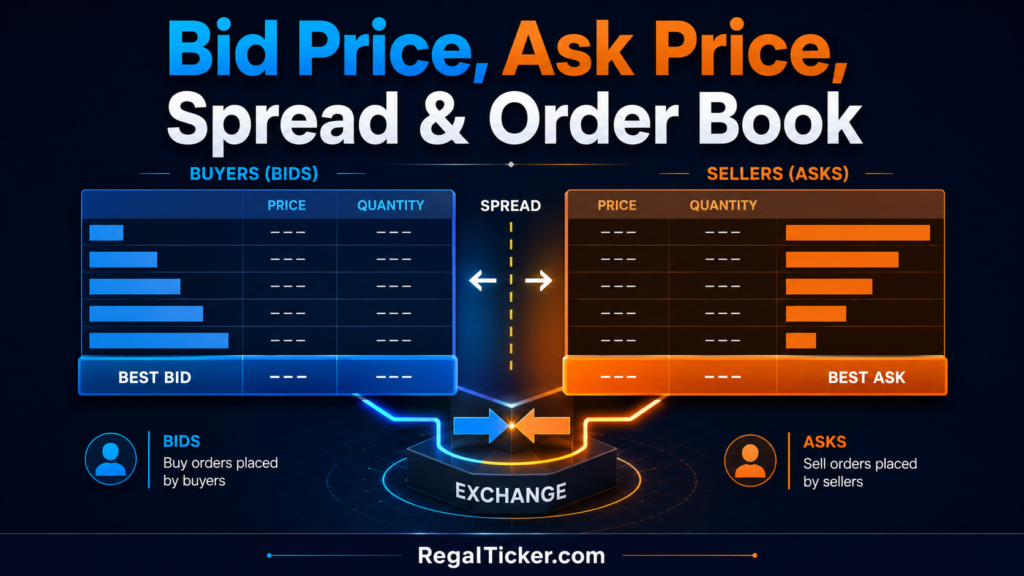
If the best buyer offers ₹100 and the best seller asks ₹100.20, crossing the spread creates an immediate ₹0.20-per-share difference before explicit charges. Learn how this works in bid price, ask price, spread and order book.
Slippage
Slippage occurs when the executed price differs from the price expected when the order was placed. It can be important in fast or illiquid markets.
Market impact
A larger order may consume quantities at several price levels and move the average execution price. NSE describes impact cost as a practical measure of liquidity and execution cost.
These costs help explain why knowing how share prices are decided is just as important as knowing the fee table.
How to Read a Contract Note
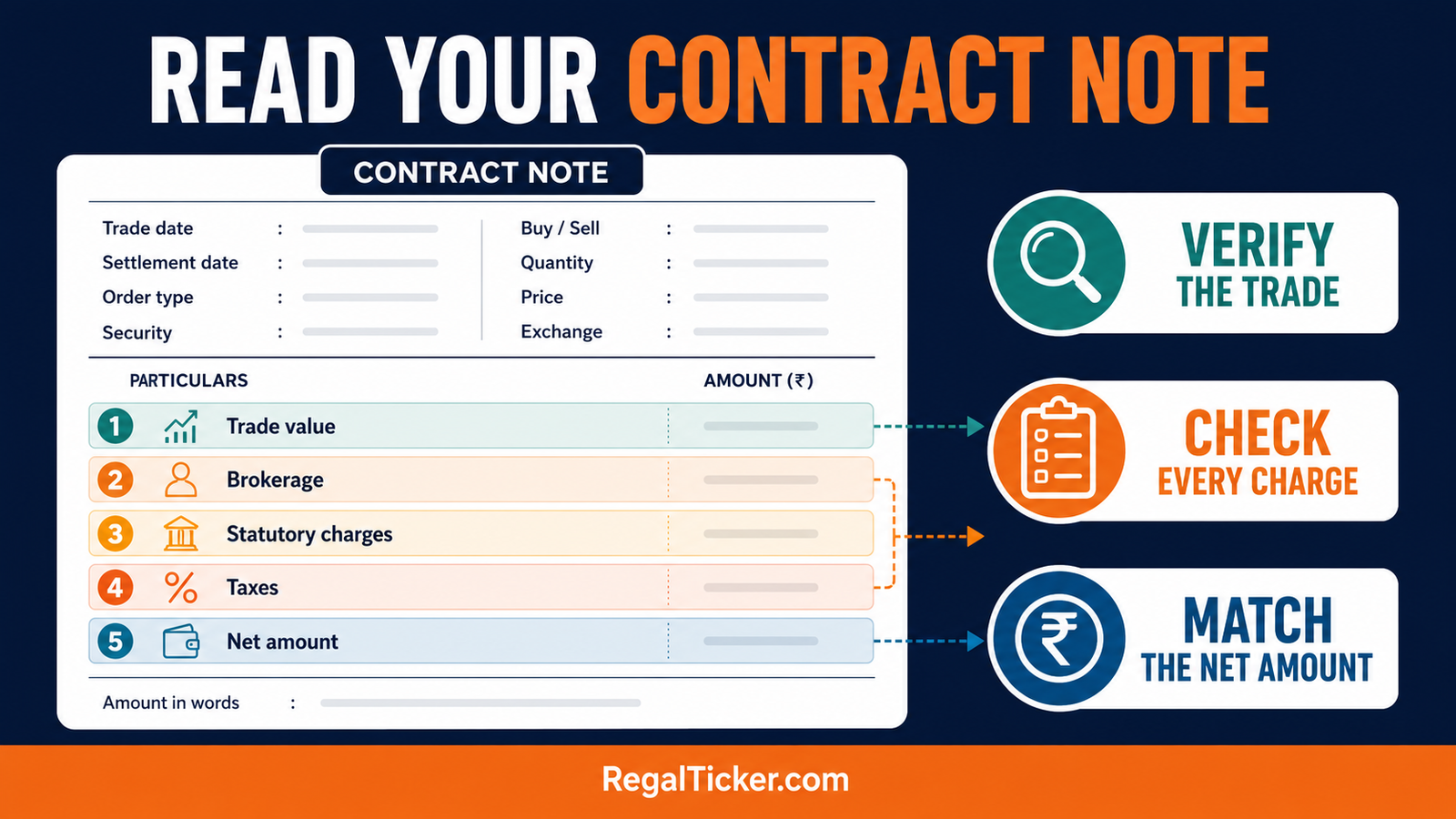
A contract note is the formal transaction record issued by the broker. It should identify the trade and show the monetary calculation.
Check:
- trade and order details;
- security, quantity and price;
- buy or sell side;
- exchange and segment;
- brokerage;
- statutory and regulatory charges;
- taxes;
- net amount payable or receivable; and
- settlement information.
Compare the contract note with the order history in your trading account. If there is an unexplained difference, contact the broker promptly and retain the note.
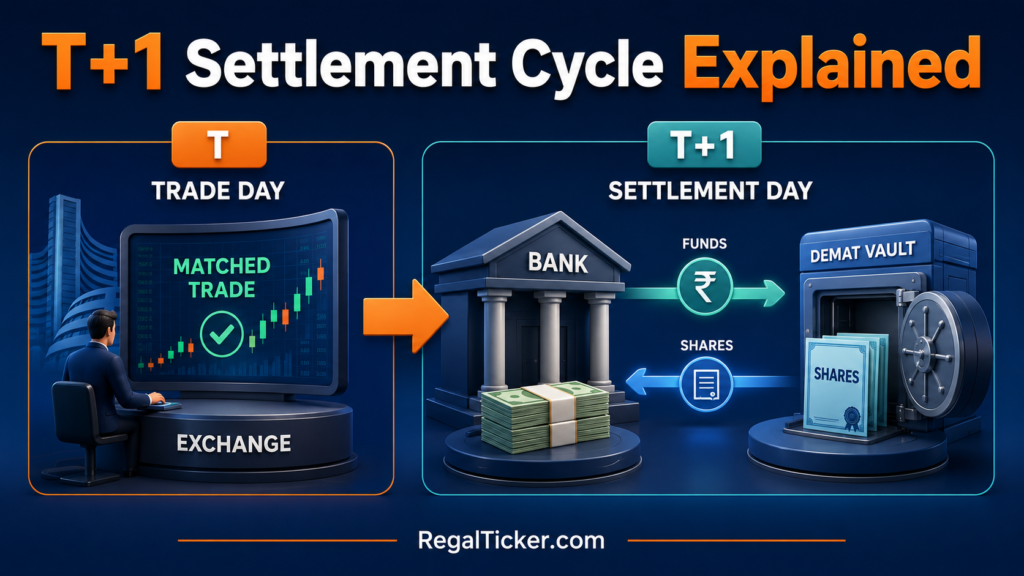
Settlement determines when funds and securities move, while the contract note explains what was executed and charged. Read the T+1 settlement cycle for the next part of the process.
Common Mistakes Beginners Make
Assuming zero brokerage means zero cost
Other statutory, regulatory, exchange and depository charges can remain.
Looking only at the buy price and sell price
The gross difference is not the net return.
Ignoring the DP charge
This can make a small delivery sale look more expensive than expected.
Treating every charge as a percentage of trade value
Some fees may be flat, capped, charged per order, or charged per debit instruction.
Using outdated derivatives rates
Futures and options STT changed from 1 April 2026. Always check the current official schedule.
Confusing trading charges with income tax
STT, GST and stamp duty are transaction-related levies. Tax on gains or business income is a separate calculation that depends on the nature of activity and applicable tax law.
Ignoring frequency
A low charge repeated across many transactions can materially reduce performance. This is one reason investing and trading are different approaches.
How to Compare Brokers Fairly
Compare the complete cost structure, not one headline:
- brokerage by segment;
- DP charge;
- account maintenance fee;
- call-and-trade or assisted-order fee;
- pledge and unpledge charges;
- payment-gateway or fund-transfer fees, if any;
- platform or subscription fees;
- square-off or penalty charges; and
- quality, reliability and support.
Also verify that the intermediary is registered and complete the proper stock-market KYC process.
A lower tariff is useful only when the broker also provides reliable execution, transparent statements, appropriate controls and adequate service.
Frequently Asked Questions
Are brokerage and STT the same?
No. Brokerage is a commercial fee charged by a broker. STT is a statutory tax on specified securities transactions.
Is GST charged on the full share value?
GST is generally charged on relevant taxable service components such as brokerage and specified transaction fees, not simply on the entire purchase value.
Why was I charged when my broker advertises zero brokerage?
Zero brokerage may remove only the broker’s execution fee for an eligible segment. STT, exchange charges, SEBI fees, GST, stamp duty and DP charges can still apply.
Why is a DP charge visible only on a delivery sale?
The charge relates to securities being debited from the Demat account. Intraday trades ordinarily do not create the same delivery debit.
Does a cancelled order attract brokerage?
A cancelled order that was never executed generally does not create an exchange trade. However, tariff rules should be checked for any service-specific fee. A partially executed order can generate charges on its executed part.
Are trading charges tax-deductible?
The treatment depends on the nature of income and applicable tax rules. This article explains transaction costs, not personal tax advice. Consult a qualified tax professional for your circumstances.
Where can I see the exact charges for my trade?
Use the contract note and ledger provided by your broker. A pre-trade calculator is only an estimate.
Final Takeaway
The real cost of a trade is broader than brokerage. It can include STT, exchange transaction charges, the SEBI turnover fee, GST, stamp duty and DP charges, along with less visible execution costs such as the spread, slippage and market impact.
Before trading, understand the tariff. After trading, verify the contract note. When comparing strategies, measure returns after costs—not from price movement alone.
This completes the Demat & Trading learning path. You can now connect the full process: opening accounts, completing KYC, selecting an order, reading the order book, choosing delivery or intraday, understanding settlement, and calculating the final cost.