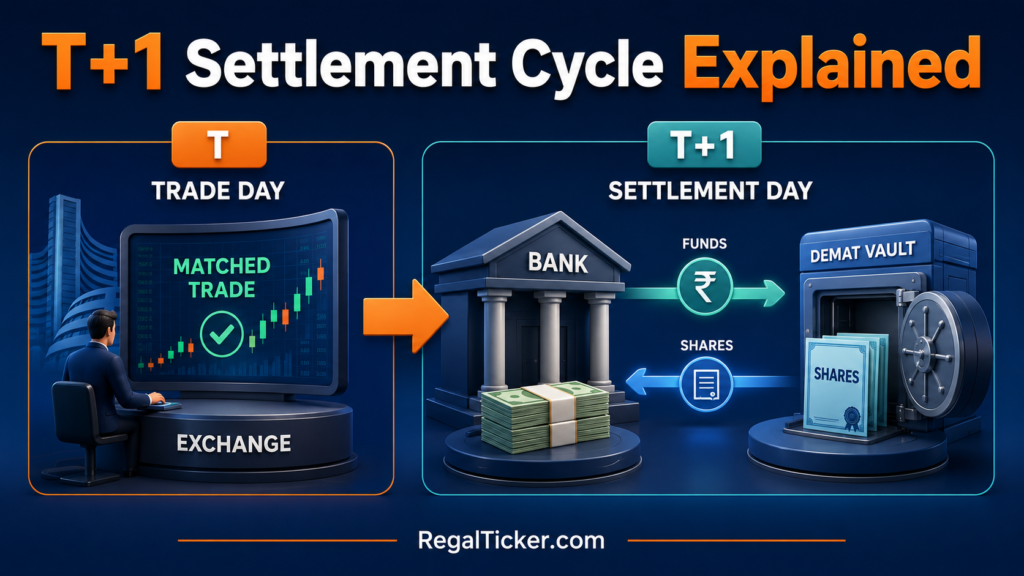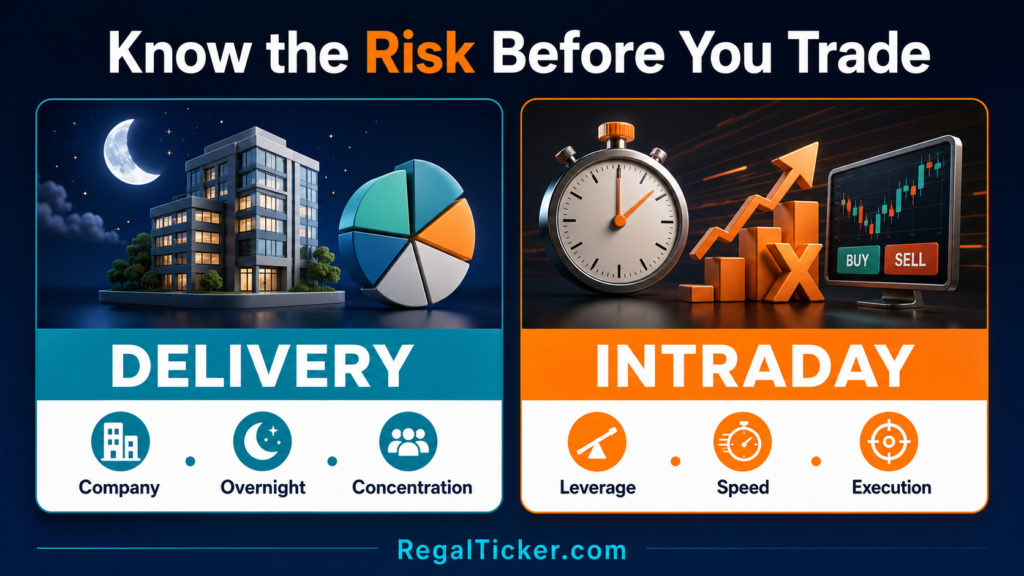

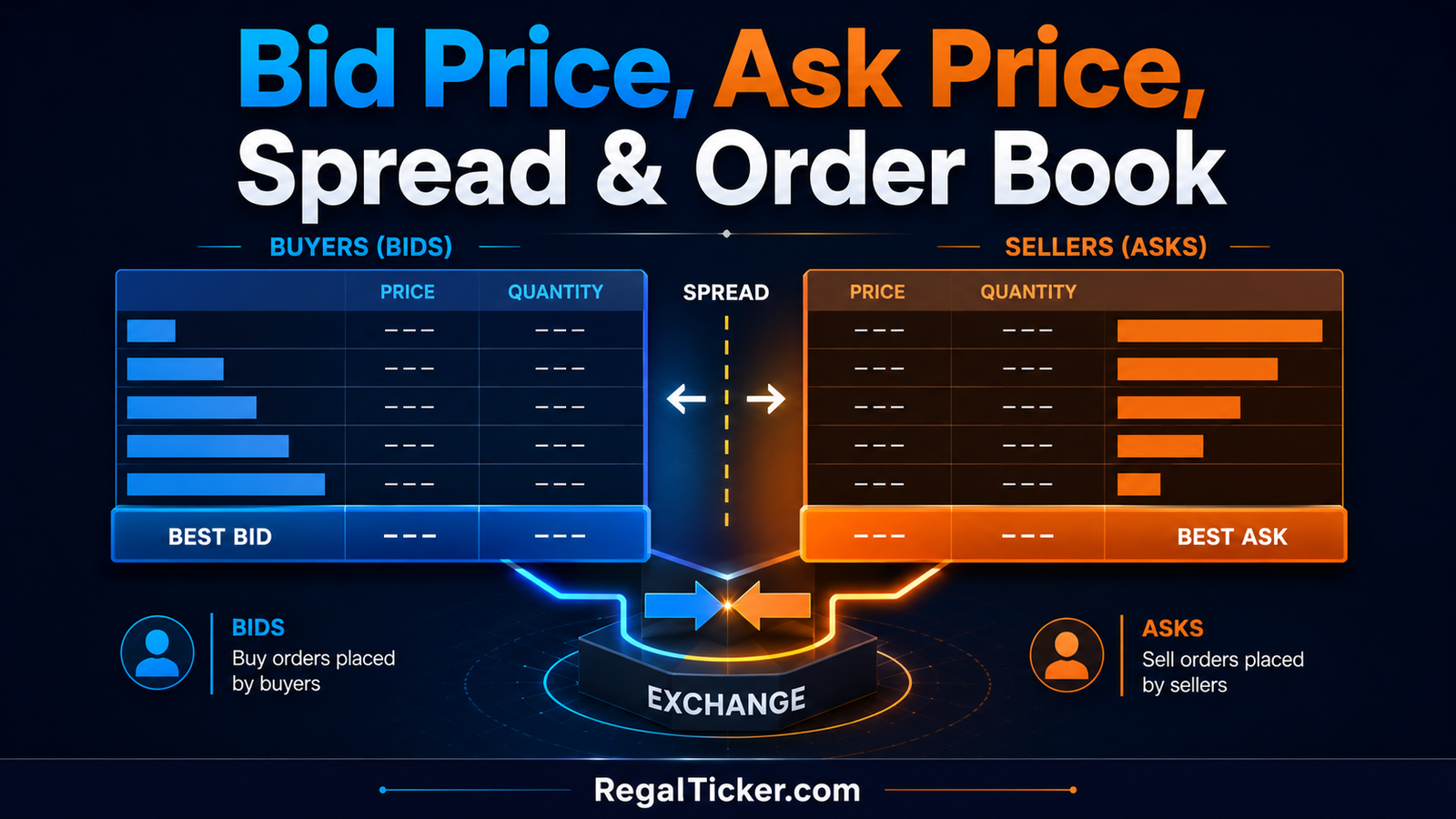
Open a trading screen and you may see two columns of prices and quantities. One side shows buyers; the other shows sellers. Between them lies a small but important difference called the bid-ask spread.
This live queue is the order book. It helps explain why the displayed share price changes, why a market order may fill at more than one price, and why the same order size can behave differently in a liquid stock and an illiquid stock.
If you have not read the companion lesson, begin with Market Order, Limit Order, Stop-Loss and Stop-Limit Order. That lesson explains the instructions. This one explains the market queue that receives them.
What Is the Bid Price?
The bid price is the price a buyer is currently willing to pay. Because many buyers may place orders at different prices, the highest active buy price is called the best bid.
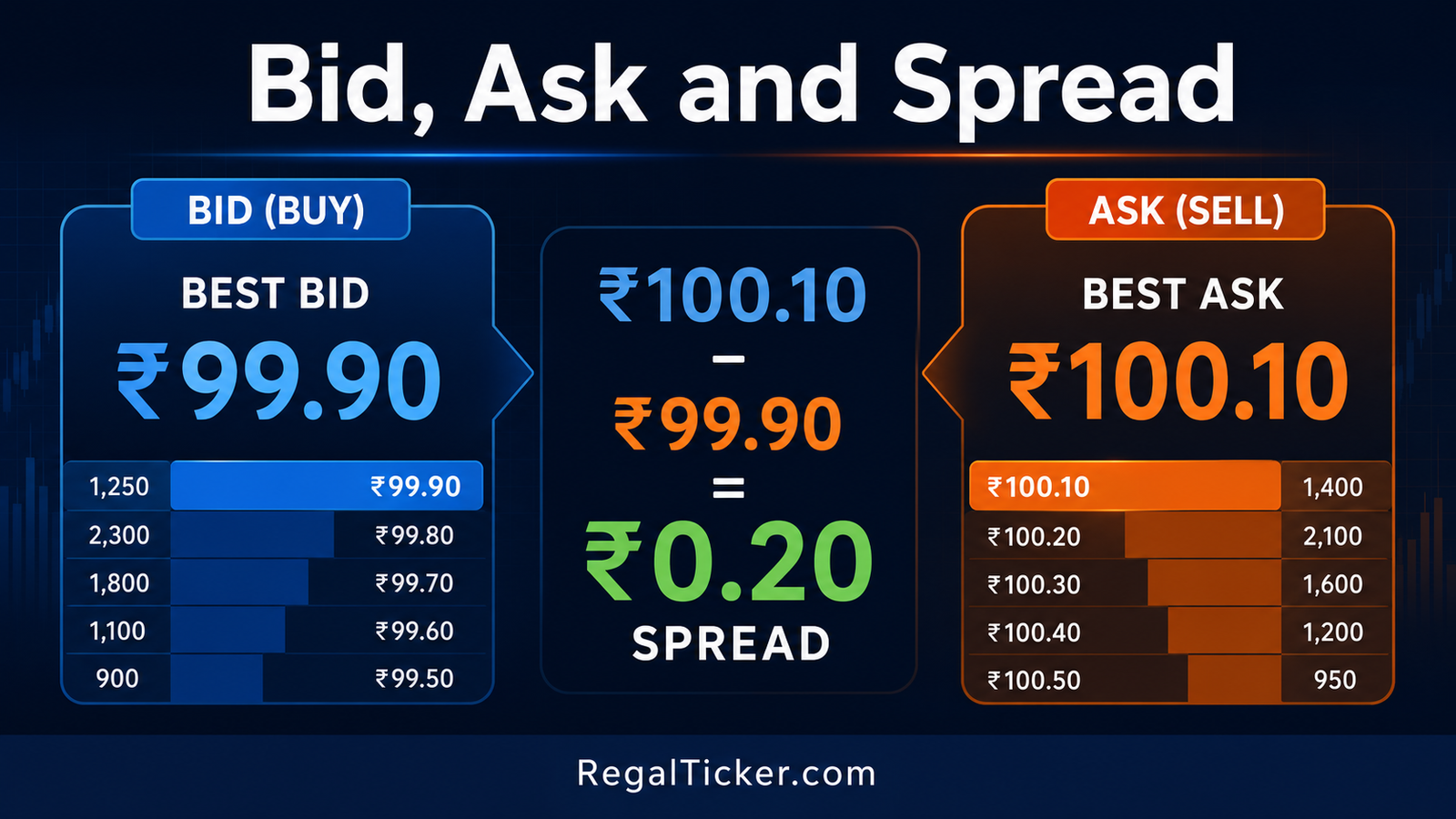
Suppose buyers are waiting at:
- ₹99.90 for 1,250 shares
- ₹99.80 for 2,300 shares
- ₹99.70 for 1,800 shares
The best bid is ₹99.90 because it is the highest buying price. A person submitting an immediately executable sell order would normally interact first with the best bids.
What Is the Ask Price?
The ask price—also called the offer price—is the price at which a seller is willing to sell. The lowest active sell price is called the best ask.
Suppose sellers are offering:
- ₹100.10 for 1,400 shares
- ₹100.20 for 2,100 shares
- ₹100.30 for 1,600 shares
The best ask is ₹100.10 because it is the lowest selling price. An immediately executable buy order normally reaches the best asks first.
What Is the Bid-Ask Spread?
The bid-ask spread is:
Best ask − Best bid
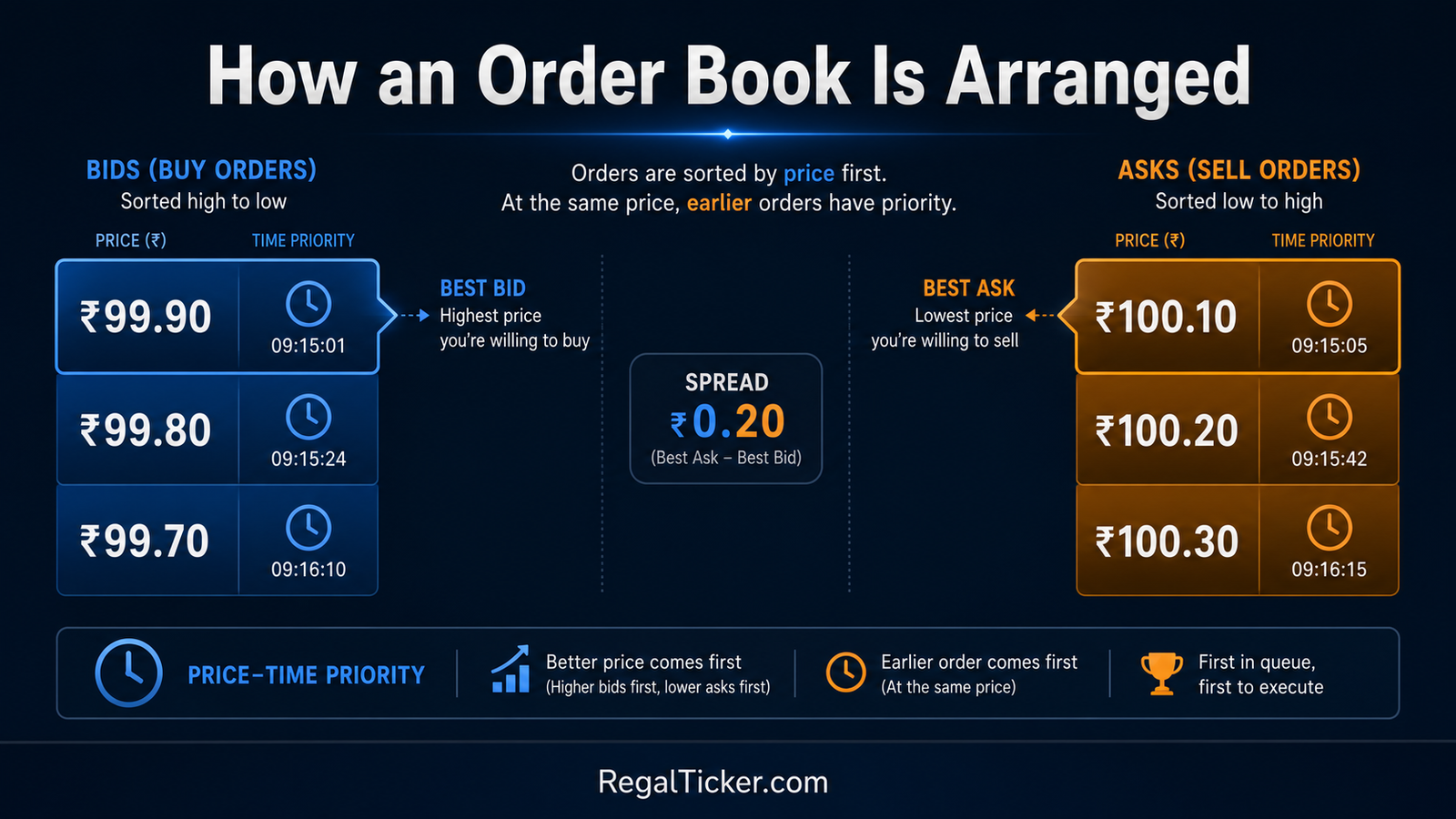
If the best ask is ₹100.10 and the best bid is ₹99.90:
Spread = ₹100.10 − ₹99.90 = ₹0.20
The spread is an immediate form of trading friction. If you buy at the ask and could instantly sell only at the bid, the difference works against you before brokerage, taxes and other charges.
Do not confuse spread with the percentage return shown on a price chart. Spread is the gap between currently available opposite quotes.
What Is an Order Book?
An order book is the exchange’s electronic list of unmatched buy and sell orders for a security. Each entry generally includes price and quantity. Your broker may show only a limited number of levels and call the display market depth.
The buy side contains bids. The sell side contains asks. Orders stay in the book until they execute, expire, are cancelled, or are modified subject to exchange rules.
An order book is dynamic. New orders arrive, existing orders are cancelled, quantities change and trades remove available orders. A screenshot is therefore only a momentary view.
For the wider explanation of how these interactions form prices, read How Are Share Prices Decided?.
How Price-Time Priority Works
NSE’s order-driven system matches orders using price-time priority.
Price priority
Better prices come first:
- Higher-priced bids receive priority over lower bids.
- Lower-priced asks receive priority over higher asks.
Time priority
When multiple orders have the same price, the earlier order normally receives priority. That is why a limit order can touch your chosen price but remain pending: quantity ahead of you may be filled first.
Modifying an order can affect its priority. The exact treatment depends on the modification and exchange rules, so do not assume an edited order retains the same queue position.
How an Order Becomes a Trade
A trade happens when compatible buying and selling instructions meet.
Imagine the best ask is ₹100.10 for 400 shares, followed by ₹100.20 for 600 shares. You submit a market order to buy 1,000 shares:
- The first 400 shares fill at ₹100.10.
- The remaining 600 shares fill at ₹100.20.
- The weighted average execution price is ₹100.16.
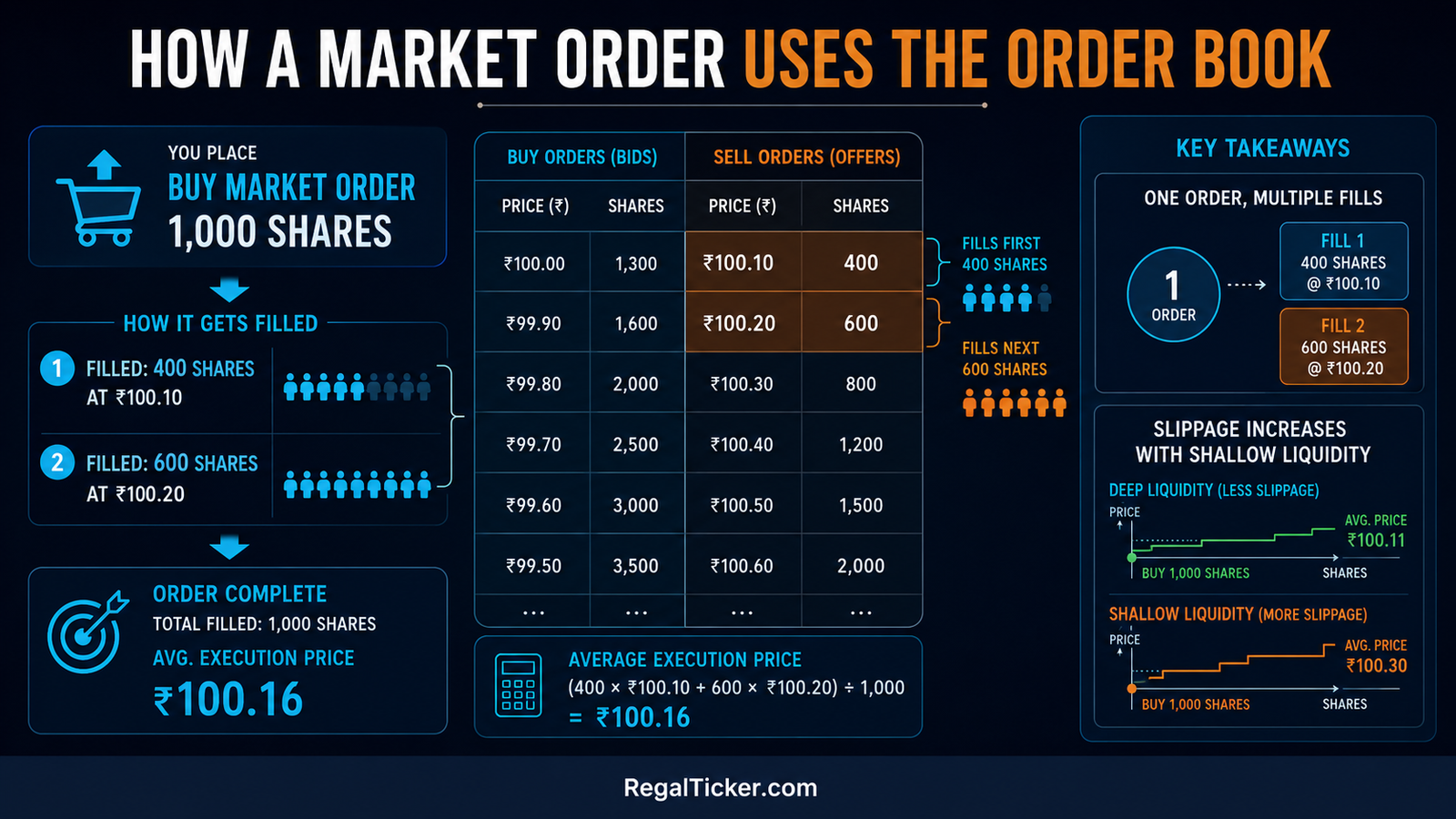
This is one order with two fills. The movement from the first ask into the next level is price impact. The difference between the price you expected and the price actually received is commonly called slippage.
This directly explains why market and limit orders behave differently. A market order consumes available opposite orders. A limit order refuses prices worse than its limit.
What Is Market Depth?
Market depth refers to the quantities available across multiple bid and ask levels. A deep order book has substantial quantity near the current market. A shallow order book has relatively little.
Depth matters because:
- Larger available quantities can absorb trades with less price movement.
- A shallow book may force an order across several levels.
- Visible depth can change before your order arrives.
- Only the displayed portion may be visible to you.
Never treat displayed quantity as a promise. Orders may be executed or cancelled, and your view may be delayed by processing or connectivity.
Tight Spread vs Wide Spread
A tight spread means the best bid and best ask are close. It often appears in actively traded securities with many competing orders.
A wide spread means the quotes are farther apart. It can be associated with lower liquidity, higher uncertainty, volatility or sparse participation.
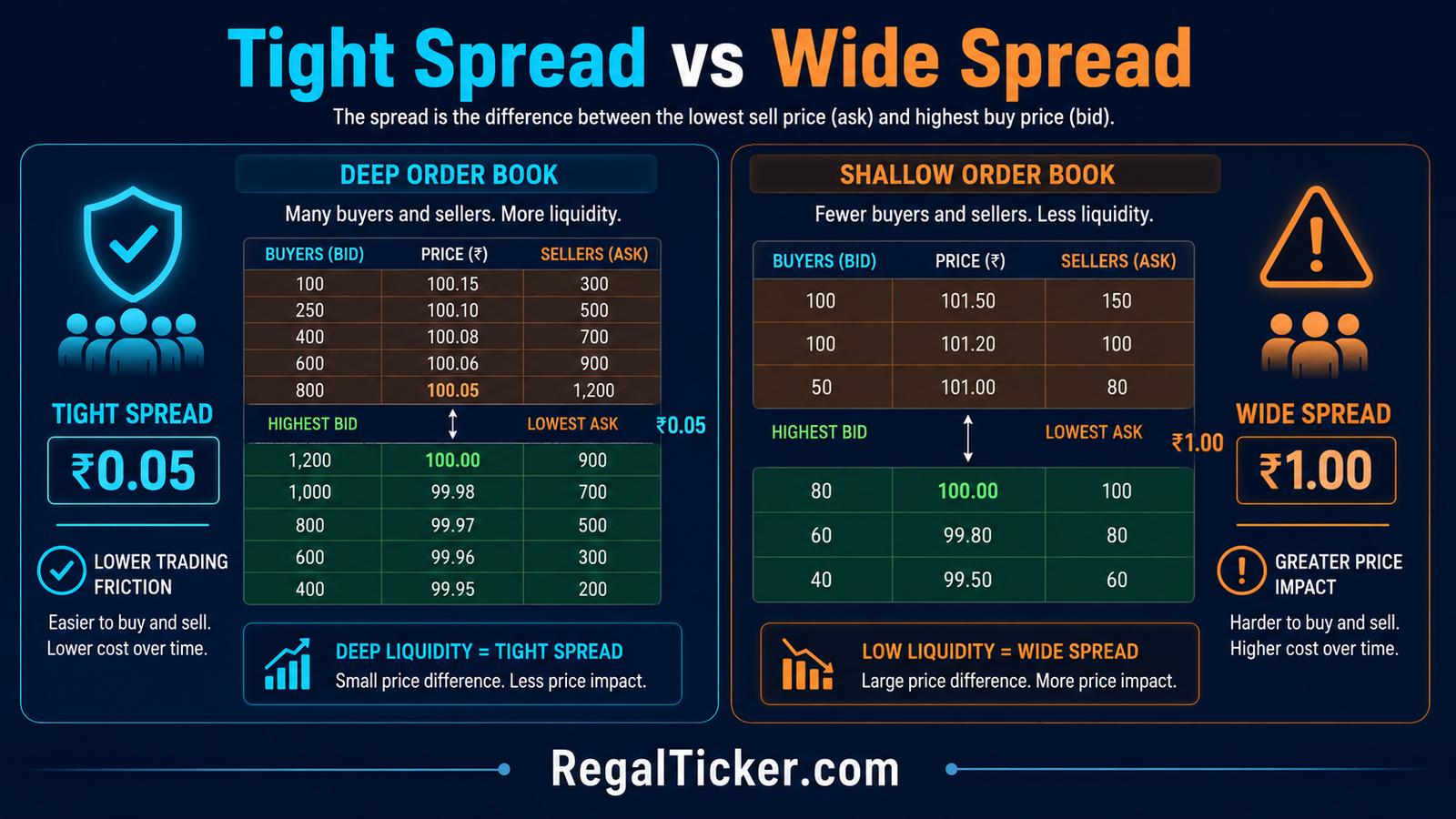
| Feature | Tight spread | Wide spread |
|---|---|---|
| Bid and ask | Close together | Farther apart |
| Typical liquidity | Often higher | Often lower |
| Immediate friction | Lower | Higher |
| Price impact risk | Usually lower for modest orders | Can be higher |
The relationship is not a guarantee. Market conditions change, and even a normally liquid stock can experience wider spreads during unusual events.
Bid, Ask and Last Traded Price
These are different values:
- Best bid: highest currently displayed buying price.
- Best ask: lowest currently displayed selling price.
- LTP: price of the most recent completed trade.
The LTP can sit at the bid, ask or another recent level. It does not guarantee where your next trade will execute.
This is an important extension of What Is a Share? and the share-price lesson. A share represents ownership; the order book is where participants continuously express the prices at which they are willing to transfer that ownership.
Why Does the Spread Change?
The spread may change because of:
- New buyers or sellers improving the best quote
- Existing best orders being traded or cancelled
- News and uncertainty
- Lower or higher trading activity
- The time of day
- A sudden imbalance between buying and selling interest
The spread can therefore widen even when the LTP has barely changed.
How Beginners Can Read Market Depth
Use market depth as context, not as a prediction.
- Identify the best bid and best ask.
- Calculate or observe the spread.
- Compare your quantity with available depth.
- Check whether liquidity is concentrated at one level or spread across several.
- Select an order type that matches your priority.
- Review the final order details before submission.
The Regal Ticker Investor Tools hub can support calculations and learning, but no tool can ensure that displayed orders remain available.
Common Misunderstandings
“A large bid guarantees the price will rise”
No. The order may be cancelled, executed or outweighed by new sell orders.
“The ask is the market price”
The ask is the lowest current selling quote. The next trade might occur there, but it is not guaranteed.
“My limit price traded, so my order must fill”
Orders ahead of yours at the same price may receive available quantity first.
“Market depth shows every intention”
It shows visible orders available through the displayed feed, not every participant’s future decision.
“A stop-loss waits in the normal order book”
Before triggering, it is held in the stop-loss book under exchange logic. After the trigger condition is met, it is released according to its order type. Review the order-types lesson for the distinction.
Connecting This Lesson to Your Demat and Trading Journey
Your trading account routes the order, while your Demat account holds securities after settlement. If you are new, also review:
- How to Open a Demat and Trading Account in India
- Stock-Market KYC: Documents and Verification Process
- Demat Account vs Trading Account vs Bank Account
These accounts enable participation, but the exchange order book determines whether and how compatible instructions meet.
Key Takeaway
The bid is the highest current buying quote, the ask is the lowest current selling quote, and their difference is the spread. The order book arranges bids and asks, generally using price-time priority. Market orders consume available liquidity; limit orders join or interact with the queue subject to their price.
Reading the book does not predict the market, but it helps you understand execution, slippage, partial fills and why the last traded price is not a promised price.
Frequently Asked Questions
Is bid price the buying price?
It is the price buyers are offering. The best bid is the highest current bid.
Is ask price the selling price?
It is the price sellers are asking. The best ask is the lowest current ask.
What is a good bid-ask spread?
There is no universal number. Consider the spread relative to the security’s price, liquidity, normal behaviour and your order size.
Why is the ask higher than the bid?
Buyers seek lower prices while sellers seek higher prices. A trade occurs when compatible instructions meet.
Can one order execute at several prices?
Yes. If insufficient quantity exists at the best level, the remaining quantity may match at subsequent levels.
What official source explains price-time matching?
See the NSE equity trading-system page. SEBI also provides investor education on buying and selling shares.