


⚡ Quick answer
Exit Load in Mutual Funds: The 30-Second Answer
Exit load in mutual funds is a charge that may be deducted when units are redeemed or switched out before the holding period specified by the scheme. It is usually expressed as a percentage of the redemption value of the units on which the load applies. If 1% exit load applies and the affected units are worth ₹1,05,000 at redemption, the load is ₹1,050 and the net amount before tax is ₹1,03,950.
There is no universal 1% rule for every mutual fund. The applicable rate, period, free-unit allowance and exemptions must be checked in the latest scheme documents. Under India's 2026 mutual fund framework, the maximum permissible exit load was reduced from 5% to 3%, but that regulatory ceiling is not the rate every scheme charges. Each SIP instalment has its own purchase date and exit-load clock, and redemptions are generally processed using the first-in, first-out method.
Key takeaways
Exit load is a redemption charge
It may apply when units are redeemed or switched out before the scheme's specified period.
It is calculated on redemption value
The usual base is units redeemed multiplied by the applicable NAV, not merely the profit.
The 2026 maximum is 3%
SEBI reduced the maximum permissible exit load from 5% to 3%; actual scheme rates can be lower or nil.
Every SIP instalment has a separate clock
Starting a SIP one year ago does not make every recent instalment load-free.
FIFO matters
The oldest available units are generally treated as redeemed first, which can split one withdrawal into load-free and load-bearing units.
Exit load is not a lock-in
A load allows redemption with a deduction, while a lock-in prevents redemption during the restricted period.
Switching can be an exit
A switch-out or STP transfer can be treated as redemption and may attract load unless the scheme terms provide an exemption.
Verify the current scheme terms
Read the latest SID, KIM, addenda, AMC disclosure and account statement before submitting a transaction.
Exit Load in Mutual Funds: Meaning and Why It Exists
Exit load in mutual funds is easy to misunderstand because it appears only when an investor tries to leave a scheme or move units out of it.
It is not normally deducted when the investment is first made. It is not the annual expense ratio reflected through NAV. It is not automatically a tax. It is not always charged. And it does not mean the investment is locked.
An exit load is a scheme-level charge that may apply when specified units are redeemed, repurchased or switched out before completing the holding period stated in the scheme's load structure.
The SEBI Investor exit-load guide describes it as a fee charged by the fund house when units are redeemed within a specified time frame. The amount is normally deducted from redemption proceeds before the balance reaches the investor.
In practical terms, exit load is the percentage-based amount deducted from the redemption value of mutual fund units when the scheme's stated early-exit conditions are met. The exact rate, period, calculation method and exemptions are scheme-specific and should be verified from current official documents.
Why Mutual Funds Use Exit Loads
Mutual funds pool money from many investors. When investors frequently enter and exit, the scheme may need to maintain additional liquidity or sell securities to meet redemptions. Those transactions can create trading, spread, market-impact and liquidity costs.
An exit load can therefore serve several purposes:
- discourage very short holding periods in a product designed for a longer horizon;
- reduce frequent entry-and-exit behaviour;
- protect remaining unitholders from some costs associated with early redemptions;
- give the fund manager a more stable asset base;
- support liquidity and portfolio management;
- encourage investors to match the scheme with a realistic time horizon.
The SEBI Annual Report chapter on fund-management activities states that exit-load proceeds continue to be credited back to the scheme for the benefit of remaining unitholders. This is an important distinction: exit load is not simply an extra annual management fee kept outside the scheme.
Exit Load Does Not Prove a Fund Is Suitable
A one-year exit-load period does not mean one year is the recommended investment horizon.
An equity scheme may stop charging exit load after 12 months but still be unsuitable for a goal only 12 months away. A long-term market-linked asset can remain volatile after the load becomes nil.
Likewise, a scheme with nil exit load is not automatically safer, cheaper or better. It may still carry market risk, credit risk, interest-rate risk, concentration risk, tracking risk, liquidity risk and tax consequences.
Risk
Nil Exit Load Does Not Mean Nil Risk
Exit load describes one possible redemption cost. It does not measure the risk of loss in the underlying portfolio. Never select a mutual fund only because it has no exit load, and never treat the end of the load period as proof that it is the right time to redeem.
What Changed Under SEBI's 2026 Rules?
India's mutual fund framework changed materially in 2026.
The SEBI (Mutual Funds) Regulations, 2026 replaced the older regulatory framework, and SEBI issued a new Master Circular for Mutual Funds dated March 20, 2026.
For exit load, the most important beginner-level change is the maximum permissible rate.
Maximum Permissible Exit Load Reduced to 3%
SEBI's 2025–26 annual report confirms that the maximum permissible exit load on mutual fund schemes was reduced:
- Old maximum: 5%
- New maximum under the 2026 framework: 3%
SEBI also notes that industry exit loads are generally in the 1% to 2% range, which is below the regulatory ceiling.
Caution
A 3% Cap Is Not a Universal 3% Charge
The 3% figure is the maximum permissible exit load under the current framework. It does not mean every scheme charges 3%. A scheme may charge 1%, use a graded structure, allow some units to exit without load or charge no exit load. The scheme's current load structure controls the transaction.
Exit Load Proceeds Continue to Benefit the Scheme
Exit load collected from redeeming investors is credited to the relevant scheme after applicable treatment such as GST on the exit-load proceeds. This helps protect remaining unitholders rather than treating the charge as ordinary extra revenue unrelated to the scheme.
Additional Exit-Load-Linked Expense Removed
The 2026 cost framework also removed the earlier additional expense allowance linked to schemes that levied exit load. This belongs mainly to the broader expense-ratio framework explained in Expense Ratio in Mutual Funds, but it is useful to understand that exit load and recurring scheme expenses are now treated as clearly separate concepts.
Existing Units and Prospective Changes
The AMFI explanation of sale and redemption price states that a change in exit-load structure is effective prospectively and should not affect existing units merely because the AMC later changes the load.
This means an investor must identify the load terms applicable when the relevant units were allotted. A website may show the load structure for new purchases today while older units remain governed by the earlier applicable structure.
How Exit Load Works at Redemption
To understand the charge, separate five events:
- Units are allotted on one or more purchase dates.
- Each set of units begins its own holding period.
- The investor submits a redemption, switch-out, STP or another unit-reducing request.
- The AMC identifies which units are being redeemed, generally using FIFO.
- The applicable load is deducted from the redemption value of units still inside the load period.
1
Identify the units
Confirm the folio, scheme, plan, option and units involved in the transaction.
2
Find each allotment date
Every purchase or SIP instalment can have a separate date and load period.
3
Apply FIFO
Oldest available units are generally considered redeemed first.
4
Test the scheme rule
Check whether each selected lot is within the fixed, stepped or load-free-unit period.
5
Calculate the load
Multiply the affected redemption value by the applicable percentage.
6
Calculate net proceeds
Subtract exit load, then consider tax and any other separate transaction consequences.
Redemption Price After Exit Load
AMFI gives the following relationship:
Redemption price per unit = Applicable NAV × (1 − Exit-load rate)
If the applicable NAV is ₹25 and the exit load is 1%:
Redemption price per unit = ₹25 × (1 − 0.01) = ₹24.75
If 4,000 affected units are redeemed:
- Gross redemption value: 4,000 × ₹25 = ₹1,00,000
- Exit load: 4,000 × ₹0.25 = ₹1,000
- Net redemption amount before tax: ₹99,000
Exit Load Can Apply Even When the Investment Is at a Loss
Exit load is based on the affected redemption value and the scheme's load conditions. It is not charged only when there is a profit.
Suppose ₹1,00,000 was invested and the affected units are worth ₹90,000 when redeemed within a 1% load period.
- Redemption value: ₹90,000
- Exit load at 1%: ₹900
- Net amount before tax: ₹89,100
The fact that the investment lost value does not automatically remove the load.
Stopping a SIP Is Not the Same as Redeeming
Cancelling future SIP instructions normally stops new instalments. It does not by itself sell the units already accumulated.
Exit load becomes relevant when existing units are redeemed, switched or otherwise moved out under a transaction treated as redemption.
Full and Partial Redemptions
Exit load can apply to a full redemption or only to the units involved in a partial redemption.
If an investor owns 10,000 units but redeems 2,000, the AMC evaluates those 2,000 units using the applicable lot-selection and holding-period rules. The remaining 8,000 units continue in the folio.
Exit Load Formula and Calculation
The basic formula is:
Exit load = Number of affected units × Applicable NAV × Exit-load percentage
Since:
Redemption value = Number of affected units × Applicable NAV
the formula can also be written as:
Exit load = Affected redemption value × Exit-load percentage
Net redemption proceeds before tax = Total redemption value − Exit load
🧮 Simple calculation
Simple 1% Exit-Load Example
Suppose 8,000 units are redeemed at an applicable NAV of ₹18.75. All 8,000 units are still within a 1% exit-load period.
Gross redemption value = 8,000 × ₹18.75 = ₹1,50,000
Exit load = ₹1,50,000 × 1% = ₹1,500
Net redemption proceeds before tax = ₹1,50,000 − ₹1,500 = ₹1,48,500
Exit Load Is Charged on Value, Not Only Profit
A common mistake is to calculate 1% only on the gain.
Suppose:
- Original investment: ₹1,00,000
- Redemption value: ₹1,05,000
- Gain before load: ₹5,000
- Exit load: 1%
Incorrect calculation:
₹5,000 × 1% = ₹50
Correct simplified exit-load calculation:
₹1,05,000 × 1% = ₹1,050
The load is calculated on the redemption value of the affected units, not merely the ₹5,000 gain.

Fixed, Stepped and Load-Free-Unit Structures
Schemes can use different structures.
| Exit-load structure | Illustrative rule | What the investor should understand |
|---|---|---|
| Fixed-period load | 1% if redeemed within 12 months; nil afterward | The same percentage applies throughout the stated early period |
| Stepped load | 2% in year 1, 1% in year 2, nil later | The rate falls as the holding period increases |
| Graded daily load | Rate declines from Day 1 to Day 6; nil from Day 7 | Common regulatory structure for liquid funds |
| Load-free-unit allowance | A specified percentage of units may be redeemed without load; excess units attract load | The allowance may be calculated separately for each purchase lot |
| Nil exit load | No charge under the current structure | Tax, market loss and other risks can still apply |
The table is educational. The actual scheme document may use different dates, rates, conditions and exemptions.
Exit Load on SIP: Every Instalment Has Its Own Clock
SIP is a method of making repeated purchases. It is not one single purchase made on the date the SIP was registered.
Every instalment normally creates a separate lot of units with:
- its own investment date;
- its own applicable NAV;
- its own number of units;
- its own holding period;
- its own exit-load expiry date;
- its own tax holding period.
If a scheme charges 1% on units redeemed within 12 months, the first instalment becomes load-free before the second, the second before the third, and so on.
SIP Timeline Example
Assume ₹10,000 is invested monthly and the scheme applies 1% exit load to units redeemed within 12 months.
| SIP instalment | Allotment date | Load-free after | Status on February 15, 2026 |
|---|---|---|---|
| Instalment 1 | January 5, 2025 | After completing the scheme's stated 12-month period | Outside load period |
| Instalment 2 | February 5, 2025 | After completing the scheme's stated 12-month period | Check exact day-count rule |
| Instalment 3 | March 5, 2025 | After completing the scheme's stated 12-month period | Inside load period |
| Instalment 4 | April 5, 2025 | After completing the scheme's stated 12-month period | Inside load period |
This is why the sentence “My SIP is more than one year old” can be misleading. The SIP registration may be old while recent instalments are still new.
FIFO and SIP Redemptions
Mutual fund redemptions are generally processed on a first-in, first-out basis.
Under FIFO:
- the oldest available units are considered redeemed first;
- older units may be outside the load period;
- newer units may still attract load;
- one redemption can therefore contain both load-free and load-bearing portions.

💡 Real example
SIP Redemption With Old and New Units
Assume the investor owns 1,200 units accumulated through monthly SIPs. The oldest 800 units have completed the scheme's exit-load period. The newest 400 units have not. The investor redeems 1,000 units at NAV ₹25 under FIFO.
The first 800 units are load-free: 800 × ₹25 = ₹20,000.
The next 200 units come from a lot still carrying 1% exit load: 200 × ₹25 = ₹5,000 affected value; exit load = ₹50.
Total gross redemption value = ₹25,000. Net before tax = ₹24,950.
The remaining 200 newer units stay invested and retain their own purchase dates and load periods.
A SIP Withdrawal Is Not Automatically Load-Free
The name of the facility does not remove the scheme rule.
- SIP purchases can later attract exit load when redeemed early.
- SWP instalments can attract load if the units selected are still inside the load period.
- STP transfers can attract load because the transferor scheme is being redeemed.
- A manual partial redemption follows the same unit-lot logic.
Always review the units being sold, not merely the name of the transaction facility.
Partial Redemption, FIFO and Load-Free-Unit Limits
Some schemes allow a defined percentage of units from a purchase lot to be redeemed without exit load during the otherwise chargeable period.
An illustrative structure may say:
- up to 10% of units allotted under each purchase may be redeemed without load within 12 months;
- units redeemed beyond that allowance within 12 months attract 1%;
- all units are load-free after 12 months.
This is not a universal rule. Some schemes use 10%, some use another percentage, and many provide no such allowance.
Example of a 10% Load-Free Allowance
Assume one purchase allotted 10,000 units and the scheme gives a 10% load-free allowance during the first year.
- Load-free allowance: 10% of 10,000 = 1,000 units
- Units requested for redemption: 2,500
- Load-free units: 1,000
- Units potentially subject to load: 1,500
- Applicable NAV: ₹20
- Load rate on excess early-redemption units: 1%
Affected redemption value:
1,500 × ₹20 = ₹30,000
Exit load:
₹30,000 × 1% = ₹300
The gross value of all 2,500 units is ₹50,000, but the load applies only to the 1,500 units outside the allowance.
The Allowance Can Be Purchase-Lot Specific
Do not automatically calculate 10% of the total units in the folio.
Scheme terms may calculate the free allowance separately for each inflow transaction. If there were three purchases, each may have its own units, dates, used allowance and remaining allowance.
This becomes more complex in a SIP because every instalment is a purchase.
FIFO Decides Which Lot Is Used First
If older and newer units coexist, FIFO can determine:
- which purchase lot is redeemed;
- whether that lot has completed its load period;
- whether a free allowance remains;
- whether the next lot begins to be used;
- what load percentage applies to each affected portion.
Before a large withdrawal, obtain a current transaction statement or use the AMC or registrar interface to inspect purchase dates and units.
Exit Load on Switches, STP and SWP
Exit load is not limited to a request labelled “redeem.”
Switch From One Scheme to Another
A switch generally has two legs:
- Units are redeemed from the source scheme.
- The resulting value is invested in the destination scheme.
The switch-out can therefore attract exit load under the source scheme's rules.
It can also create capital-gains tax consequences because the source units are treated as redeemed. The investment in the destination scheme begins with new units, a new acquisition date and a new exit-load clock.
Switch Between Direct and Regular Plans
Some scheme documents exempt switches between direct and regular plans of the same scheme from exit load. Other transaction consequences, including tax, may still apply.
Do not assume the exemption is universal. Read the load structure of the exact scheme and the current addenda before switching.
The cost decision itself is explained in Direct vs Regular Mutual Funds.
Switch Between Growth and IDCW
A switch between options can also involve redemption and fresh allotment. Some schemes may exempt the transaction from exit load, but tax and a new unit history can still matter.
Read Growth vs IDCW in Mutual Funds before changing an option merely because one NAV appears higher or a payout looks attractive.
Systematic Transfer Plan
An STP regularly moves value from one scheme to another.
Every transfer instalment generally involves:
- redemption from the transferor scheme;
- possible exit load on the redeemed units;
- possible tax consequence;
- purchase of new units in the transferee scheme;
- a new holding period in the destination scheme.
An STP is systematic, but it is not cost-free by definition.
Systematic Withdrawal Plan
An SWP regularly redeems units to create cash flow.
Each withdrawal can consume units using FIFO. If the selected units are inside the applicable exit-load period, a charge may apply.
An SWP should therefore be planned only after checking:
- the source scheme's exit-load structure;
- the purchase dates of available units;
- the withdrawal amount and frequency;
- capital-gains tax treatment;
- whether the assumed return can support the withdrawal;
- whether the goal requires a separate liquidity reserve.
Use the SWP Calculator to model corpus survival, but remember that the calculator does not automatically read your scheme's lot-wise exit-load schedule.
Switching is not a free shortcut. It can trigger exit load, capital-gains tax and a reset of the unit holding period. Do not switch merely to obtain a higher NAV, chase recent returns or save a small expense-ratio difference without comparing the immediate cost and remaining investment horizon.
Exit Load Across Mutual Fund Categories
There is no universal category table that can replace the current SID and KIM. Even schemes within the same category can use different load structures.
The following orientation explains common patterns without claiming that every scheme follows them.
| Mutual fund category or structure | Common exit-load approach | Important 2026 point |
|---|---|---|
| Equity funds | Often a fixed or free-unit-plus-load structure for early redemption; some schemes now use nil load | Do not assume every equity fund charges 1% for one year |
| Debt funds | Can be nil, short-period, fixed or stepped according to duration and portfolio strategy | A debt label does not guarantee immediate load-free liquidity |
| Hybrid funds | Scheme-specific; can resemble equity or use separate stepped terms | Asset mix and tax classification do not by themselves determine the load |
| Liquid funds | Uniform graded structure in the first six days, nil from Day 7 under the SEBI–AMFI framework | The percentages are very small but should still be checked |
| Overnight funds | Commonly nil | Nil load does not remove credit, operational or return considerations applicable to the product |
| Index funds and ETFs | Many use nil or short-period loads, but scheme terms vary | ETF investors may also face bid-ask spread and brokerage outside the exit-load concept |
| Life Cycle Funds | Prescribed stepped structure under the 2026 category framework | Up to 1 year: 3%; over 1 to 2 years: 2%; over 2 to 3 years: 1%; after 3 years: nil |
Liquid-Fund Graded Exit Load
SEBI agreed to a uniform graded structure for liquid funds to discourage extremely short holding periods while retaining high liquidity.
| Investor exit after subscription | Exit load as percentage of redemption proceeds |
|---|---|
| Day 1 | 0.0070% |
| Day 2 | 0.0065% |
| Day 3 | 0.0060% |
| Day 4 | 0.0055% |
| Day 5 | 0.0050% |
| Day 6 | 0.0045% |
| Day 7 onward | Nil |
Current 2026 liquid-scheme disclosures continue to show this graded structure. Because the day-count convention can matter, verify the specific scheme document before placing a same-day or very-short-term redemption.
Life Cycle Funds: A Special 2026 Structure
SEBI's February 2026 Categorization and Rationalization of Mutual Fund Schemes circular introduced Life Cycle Funds with a glide path toward a target maturity year.
Their prescribed stepped exit-load structure is designed to encourage goal-based holding:
- Up to 1 year: 3%
- More than 1 year and up to 2 years: 2%
- More than 2 years and up to 3 years: 1%
- After 3 years: Nil
This is a useful example of why the phrase “mutual fund exit load is usually 1% for one year” is no longer enough for a complete 2026 explanation.
Exit Load vs Expense Ratio, Lock-in, Entry Load and Tax
These concepts answer different questions.
| Concept | When it matters | Can the investor transact? | How it affects value |
|---|---|---|---|
| Exit load | When specified units are redeemed or switched early | Usually yes | Deducted from affected redemption proceeds |
| Expense ratio | Throughout the investment period | Yes | Reflected through scheme or plan net assets and NAV |
| Lock-in period | During a legally or contractually restricted period | No redemption during lock-in | Prevents access rather than merely reducing proceeds |
| Entry load | At investment entry | Not applicable to current Indian mutual fund subscriptions under SEBI's abolition of entry load | No current entry-load deduction from subscription amount |
| Capital-gains tax | On a taxable redemption, switch or other transfer | Yes | Separate investor-level tax consequence based on current law and transaction facts |
Exit Load vs Expense Ratio
Exit load may apply once when specific units leave early. Expense ratio is an ongoing scheme or plan cost reflected through NAV.
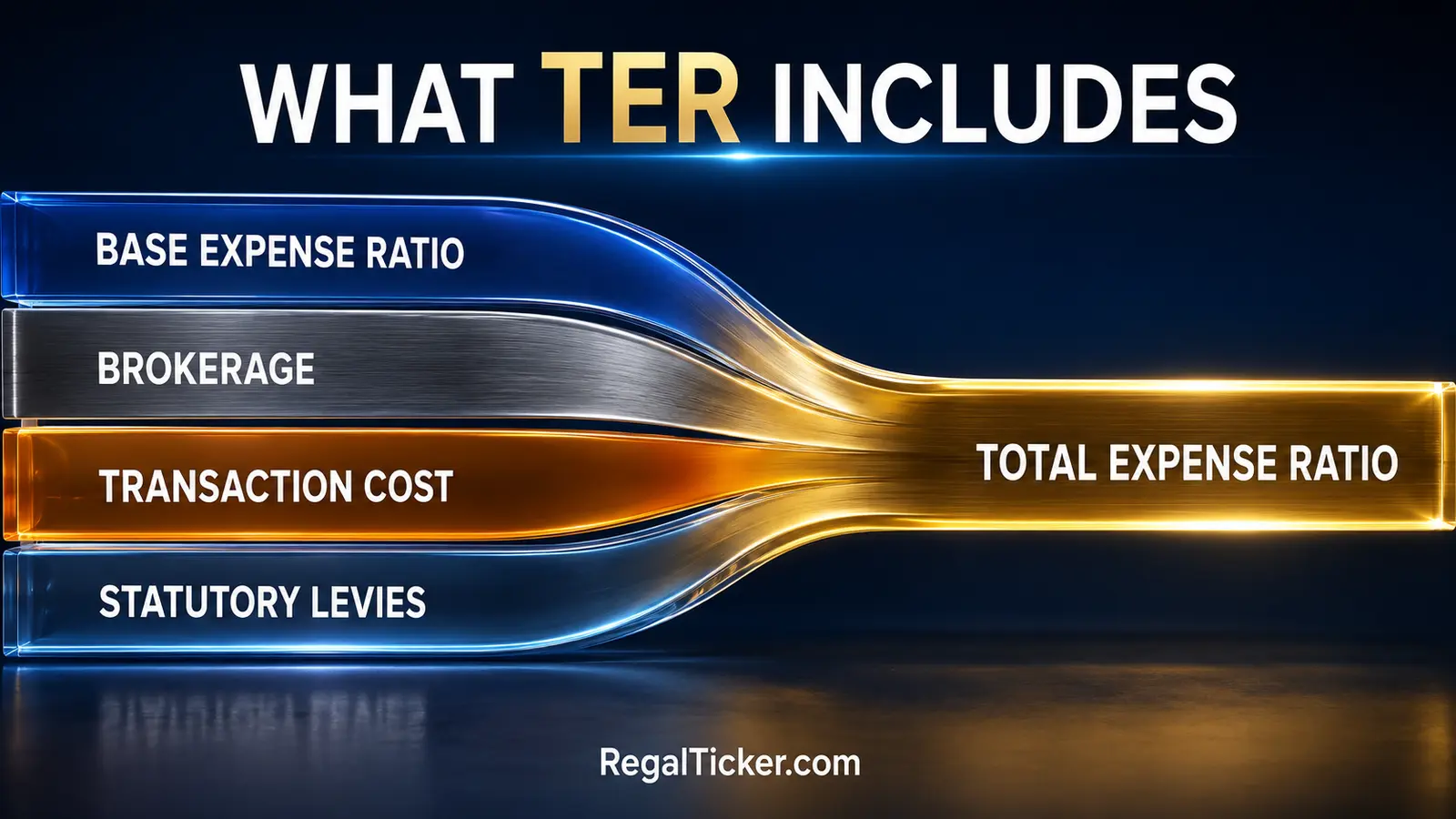
Read Expense Ratio in Mutual Funds for the 2026 distinction between Base Expense Ratio and Total Expense Ratio.
Exit Load vs Lock-in Period
An exit-load period and a lock-in period are not interchangeable.
- Exit-load period: redemption is generally allowed, but a charge may apply.
- Lock-in period: redemption is not permitted during the restricted period, subject to applicable product rules.
For example, ELSS units have a three-year lock-in from each allotment. Every SIP instalment in ELSS therefore has its own three-year lock-in. This is not simply a 1% early-exit charge; the units cannot ordinarily be redeemed before completing the lock-in.
Exit Load vs Entry Load
SEBI abolished entry load for mutual fund schemes in 2009. The amount invested is not reduced by a current mutual-fund entry-load percentage.
Distribution or separately paid service costs should not be confused with entry load. Direct and regular plan costs are covered in the dedicated plan lesson.
Exit Load vs Capital-Gains Tax
Exit load and capital-gains tax can both matter in the same redemption.
Exit load is deducted under the scheme's load structure. Capital-gains tax depends on factors such as:
- type and tax classification of the fund;
- purchase date;
- redemption or switch date;
- holding period;
- cost of acquisition;
- current tax law;
- investor-specific facts.
This Lesson 8 does not attempt to replace the next dedicated mutual-fund taxation lesson.
Use the Capital Gains Tax Calculator only as an educational estimate and verify the current rule applicable to the specific mutual fund transaction.
Investor note
Load-Free Does Not Mean Tax-Free
Waiting until exit load becomes nil may avoid that scheme charge, but a redemption can still create capital gains or losses and a tax consequence. Conversely, tax may be nil in a particular case while exit load still applies. Calculate and verify the two separately.
When Exit Load May Be Nil or Waived
Exit load can be nil for several different reasons. The reason matters.
The Holding Period Has Ended
The most common case is that the units have completed the scheme's specified load period.
The Scheme Currently Has Nil Exit Load
Some schemes publish a nil exit-load structure. Verify that it applies to the exact plan, option, purchase date and transaction.
Units Fall Within a Load-Free Allowance
A scheme may allow a stated percentage of units from each purchase to be redeemed without load during the initial period.
The Transaction Is Covered by a Scheme-Specific Exemption
Some scheme documents exempt defined intra-scheme switches, units created through IDCW reinvestment, bonus units or other stated cases. The exemption is not automatically universal across all schemes.
An Exit Window Is Offered Without Load
When a material change such as a change in fundamental attributes is proposed, applicable rules can require an exit option at prevailing NAV without exit load for a specified period.
The investor should read the official communication carefully. An exit-load waiver does not automatically mean the transaction is tax-free or that exiting is the best decision.
Regulatory or Scheme Conditions Require a Waiver
Specific events, portfolio-rebalancing failures or regulatory changes can create exit-without-load rights under applicable rules. These are event-specific, not general loopholes.
❌ Myth
If an AMC changes the exit load to nil today, every older unit automatically uses today's nil rule.
✅ Fact
Exit-load changes generally apply prospectively. Existing units can retain the load structure applicable when they were allotted. Verify the transaction statement and current AMC communication for the exact units.
How to Check Exit Load Before Investing or Redeeming
Do not rely only on an app label, a search snippet or the phrase “usually 1%.”
1. Identify the Exact Holding
Confirm:
- AMC name;
- scheme name;
- direct or regular plan;
- growth or IDCW option;
- folio or demat holding;
- number of units;
- purchase or allotment dates.
2. Read the Current SID and KIM
The Scheme Information Document and Key Information Memorandum describe the load structure and material conditions.
3. Check Addenda and AMC Notices
The load may have changed for new investments. An addendum should explain the effective date and whether the change applies prospectively.
4. Check the Account Statement or CAS
Use the folio statement, consolidated account statement, AMC portal or registrar portal to identify transaction-wise units and dates.
5. Confirm FIFO and Free-Unit Treatment
If the folio has multiple purchases, confirm which units the redemption will consume and whether any load-free allowance remains.
6. Estimate the Gross and Net Redemption Value
Use:
Gross redemption value = Units × Applicable NAV
Exit load = Affected value × Applicable rate
Net before tax = Gross value − Exit load
The applicable NAV depends on the transaction and cut-off rules, so the final amount can differ from a same-day estimate.
7. Check Tax Separately
Do not treat the exit-load figure as the entire cost of switching or redeeming.
8. Recheck the Investment Reason
Ask why you are redeeming:
- the goal is due;
- an emergency requires funds;
- planned rebalancing is needed;
- the scheme no longer fits the goal;
- persistent process or mandate concerns exist;
- or short-term market emotion is driving the action.
Exit load should not trap an investor in an unsuitable scheme indefinitely. But an avoidable early charge should not be ignored when a transaction can be planned safely.

Common Exit-Load Mistakes and Investor Checklist
Common Mistakes
- Assuming every mutual fund charges 1% for one year.
- Treating the 3% regulatory cap as the rate every scheme charges.
- Calculating load only on profit instead of affected redemption value.
- Believing exit load disappears because the investment is at a loss.
- Treating the SIP start date as the purchase date for every instalment.
- Ignoring FIFO when old and new units coexist.
- Calculating a load-free allowance on the total folio when it applies separately to each purchase.
- Assuming stopping a SIP redeems existing units.
- Assuming every switch between plans or options is exit-load-free.
- Forgetting that STP and SWP involve redemptions from the source scheme.
- Confusing an exit-load period with a lock-in period.
- Assuming nil exit load means nil tax or nil market risk.
- Using today's load structure for older units without checking the effective date.
- Redeeming one day before the load period ends without an urgent reason.
- Staying in an unsuitable or risky scheme only to avoid a relatively small load.
15 Checks Before You Redeem or Switch
- Confirm the exact scheme, plan and option.
- List every purchase or SIP allotment date.
- Check the applicable load terms for those units.
- Confirm whether the load changed prospectively.
- Verify the number of units requested for redemption.
- Apply FIFO to identify the affected lots.
- Check whether any load-free-unit allowance remains.
- Confirm the applicable exit-load rate for each lot.
- Estimate the applicable NAV and gross redemption value.
- Calculate exit load on the affected redemption value.
- Estimate capital-gains tax separately.
- Check whether the transaction is a redemption, switch, STP or SWP.
- Confirm whether any specific exemption applies.
- Recheck the goal, liquidity need and remaining horizon.
- Save the transaction confirmation and updated statement.
Use RegalTicker Calculators Before Redeeming
RegalTicker calculators do not fetch your scheme's live lot-wise exit-load data. Enter current, verified inputs and treat outputs as educational scenarios.
| Investor question | RegalTicker calculator | Correct use with exit load |
|---|---|---|
| What could one investment be worth after an optional exit load? | Lumpsum Calculator | Enter the current or projected exit-load percentage as a scenario |
| What might monthly investing grow to? | SIP Calculator | Project SIP value; calculate actual lot-wise load separately |
| What starting SIP may be needed for a goal? | Goal SIP Calculator | Build a goal plan with adequate liquidity so forced early exits are less likely |
| How long might a withdrawal corpus last? | SWP Calculator | Test withdrawals, then separately verify load on source units |
| What annualised rate connects one starting and ending value? | CAGR Calculator | Use consistent values and state whether the ending amount is before or after load |
| What return applies to dated SIP cash flows? | XIRR Calculator | Use actual dated investments and net redemption receipts for realised cash-flow analysis |
| What tax may apply to a redemption or switch? | Capital Gains Tax Calculator | Estimate tax separately from the scheme's exit load |
Use the calculator
Test the Exit-Load Impact Before Redeeming
TEXT: Enter a one-time investment scenario, projected value and optional exit-load percentage to see the estimated deduction and net amount. Then check capital-gains tax separately. The Investor Tools hub contains all RegalTicker calculators. Use only the tool that matches the question; no calculator can replace current scheme documents.
Frequently asked questions
What is exit load in mutual funds?
Exit load is a charge that may apply when mutual fund units are redeemed, repurchased or switched out before completing the holding period stated in the scheme's load structure. It is usually deducted from the redemption value of the affected units.
What does 1% exit load mean?
It means 1% of the affected redemption value is deducted when the scheme's stated conditions are met. If affected units are worth ₹1,00,000, a 1% exit load is ₹1,000.
Is exit load calculated on investment or profit?
Exit load is generally calculated on the redemption value of the affected units, not only on the profit and not necessarily on the original investment amount.
What is the maximum exit load under SEBI's 2026 rules?
SEBI reduced the maximum permissible exit load from 5% to 3%. This is a regulatory ceiling, not a universal rate. A scheme may charge less or have nil load.
Does every mutual fund charge exit load?
No. Load structures vary. Some schemes charge a fixed or stepped load, some provide a load-free-unit allowance and some currently have nil exit load.
Does SIP have exit load?
SIP units can attract exit load when redeemed early. Every SIP instalment is a separate purchase with its own allotment date and holding period.
If my SIP is one year old, is the full investment load-free?
Not necessarily. Older instalments may have completed the load period while recent instalments remain inside it. Apply the scheme rule separately to the units being redeemed.
What is FIFO in mutual fund redemption?
FIFO means first in, first out. The oldest available units are generally considered redeemed first, which determines their holding period, exit load and tax lot.
Is exit load charged on partial redemption?
It can be. The AMC evaluates the units included in the partial redemption. Only affected units within the applicable load conditions should attract the charge.
Does exit load apply when the mutual fund is in loss?
It can. If the units are redeemed within the applicable load period, the charge may be deducted from their redemption value even when that value is below the original investment.
Is exit load charged on a switch?
A switch-out is generally treated as redemption from the source scheme and may attract exit load. Some scheme-specific intra-scheme switches may be exempt, so verify the current documents.
Does STP attract exit load?
An STP transfers value by redeeming units from the source scheme. Those redemptions can attract load if the affected units are within the source scheme's exit-load period.
Does SWP attract exit load?
An SWP redeems units periodically. A withdrawal can attract exit load when the units selected under FIFO are still within the applicable period.
Is exit load included in the expense ratio?
No. Exit load is a separate possible redemption charge. Expense ratio is an ongoing scheme or plan cost reflected through NAV.
Is exit load the same as lock-in?
No. Exit load generally allows redemption with a deduction. A lock-in prevents redemption during the restricted period.
Is there an entry load in Indian mutual funds?
SEBI abolished entry load for mutual fund schemes in 2009. Current subscriptions are not reduced by an entry-load percentage.
Is exit load tax?
No. Exit load is a scheme charge. Capital-gains tax is a separate investor-level consequence under tax law, and both can matter in one redemption.
Can an AMC change the exit load?
An AMC or trustee can modify the load structure subject to regulatory requirements. Increases or new loads generally apply prospectively rather than changing the terms of units already allotted.
Where can I check the exit load of my mutual fund?
Check the latest SID, KIM, addenda, AMC website, scheme factsheet and your transaction statement. Confirm the terms applicable to the exact purchase dates of the units being redeemed.
How can I avoid exit load legally?
Where the transaction is not urgent, hold each affected lot until its load period ends, use any scheme-provided load-free allowance correctly and plan withdrawals around verified unit dates. Do not remain in an unsuitable scheme solely to avoid the charge.
Final takeaway
Exit Load Is a Unit-Level Redemption Rule, Not a Universal 1% Fee
Exit load in mutual funds is a possible deduction from the redemption value of units that leave a scheme before completing its stated holding period.
The basic arithmetic is simple: affected units × applicable NAV × exit-load rate. The real difficulty is identifying the correct units and rule.
Every purchase can have a different allotment date. Every SIP instalment has its own clock. FIFO generally selects the oldest units first. Some schemes offer load-free units; others use a fixed, graded or stepped structure. Switches, STPs and SWPs can involve redemptions. Tax, expense ratio and lock-in are separate concepts.
Under the 2026 framework, SEBI reduced the maximum permissible exit load from 5% to 3%, but the actual scheme rate can be lower or nil. Never convert that cap into a universal charge.
Before redeeming, verify the exact scheme, plan, option, purchase dates, applicable load structure, FIFO lots, free-unit allowance, current NAV, tax impact and investment reason. A careful five-minute check can prevent an avoidable deduction or a more costly transaction mistake.
This is Lesson 8 in the RegalTicker Mutual Funds learning path. Review Expense Ratio in Mutual Funds, Growth vs IDCW Mutual Funds, Direct vs Regular Mutual Funds, SIP vs Lumpsum and NAV in Mutual Funds when a redemption decision involves multiple costs, options or cash flows.
Verify through official sources
Official references
- [SEBI Investor: Exit Load](https://investor.sebi.gov.in/exit_load.html) | Official beginner explanation and calculation example
- [SEBI: Mutual Funds Regulations, 2026](https://www.sebi.gov.in/legal/regulations/jan-2026/securities-and-exchange-board-of-india-mutual-funds-regulations-2026_99173.html) | Current regulatory framework effective in 2026
- [SEBI: Master Circular for Mutual Funds, March 20, 2026](https://www.sebi.gov.in/legal/master-circulars/mar-2026/master-circular-for-mutual-funds_100491.html) | Consolidated current operational requirements
- [SEBI Annual Report 2025–26: Fund Management Activities](https://www.sebi.gov.in/reports-and-statistics/publications/aug-2026/Chapter%2005.pdf) | Official confirmation of the 3% maximum and crediting load to the scheme
- [SEBI: Categorization and Rationalization of Mutual Fund Schemes, February 26, 2026](https://www.sebi.gov.in/legal/circulars/feb-2026/categorization-and-rationalization-of-mutual-fund-schemes_99983.html) | Life Cycle Fund structure and current category framework
- [SEBI: Policy-Related Letters and Emails, Liquid-Fund Graded Exit Load](https://www.sebi.gov.in/sebi_data/commondocs/may-2023/Policy%20related%20Letters-Emails%20issued%20by%20SEBI%20as%20on%20March%2031%2C%202023_p.pdf) | Official graded liquid-fund exit-load table
- [AMFI: NAV, Sale Price and Redemption Price](https://www.amfiindia.com/investor/knowledge-center-info?zoneName=NetAssetValueNAV) | Redemption-price formula, load disclosure and prospective-change principle
- [Kotak Mutual Fund: Exit Load in Mutual Funds, July 13, 2026](https://www.kotakmf.com/Information/blogs/exit-load-in-mutual-funds) | Current AMC explanation of SIP, FIFO, fixed and stepped loads
Educational disclaimer: This article is for investor education and general information only. It is not investment, tax, legal or financial advice and is not a recommendation to invest, redeem, switch, start or stop any mutual fund transaction. Regal Ticker is not a SEBI-registered investment adviser or mutual fund distributor. Mutual fund investments are subject to market risks. Exit-load structures, regulations, tax laws, scheme terms, NAVs and transaction procedures can change. Read the latest scheme-related documents and verify current official disclosures before acting.