
Opening a Demat and trading account is the practical first step between learning about shares and actually participating in India’s securities market. The process can now be completed online in many cases, but a quick application is not the same as a good decision. You still need to choose a suitable intermediary, understand the documents you sign and activate only the market segments you genuinely need.
This guide explains how to open a Demat and trading account in India, what to keep ready, how verification works, which charges to compare and what to check before placing your first order.
> Quick answer: Choose a SEBI-registered stockbroker or depository participant, complete the application and KYC, submit PAN, address and bank proofs, finish identity verification, review the agreement and activate the required segments. Your Demat account holds securities, while your trading account sends buy and sell orders to the exchange.
Understand the three-account setup first
A beginner commonly uses three connected accounts:
- A bank account supplies money for purchases and receives withdrawals or eligible payouts.
- A trading account is the interface through which orders are placed.
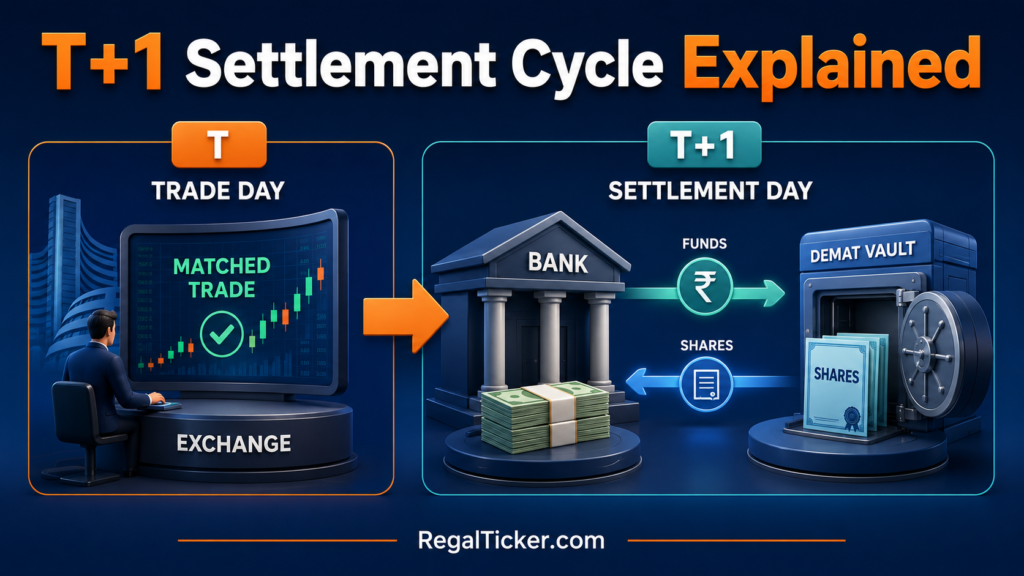
- A Demat account holds eligible securities electronically after settlement.
They perform different jobs. Read Demat Account vs Trading Account vs Bank Account if you want a detailed comparison. You can also revisit What Is a Demat Account? and What Is a Trading Account? before starting the application.
In India, the two depositories are NSDL and CDSL. You do not normally open a retail Demat account directly with a depository. You open it through a depository participant, or DP. A stockbroker may also be a DP or may provide a combined onboarding arrangement.
Step 1: Decide what you actually need
Before comparing apps, decide how you intend to use the account. A long-term equity investor may need only the cash-equity segment. A person who selects derivatives, currency or commodity segments may face extra documentation, risk disclosures and suitability considerations.
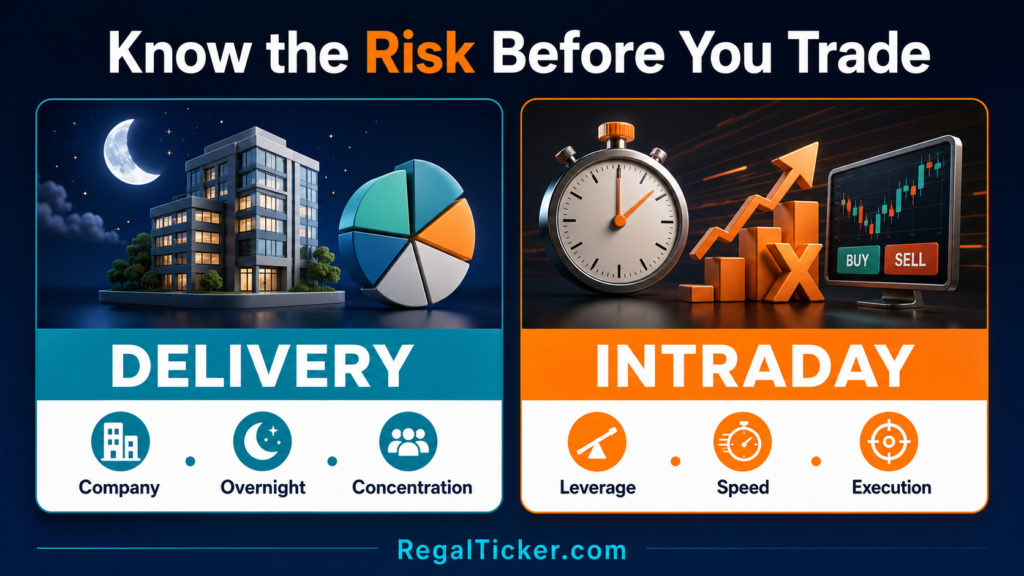
Do not activate every segment simply because the form offers it. Derivatives involve leverage and can produce losses much larger and faster than ordinary delivery investing. Segment activation is an account-setting decision, not a badge of experience.
Step 2: Choose a registered intermediary carefully
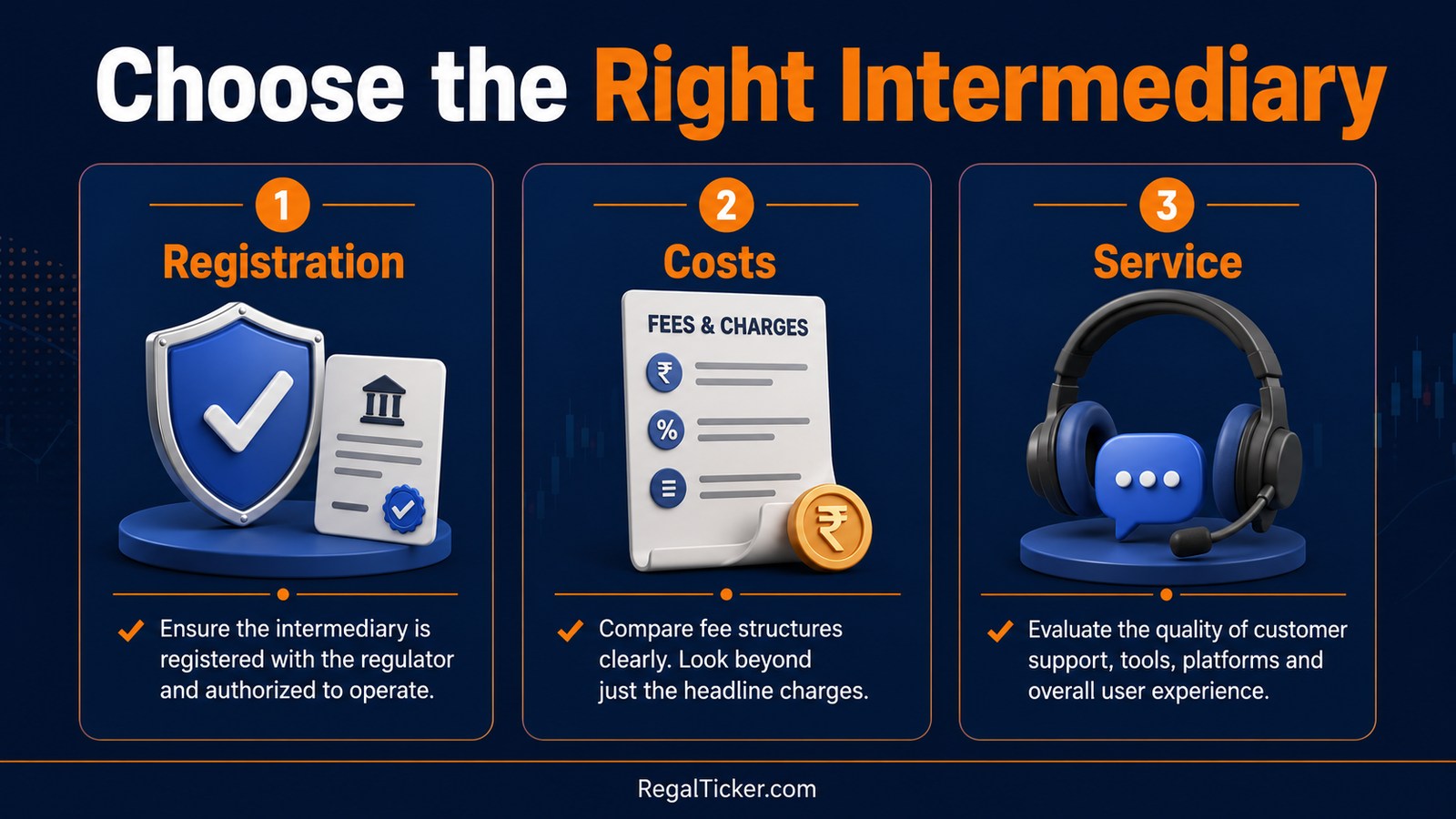
The lowest headline brokerage is not the only selection criterion. Check:
- Whether the intermediary is registered with SEBI and is a member of the relevant exchange
- Whether Demat services are provided through NSDL or CDSL and who the DP is
- Account-opening, annual maintenance, brokerage, DP, call-and-trade and other charges
- Platform reliability, security controls and support channels
- Availability of statements, contract notes and tax reports
- Nomination and account-freezing facilities
- Complaint-handling and escalation process
Verify registration through official SEBI or exchange records rather than trusting an advertisement or social-media link. SEBI’s depository explainer confirms that investors access depository services through a DP, not by opening an account directly with the depository.
Step 3: Keep the required documents ready
For a resident individual, the exact list can vary with the intermediary and selected segments, but the usual requirements include:
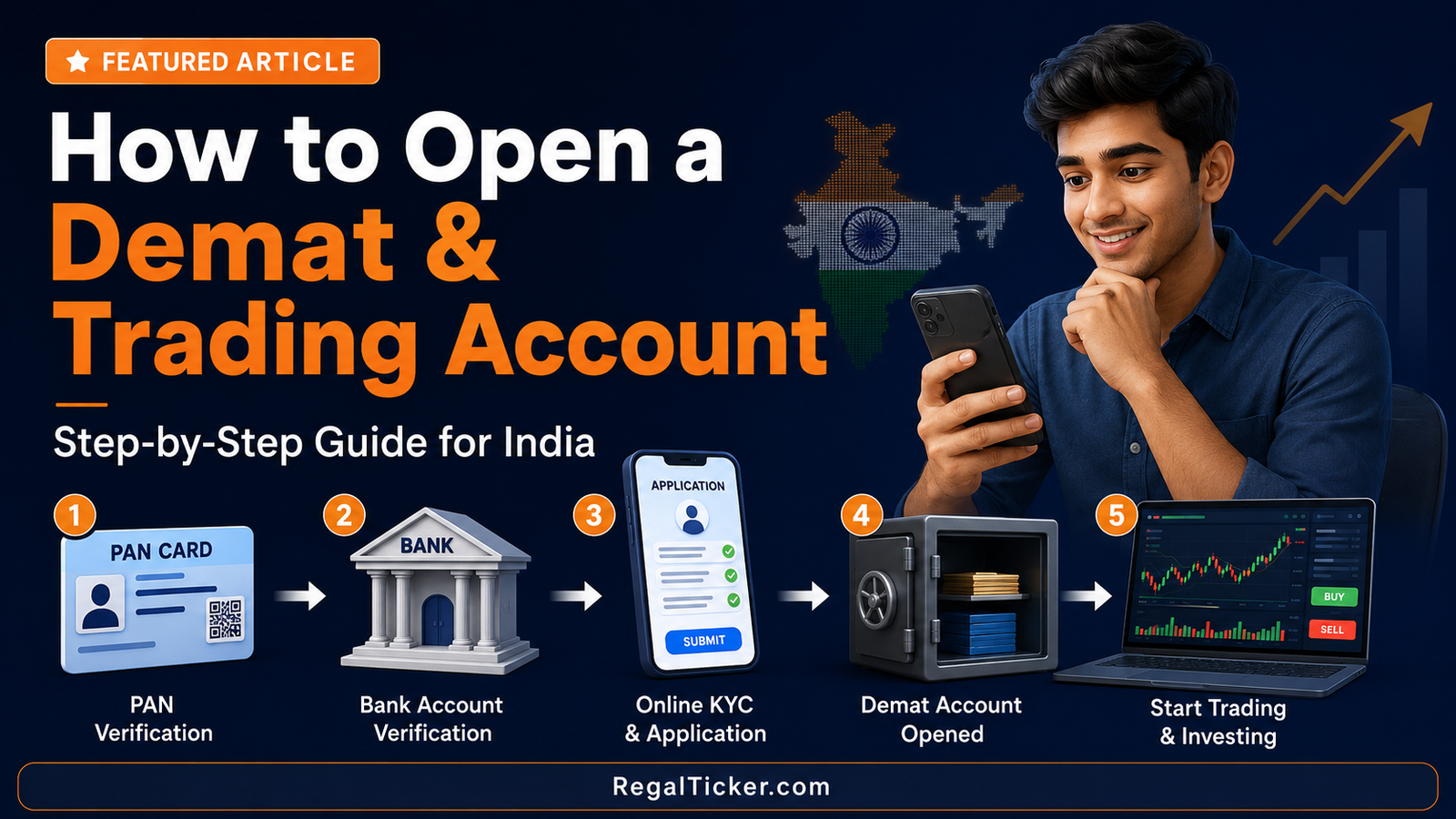
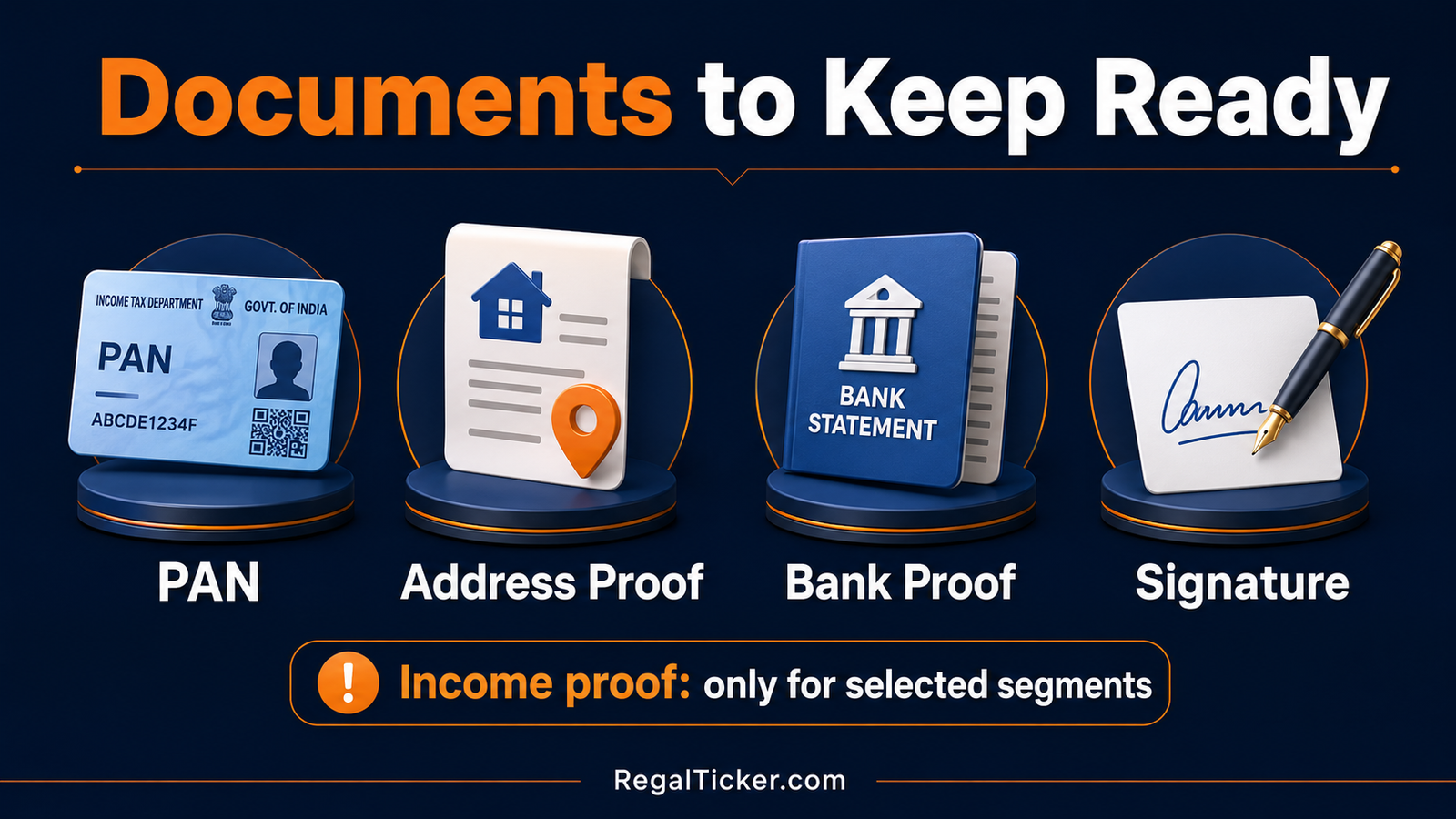
- PAN: PAN is a central identity requirement for securities-market KYC.
- Proof of address: Aadhaar, passport, driving licence, voter identity card or another accepted document may be used according to applicable rules.
- Bank proof: A personalised cancelled cheque, passbook or bank statement may be requested to verify the account number, account holder, IFSC and related details.
- Photograph and signature: Digital onboarding may capture a live photograph and signature specimen.
- Mobile number and email address: These receive verification messages, statements, alerts and account communication.
- Income proof where applicable: This is generally relevant when activating derivatives or other specified segments, not merely for basic cash-equity investing.
Keep clear, current and uncropped files. The spelling of your name, date of birth and other important details should be consistent. A mismatch between PAN, Aadhaar, bank proof and the application is a common reason for delay.
Step 4: Start the application only through an official channel
Use the intermediary’s official website, verified application or branch. Avoid account-opening links sent by unknown people. Check the domain and never share an OTP, password, PIN or screen-control access with someone claiming to “help” activate the account.
You will typically provide personal details, tax status, occupation, income range, bank information and the segments you want to activate. Read each field instead of accepting defaults blindly.
Step 5: Complete KYC and identity verification
KYC means Know Your Customer. It helps the regulated intermediary establish your identity and record essential information. Digital onboarding may include:
- PAN validation
- Aadhaar-based authentication or another permitted document route
- Mobile and email OTP verification
- Bank-account verification
- Live photograph or video in-person verification
- Electronic signing of forms
SEBI’s KYC guidance describes document submission and in-person verification as core parts of KYC. Video or permitted electronic methods may make this possible without visiting an office.
KYC is covered in detail in the next lesson: Stock-Market KYC: Documents and Verification Process.
Step 6: Add a nominee or make the permitted declaration
Nomination can simplify transmission of eligible assets if the account holder dies. Read the nomination choices carefully and provide accurate nominee details. If you choose not to nominate, follow the prescribed opt-out or declaration process shown by the intermediary.
Nomination does not replace estate planning, and nominees and legal heirs are not always the same concept. For a complicated family or estate situation, obtain qualified legal advice.
Step 7: Review account-opening documents
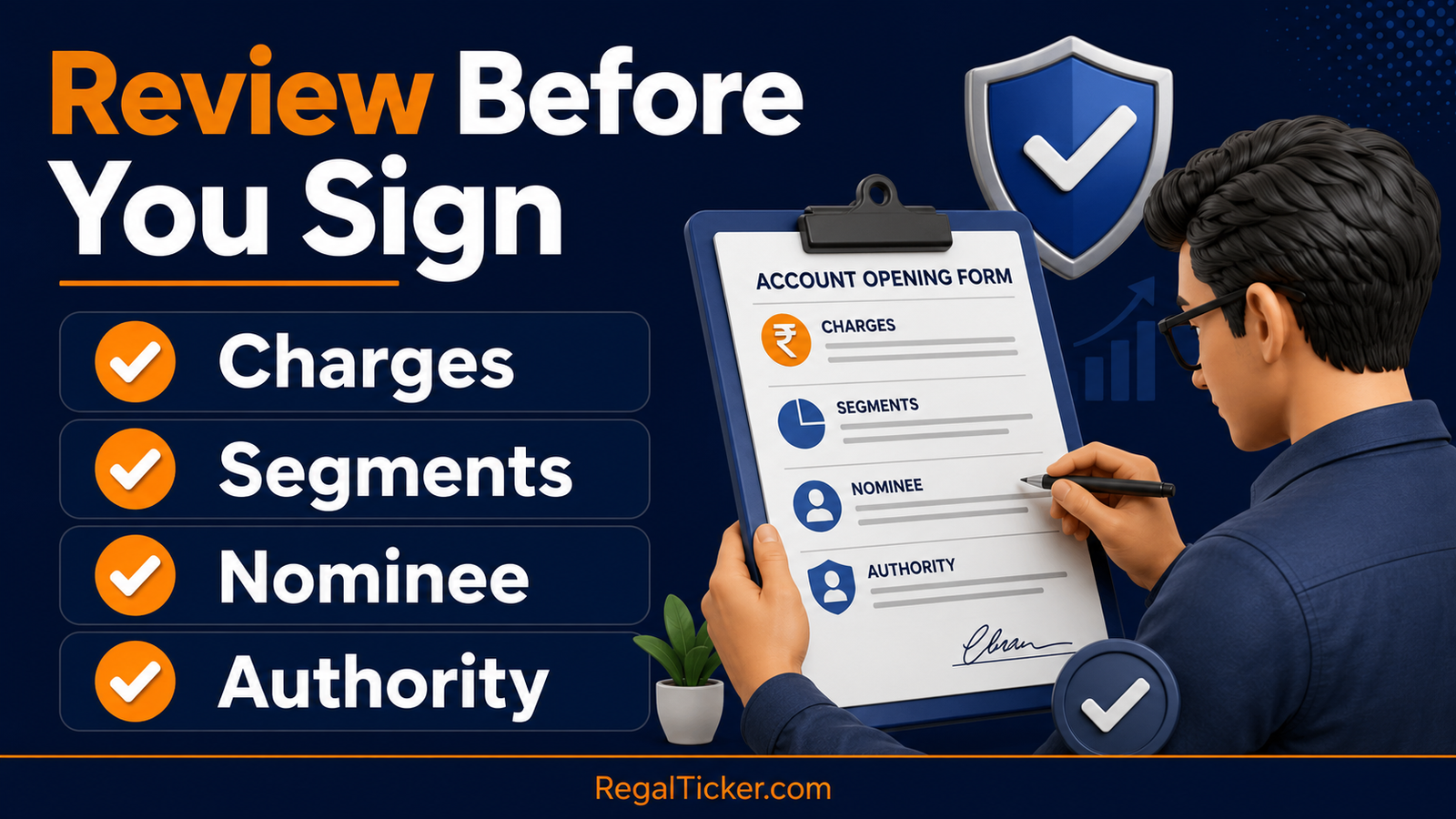
The application may include KYC details, rights and obligations, tariff sheets, policies, segment declarations and optional authorisations. Pay special attention to:
- The complete tariff or charge sheet
- Segments selected for activation
- Mobile number and email entered
- Bank account mapped to the account
- Nomination choice
- Any power of attorney or Demat Debit and Pledge Instruction arrangement
- Running-account or settlement preferences, where offered
- Communication and statement preferences
Do not sign blank forms. Do not accept an optional authority merely because it is preselected. Understand what the authority permits and which alternative transaction-verification method is available.
Step 8: Wait for verification and account activation
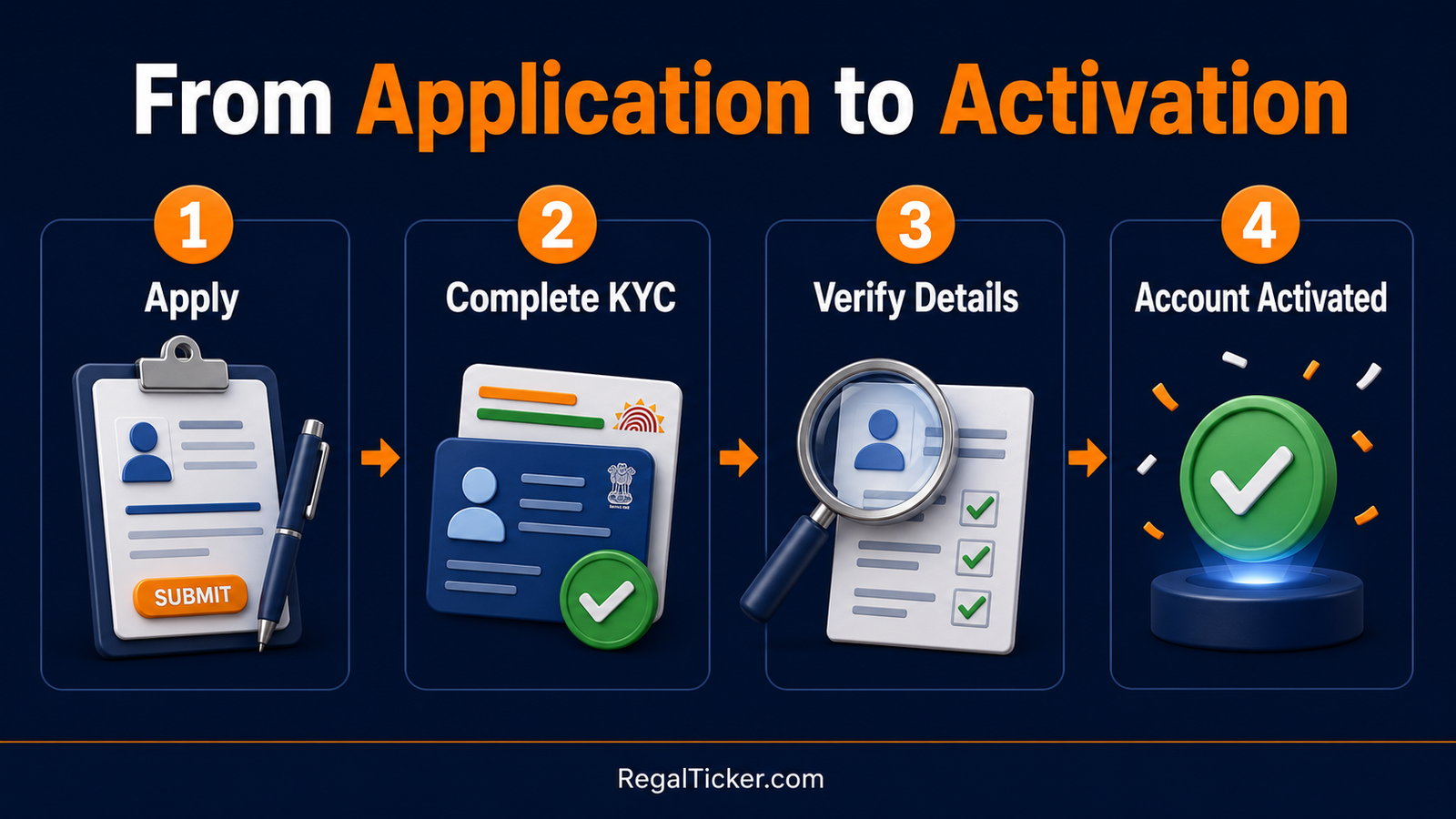
Once the information is complete, the intermediary verifies the application and creates the relevant client and Demat records. Processing time varies with the verification method, document quality and whether discrepancies need correction. Avoid relying on a universal “instant activation” promise.
After activation, you may receive:
- A unique client code for the trading account
- Demat account or beneficial-owner details
- Login and platform instructions
- Tariff sheet and executed documents
- Risk disclosures, policies and contact information
Save these records securely. Change any temporary password immediately and enable available security controls.
Step 9: Check everything before funding the account
Log in through the official app or website and verify:
- Your full name and PAN-linked details
- Registered mobile number and email
- Linked bank account
- DP and Demat account details
- Activated exchange segments
- Nominee status
- Brokerage and other charges
Then start with a small amount while learning how funds, orders, contract notes and settlement work. The Regal Ticker Investor Tools can help you examine calculations, but a tool does not replace understanding the product or its risks.
Charges to compare before opening an account
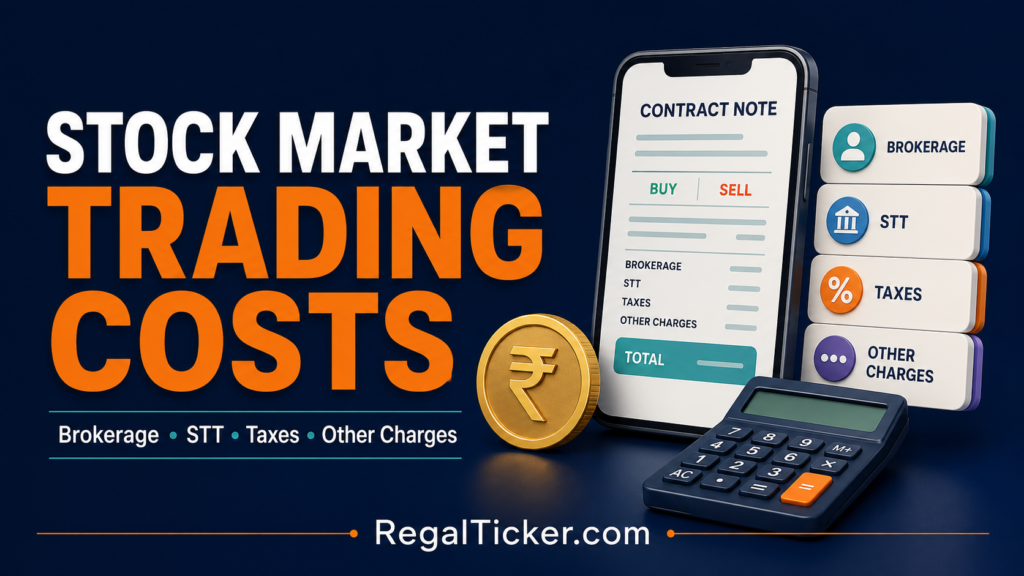
“Zero account-opening fee” does not mean the relationship has no costs. Depending on the intermediary and activity, you may encounter:
- Account-opening fee
- Annual maintenance charge
- Brokerage
- Depository participant charge on eligible debit transactions
- Exchange transaction charges
- Securities Transaction Tax
- GST
- SEBI turnover fees
- Stamp duty
- Call-and-trade or platform-specific charges
- Interest or penalties connected with funded facilities
Obtain the current tariff sheet from the intermediary because charges and offers can change. For a detailed breakdown of brokerage, STT, exchange transaction charges, GST, stamp duty, SEBI fees and DP charges, read Brokerage, STT, Exchange Charges and Other Trading Costs.
Common mistakes to avoid
Choosing only by an advertisement
Compare registration, security, service, statements and total charges—not only a promotional brokerage claim.
Activating derivatives without understanding them
Extra segments add risk and may require income proof. Basic investing does not require every available segment.
Ignoring optional authorisations
Read what you permit the intermediary to do with your securities or account.
Entering someone else’s contact details
Use your own mobile number and email so alerts reach you directly.
Sharing passwords, OTPs or PINs
A genuine intermediary should not require you to disclose confidential authentication credentials.
Forgetting to review statements
Check contract notes, ledger entries, holdings and depository alerts regularly.
Can you have more than one Demat account?
An investor can generally maintain multiple Demat accounts, subject to KYC and intermediary requirements. Each account may carry separate charges and records. More accounts do not create more investment skill; they can instead increase administrative work.
Can a minor open a Demat account?
A Demat account may be opened for a minor through a guardian under the applicable process, but trading and segment availability differ from an ordinary adult account. Check the intermediary’s current requirements and official rules before applying.
Final checklist
Before submitting, confirm that you have:
- Verified the intermediary’s registration
- Compared the complete tariff
- Selected only necessary segments
- Prepared clear PAN, address and bank proofs
- Used your own mobile number and email
- Checked every material detail for consistency
- Read optional authorisations
- Recorded your nomination choice
- Saved executed documents after activation
Opening an account is easy; opening it thoughtfully is more important. A correctly configured account, clear records and careful security habits give you a stronger foundation than rushing to place the first trade.
Frequently Asked Questions
Is a Demat account compulsory to buy shares in India?
For holding listed shares in electronic form, a Demat account is generally required. The trading account sends the order, while the Demat account receives eligible securities after settlement.
Can I open only a Demat account without a trading account?
Depending on the purpose and DP offering, a Demat account may exist without a trading account. To place exchange buy and sell orders through a broker, you generally need trading access.
Is Aadhaar compulsory for every account-opening route?
Aadhaar is widely used for convenient online authentication, but requirements can depend on the permitted KYC route and intermediary. Check current official instructions rather than assuming every applicant follows the same route.
Is income proof needed for a basic equity account?
Income proof is commonly associated with activation of derivatives or specified segments. A basic cash-equity application may not require it, subject to current rules and intermediary checks.
Does opening an account guarantee investment returns?
No. An account provides market access. Returns depend on investment decisions and market outcomes, and losses are possible.
Where can I verify a broker?
Use SEBI and the relevant stock exchange’s official intermediary or member records. Do not rely solely on promotional material. NSDL’s investor charter also summarises investor rights and responsibilities connected with Demat services.