

If you open a stock-market app, you may see a share trading at ₹100. A few seconds later, it may show ₹100.20, ₹99.85 or another price. Who is changing it? Does the company decide the price? Does the stock exchange calculate it? Or does a regulator set it?
The short answer is:
> A listed share’s market price is discovered through the interaction of buy and sell orders on the stock exchange.
When a compatible buyer and seller agree through the exchange’s electronic order-matching system, a trade takes place. The price of that completed trade becomes the latest traded price. As new orders and trades arrive, the displayed market price can keep changing.
This process is called price discovery.
In this guide, you will learn how share prices are decided in India, how demand and supply affect prices, what bid and ask prices mean, how an order becomes a trade, and why a company’s face value or business quality does not directly determine its live market price.
Who Decides the Price of a Share?
No single person decides the continuously changing market price of a listed share.
It is not fixed every morning by:
- the company;
- the stock exchange;
- SEBI;
- your stockbroker; or
- one individual investor.
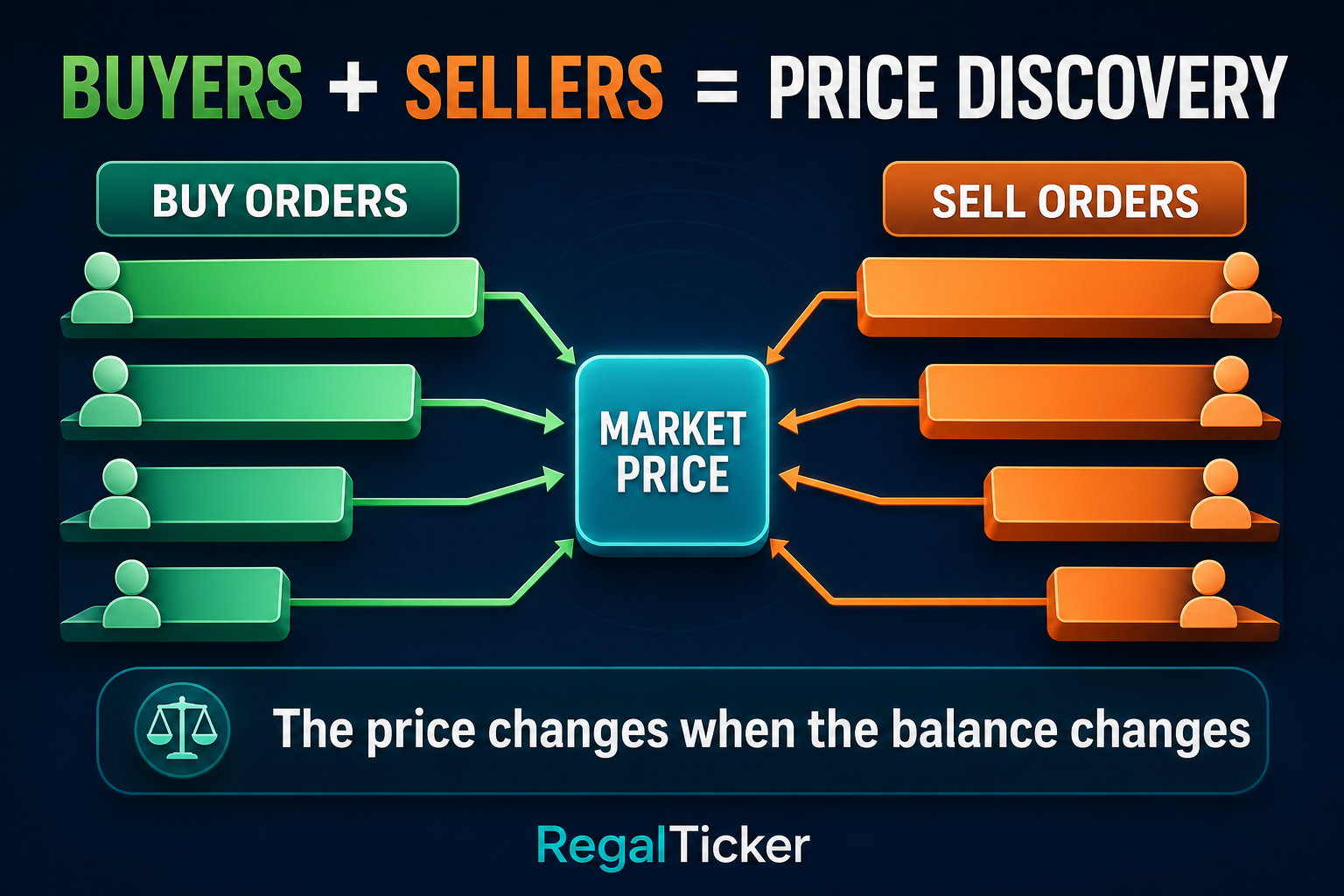
Instead, thousands of market participants place buy and sell orders at different prices. NSE or BSE receives these orders and uses an electronic trading system to match compatible orders according to its rules.
The exchange provides the market and matching mechanism. Buyers and sellers provide the orders. Their interaction produces the traded price.
SEBI regulates the securities market, while exchanges operate the trading platform and apply trading rules. Regulation is essential for an orderly market, but regulation does not mean that SEBI manually chooses the normal market price of every listed share.
Demand and Supply: The Basic Force Behind Share Prices
Demand represents the willingness of market participants to buy a share at different prices. Supply represents the willingness of existing holders to sell it.
The relationship can be understood simply:
- If buyers become more aggressive than sellers, they may offer higher prices to obtain shares. The market price can rise.
- If sellers become more aggressive than buyers, they may accept lower prices to complete a sale. The market price can fall.
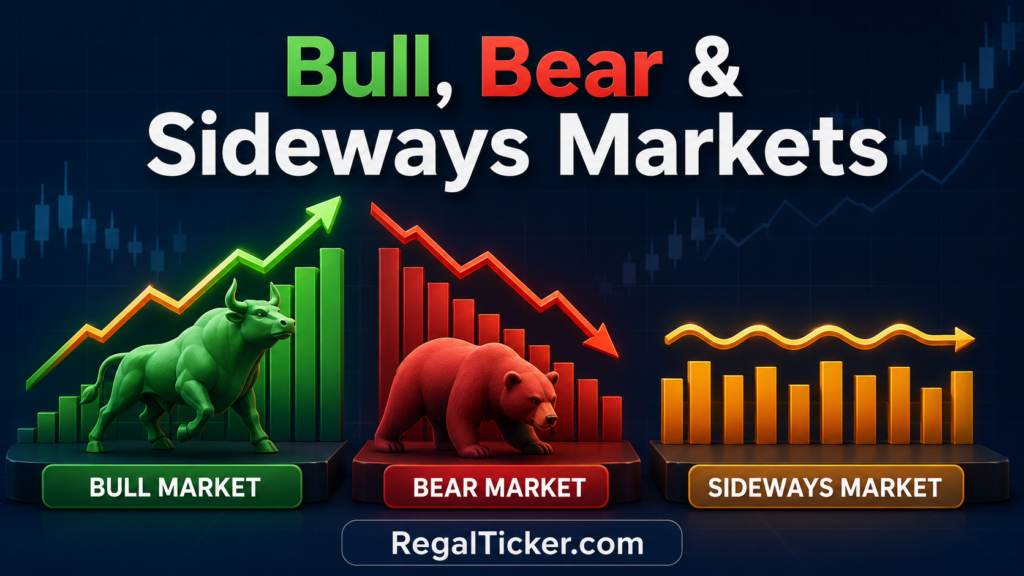
- If buyers and sellers remain broadly balanced, the price may trade within a narrower range.
However, “more buyers than sellers” is often an oversimplification. Every completed trade has both a buyer and a seller. What matters is which side is more eager and at what prices orders are available.
Suppose many investors want to buy a share, but sellers are unwilling to sell near the current price. Buyers may need to raise their bids until they meet a seller’s asking price. That is how stronger demand can push the traded price higher.
The reverse can happen when many holders want to exit quickly. Sellers may lower their asking prices until buyers are willing to trade.
What Are Bid Price and Ask Price?
Two prices are especially important in an order book:
- Bid price: the highest price a buyer is currently willing to pay.
- Ask price: the lowest price a seller is currently willing to accept.
The difference between the best bid and best ask is called the bid–ask spread.
For example:
- Best available bid: ₹100.90
- Best available ask: ₹101.00
- Bid–ask spread: ₹0.10
At that moment, the best buyer is offering ₹100.90, while the least expensive seller wants ₹101.00. Until an incoming order accepts an available price—or an existing order is changed—the two sides may remain unmatched.
A narrow spread generally indicates that buyers and sellers are quoting close to one another. A wide spread can occur in less-liquid shares, during volatile conditions or when trading interest is limited.
How Does an Order Become a Trade?
Consider a simplified example involving a fictional share:
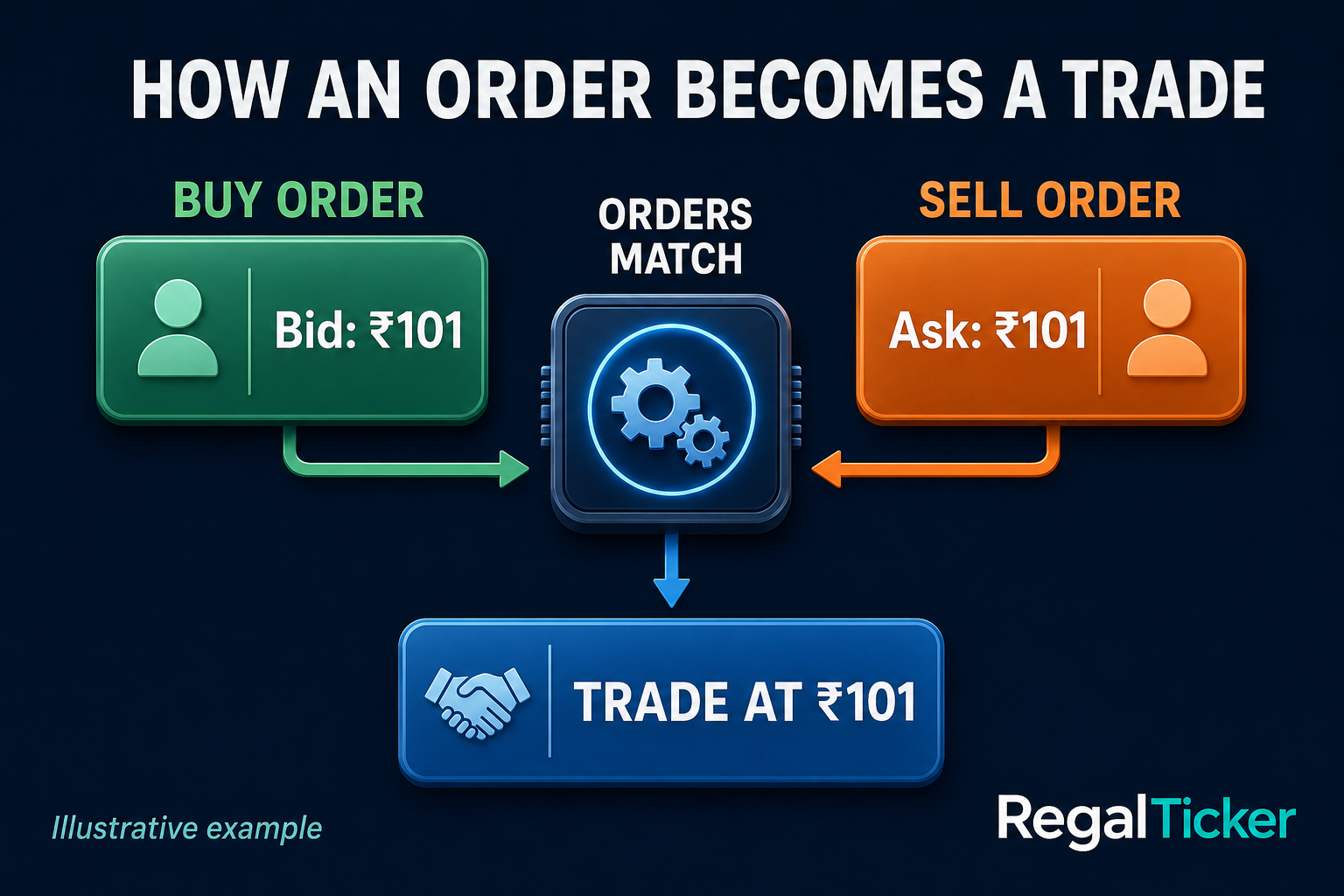
- A seller places a limit order to sell at ₹101.
- A buyer places a compatible order at ₹101.
- The exchange’s electronic system matches the orders.
- A trade is executed at ₹101.
- ₹101 becomes the latest traded price until another trade occurs at a different price.
The real order book may contain many orders, prices and quantities. The exchange does not randomly choose between them.
NSE explains that orders receive price priority and then time priority:
- An order offering the better price receives priority.
- If multiple orders have the same price, the order entered earlier receives priority.
This is why two investors placing similar orders may not receive identical execution timing. Price, order type, available quantity and time of entry all matter.
What Is the Last Traded Price?
The last traded price, commonly shown as LTP, is the price at which the most recent trade was completed.
It is not necessarily:
- the price at which you can buy any quantity immediately;
- the price at which you can sell any quantity immediately;
- the company’s fair value; or
- the price at which the next trade will occur.
Suppose the LTP is ₹101, but the lowest available seller now wants ₹101.20. If you place a market buy order, your execution may occur at ₹101.20 or across multiple available prices, depending on quantity and liquidity.
Therefore, the displayed LTP is a record of the latest completed transaction—not a promise that your next order will execute at exactly that price.
Market Order vs Limit Order
The order type you use influences how you participate in price discovery.
Market order
A market order seeks immediate execution against the best available orders. It prioritises execution, but the final price may differ from the displayed LTP, especially in a fast-moving or illiquid share.
Limit order
A limit order lets you specify the maximum price you will pay when buying or the minimum price you will accept when selling. It provides price control, but execution is not guaranteed.
For example:
- A buy limit order at ₹100 will not normally execute against a seller asking ₹101.
- A sell limit order at ₹102 will wait if available buyers are bidding below ₹102.
Beginners often assume that clicking “buy” means the exchange assigns them the visible price. In reality, the order enters a market containing other orders, and execution depends on the order type and available counterparties.
How Is the Opening Price Decided?
The first price shown for a trading day is not always simply the previous day’s closing price.
Indian exchanges use a pre-open session for eligible securities. During this session, orders are collected and an equilibrium price is discovered using the applicable exchange process. That discovered price becomes the opening price.
If no price is discovered in the pre-open session, the first trade in the normal market can become the opening price.
This mechanism helps incorporate information and orders accumulated while the normal market was closed. If important news appeared overnight, the opening price may differ substantially from the previous close. This difference is commonly called a gap up or gap down.
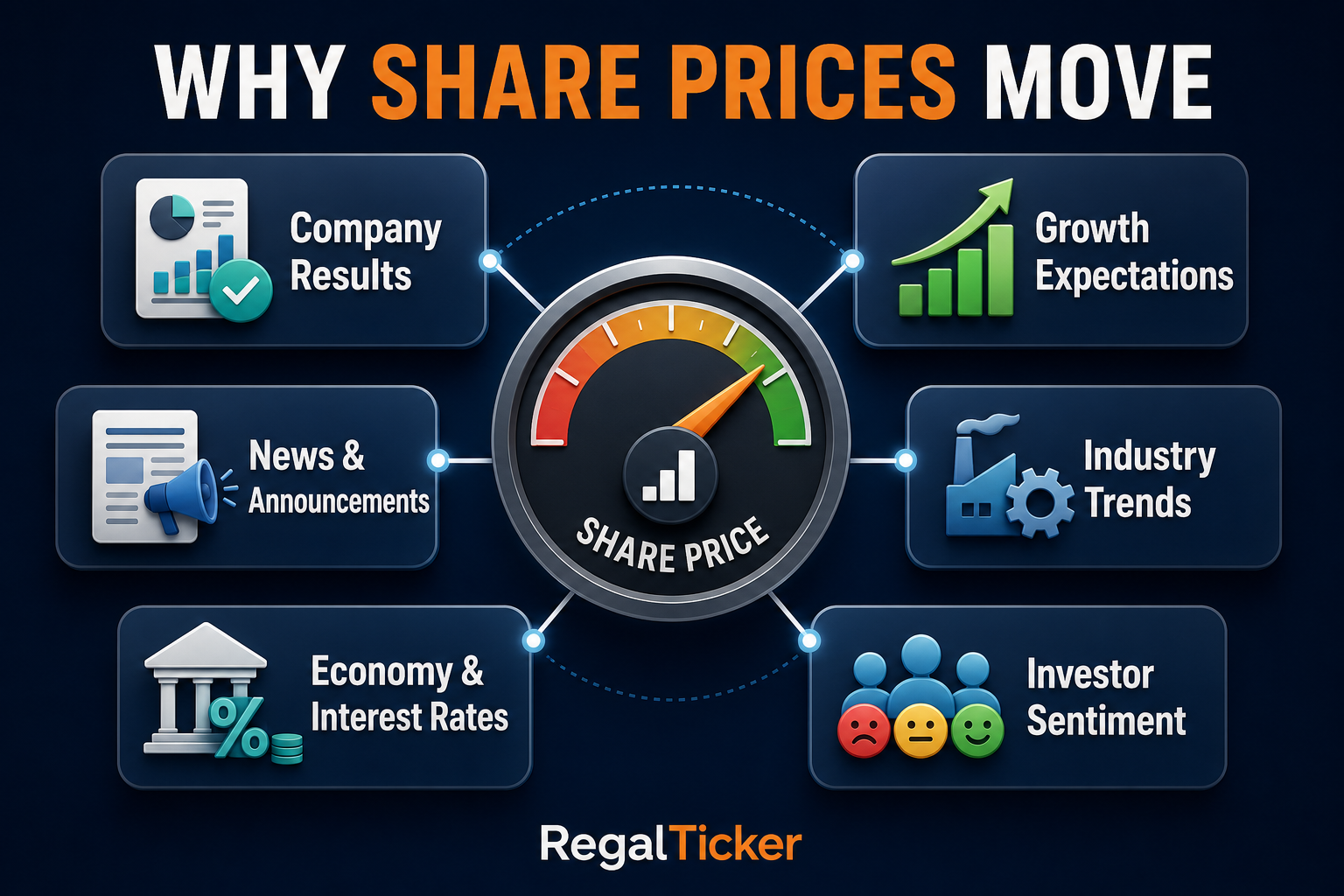
Why Do Share Prices Change?
The exchange’s order book explains how a price changes. Investor expectations explain why demand and supply change.
1. Company results
Revenue, profit, margins, debt, cash flow and management commentary can change expectations about a company’s future. The reaction depends not only on whether results are good or bad, but also on how they compare with what the market already expected.
2. Future growth expectations
Share prices are forward-looking. Investors may pay more when they expect faster and more durable growth. If those expectations weaken, demand may fall even when the company remains profitable.
3. Corporate announcements
Acquisitions, major orders, management changes, regulatory actions, fund-raising, dividends, stock splits and other announcements can alter investors’ views.
4. Industry conditions
A company’s shares can move because of changes affecting its entire sector, such as input costs, competition, demand cycles, regulation or technological disruption.
5. Economy and interest rates
Inflation, interest rates, currency movements, government policy and economic growth can affect company profits, borrowing costs and investor preferences.
6. Global events
International markets, commodity prices, geopolitical developments and foreign investment flows can influence Indian shares.
7. Investor sentiment
Fear, optimism, momentum and risk appetite can affect short-term buying and selling. Prices may sometimes move faster than a company’s underlying business changes.
8. Liquidity
In a highly liquid share, many orders may be available close to the current price. In an illiquid share, a relatively modest order can move through several price levels and cause a larger price change.
Why Can a Good Company’s Share Price Fall?
A good business and a rising share price are not the same thing.
A company may report profit growth and still see its share price fall if:
- investors expected even stronger growth;
- management gives a cautious outlook;
- the valuation was already very high;
- a risk becomes visible;
- the industry outlook weakens; or
- investors reduce exposure to risky assets generally.
Similarly, a weak company’s share price may rise temporarily when results are less bad than expected, traders anticipate a turnaround or speculative demand increases.
This leads to an important lesson:
> Markets react to the difference between reality and expectations—not to headlines in isolation.
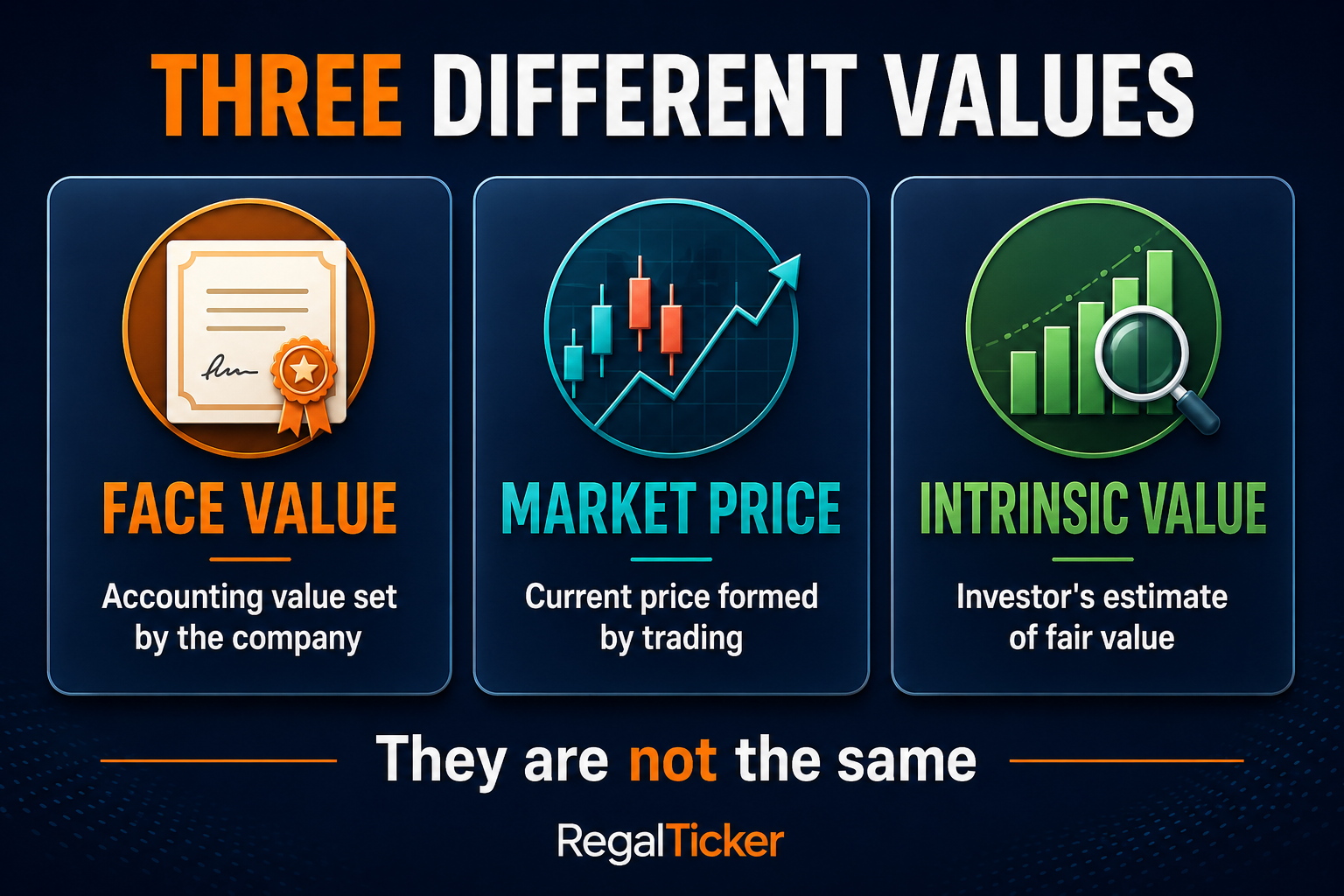
Market Price, Face Value and Intrinsic Value Are Different
These three terms are often confused.
Market price
The market price is the price formed through trading on the stock exchange. It can change continuously during market hours.
Face value
Face value is an accounting value assigned to a share by the company. It is used for matters such as share capital and may be relevant to certain corporate actions. It does not tell you what the share should trade for in the market.
A share with a face value of ₹10 can trade at ₹80, ₹800 or another market price.
Intrinsic value
Intrinsic value is an investor’s estimate of what the business or share is fundamentally worth. Analysts may use earnings, cash flows, assets, growth and risk to estimate it.
Different investors can calculate different intrinsic values because they use different assumptions. The exchange does not replace the market price with an analyst’s estimate.
Does Market Capitalisation Decide the Share Price?
Market capitalisation does not independently set the share price. It is calculated using the share price:
Market capitalisation = Current market price per share × Number of outstanding shares
If the market price changes, the company’s market capitalisation changes.
This also explains why a company with a share price of ₹2,000 is not automatically “more valuable” than a company whose share trades at ₹200. You must also consider how many shares each company has outstanding.
Share price alone is not a reliable way to compare the size, quality or valuation of two companies.
Can a Company Control Its Share Price?
A listed company can influence investor expectations through business performance, disclosures, capital allocation and communication. It can also undertake corporate actions such as stock splits, bonus issues or buybacks, subject to applicable rules.
But the company does not normally type in or manually fix its continuously changing secondary-market price.
A stock split may reduce the quoted price per share by increasing the number of shares in the specified ratio, but it does not automatically create equivalent economic value. The shareholder’s proportional ownership and the company’s total value must be considered.
Can a Stockbroker Decide the Price?
A broker transmits your order to the exchange and provides the trading interface. It does not normally choose the market price for an exchange-traded order.
Your execution price depends on:
- the order you place;
- the available orders in the market;
- price–time priority;
- liquidity;
- market movement; and
- applicable exchange rules.
This is why you should review the bid, ask, spread, order type and quantity instead of looking only at the LTP.
Why Do the Same Shares Sometimes Show Slightly Different Prices on NSE and BSE?
A company may be listed on both NSE and BSE. Each exchange has its own order book, buyers, sellers and available quantities. Therefore, small price differences can occur.
Professional participants and traders may act on meaningful differences, which often helps keep the prices broadly aligned. However, liquidity can differ between the exchanges, so investors should also consider trading volume, bid–ask spread and available depth.
Common Beginner Mistakes
Mistake 1: Believing the company fixes the live price
The company affects expectations through its performance, but the market price is discovered through trading.
Mistake 2: Treating LTP as a guaranteed execution price
The next available seller or buyer may quote a different price.
Mistake 3: Thinking a low-priced share is automatically cheap
A low nominal share price does not prove undervaluation. Consider market capitalisation, financial performance, risks and valuation.
Mistake 4: Confusing face value with market value
Face value is an accounting concept. Market price is formed in trading.
Mistake 5: Assuming good news must make a share rise
The news may already be reflected in the price, or the outcome may be weaker than expectations.
Mistake 6: Ignoring liquidity
In an illiquid share, even a market order of modest size may execute across several prices.
A Simple Way to Remember the Process
You can understand price discovery as a sequence:
- Information changes investor expectations.
- Investors place or modify buy and sell orders.
- The exchange arranges orders using its matching rules.
- Compatible orders execute.
- The completed trade establishes a new traded price.
- New information and new orders continue the process.
The exchange is the organised marketplace, but the price comes from the orders submitted by market participants.
Frequently Asked Questions
Who decides the share price in India?
The market price is discovered through buy and sell orders placed by market participants on stock exchanges such as NSE and BSE. The exchange’s electronic system matches compatible orders under its trading rules.
Does SEBI decide share prices?
SEBI regulates the securities market but does not normally set the continuously changing market price of each listed share.
Why does a share price rise when there are more buyers?
Every completed trade has both a buyer and a seller. A price tends to rise when buyers are more aggressive and are willing to bid higher to find available sellers.
What is the difference between bid price and ask price?
The bid is the highest available buying price, while the ask is the lowest available selling price. Their difference is the bid–ask spread.
What is LTP in the share market?
LTP means last traded price—the price of the most recently completed trade. It does not guarantee that the next order will execute at the same price.
Why does a share open higher or lower than the previous close?
Overnight news and accumulated orders can change demand and supply. The pre-open price-discovery process can therefore produce an opening price above or below the previous close.
Is a ₹50 share cheaper than a ₹500 share?
Not necessarily. The quoted price per share does not by itself show whether a company is cheap or expensive. Market capitalisation, earnings, growth, risk and valuation also matter.
Is market price the same as intrinsic value?
No. Market price is formed through actual trading. Intrinsic value is an investor’s estimate of fair value based on assumptions and analysis.
Can share prices be manipulated?
Securities-market manipulation is prohibited, but investors should still be alert to misleading tips, artificial excitement and pump-and-dump schemes—especially in illiquid shares. Use official disclosures and regulated intermediaries.
Conclusion
Share prices are not assigned by a single authority. They are continuously discovered as buyers and sellers place orders and the stock exchange matches compatible ones.
Demand and supply determine the immediate trading price, while company performance, expectations, news, economic conditions, sentiment and liquidity influence the orders behind that demand and supply.
The most important distinction for a beginner is this:
> A share’s market price tells you where the latest trade occurred. It does not, by itself, tell you what the company is worth or whether the share is a good investment.
Understanding this difference will help you read market prices more intelligently and avoid common mistakes based on LTP, face value or nominal share price alone.
Sources
- National Stock Exchange of India, Trading System: price priority and time priority in electronic order matching.
- National Stock Exchange of India, Pre-open Session: opening-price discovery and treatment when no price is discovered.
- SEBI Investor, Market Infrastructure Institutions: how investor orders move through exchanges, clearing corporations and depositories.