

Lesson 01
Beginner
What Is an IPO? Meaning, Process and Example
Learn what an IPO is, why companies launch one, how the IPO process works in India, and the main benefits…
Learn IPO investing for beginners in India through an ordered path covering offer documents, price bands, applications, subscription, allotment, listing and evaluation.

An IPO moves an unlisted company into public ownership through a regulated issue and listing process. This path begins with the meaning and complete journey, then explains price bands, lot sizes, offer documents, fresh issues and offers for sale, investor categories, subscription data, allotment, GMP, listing outcomes and a final evaluation checklist.
Follow the lessons in order if you are new to public issues. Verify the RHP and exchange issue page, calculate the application amount, choose the correct category and separate demand indicators from business quality and valuation. An application is not an allotment, and an allotment does not guarantee a listing gain or a good long-term investment.
Use the recommended learning order, or jump directly to the guide you need.
Learn what an IPO is, why companies launch one, how the IPO process works in India, and the main benefits…

Understand the complete IPO process in India, from DRHP and SEBI review to bidding, allotment, ASBA, listing and post-listing trading.

Learn IPO price band, lot size and issue size with simple Indian examples, formulas, application calculations and practical investor checks.
Understand DRHP vs RHP, their differences, important IPO sections, risk factors, financial statements, issue details and investor checks.

Understand fresh issue vs offer for sale in an IPO, who receives the money, dilution, promoter exits, use of proceeds…

Understand retail, HNI or NII, QIB and employee IPO categories, application limits, reservation, allotment and category-selection rules.

Learn how to read IPO subscription data for QIB, NII, retail and employee categories, calculate subscription multiples and avoid common…
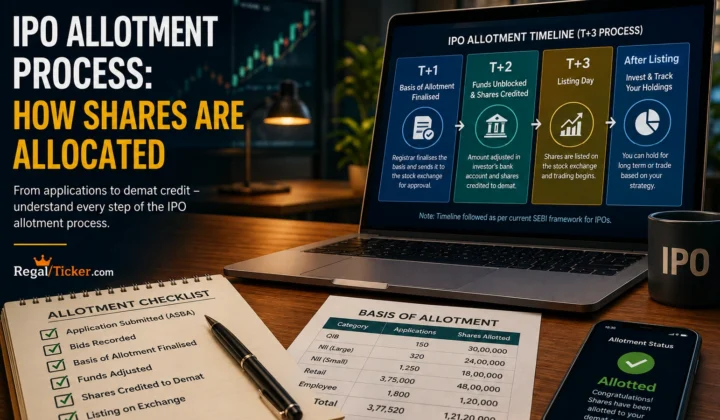
Learn the IPO allotment process in India, including retail allotment, NII and QIB allocation, technical rejections, share credit and T+3…

Learn IPO GMP, how grey market premium is calculated, how listing price is discovered, listing-gain formulas and the major risks…

Learn how to evaluate an IPO using business quality, financials, valuation, risks, issue structure, subscription data and a practical checklist.
Use this calculator only after an IPO share has a known issue price and an actual listing, current or sale price. It cannot estimate allotment probability, GMP reliability or future performance.
Compare the final issue price with an actual sale or current price and include relevant cash distributions where applicable. Use executed or observable prices, not an unofficial GMP quote.
Open calculator
Learn how to evaluate an IPO using business quality, financials, valuation, risks, issue structure, subscription data and a practical checklist.
Read Latest ArticleVerify every live issue through its current RHP, SEBI filing, recognised-exchange issue page and registrar communication. Dates, categories, application procedures and allotment information can change.
No. An IPO creates access to a newly listed company, but business quality, valuation, issue structure, governance, market conditions and post-listing liquidity still determine the risks and possible outcomes.
Start with the current RHP and abridged prospectus. Check the business, risk factors, financial statements, objects of the issue, fresh-issue and offer-for-sale split, promoter information, litigation, price band and lot size.
The application amount generally depends on the number of lots, shares per lot and bid price. Under ASBA, the applicable amount is blocked in the bank account and the required amount is debited if shares are allotted.
No. Subscription data shows demand by category, while GMP is an unofficial indication outside the recognised exchange. Neither guarantees allotment, the opening price, an executable sale price or a long-term return.